

What is a Bilingual School and What Parents Should Know About It
Key Takeaways
- A bilingual school teaches academic subjects in two languages, developing fluency through immersion rather than treating the second language as a standalone subject.
- Research from the National Institute of Child Health and Human Development (NICHD) shows bilingual children develop stronger cognitive flexibility, memory, and problem-solving skills.
- Bilingual schools differ from international schools: bilingual programs blend a national curriculum with a second language, while fully international schools teach 100% in a foreign language.
- When choosing a bilingual school in Ho Chi Minh City, parents should evaluate accreditation (AEFE, CIS), the balance of instruction time in each language, teacher qualifications, and language support programs for newcomers.
- At La Petite Ecole Ho Chi Minh City, the French national curriculum is taught equally in French and English, with AEFE accreditation and dedicated FLE/ESL support for children entering with limited proficiency in either language.
What is a Bilingual School?
Bilingual schools are educational institutions that offer instruction in two languages, providing students with the opportunity to become proficient in both languages while receiving a well-rounded education. These schools operate on the principle of language immersion, where students are exposed to and instructed in both languages throughout their academic journey.
How Does Bilingual School Work?
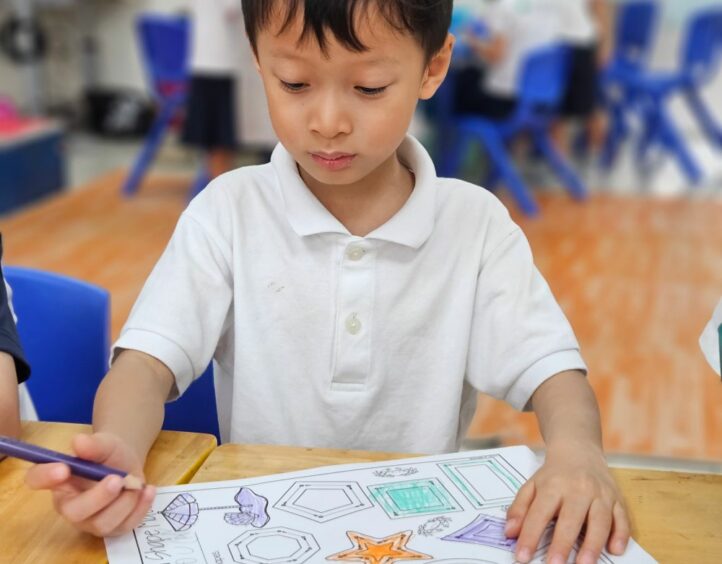
In a bilingual school, students typically spend equal amounts of time learning in each language. The curriculum is carefully designed to integrate both languages into various subjects, ensuring that students develop proficiency in both languages while mastering core academic content. Instruction can be delivered through various methods, including dual-language programs, where subjects are taught in both languages, and immersion programs, where one language is used exclusively for instruction during specific periods.
Benefits of Bilingual Education For Kids
Bilingual education offers numerous benefits for children, both academically and cognitively. Research has shown that bilingualism can enhance cognitive abilities such as problem-solving, critical thinking, and creativity.
Additionally, bilingual children tend to have better communication skills, as they are able to understand and interact with people from different linguistic and cultural backgrounds.
Moreover, bilingual education promotes cultural awareness and appreciation, fostering a sense of global citizenship in students.
These benefits are supported by a growing body of research. A study published in the journal Developmental Science found that bilingual children show enhanced executive function, the mental processes that help with planning, focus, and managing multiple tasks. The National Institute of Child Health and Human Development (NICHD) in the United States has also documented that children educated in two languages tend to demonstrate stronger memory retention and more flexible thinking patterns compared to monolingual peers.
Importantly, research suggests the cognitive advantages of bilingual education become most pronounced around grades 6–8, when bilingual students often outperform monolingual classmates in subjects beyond language, including mathematics and science (Thomas & Collier, 2002). This long-term perspective is one reason experts recommend starting bilingual education as early as possible.
Bilingual School vs International School vs Private School: What’s the Difference?
Parents in Ho Chi Minh City often ask how bilingual schools compare to fully international or private Vietnamese schools. Understanding the differences helps families choose the model that best fits their child’s learning goals, language needs, and budget.
| Criteria | Bilingual School | International School | Private School |
| Curriculum | Blends national + international (e.g., French national curriculum with English instruction) | Fully international (IB, A-Levels, AP) | Vietnamese national curriculum, may add English hours |
| Language Balance | 40–60% in each language; structured alternation | 90–100% in the foreign language | 10–25% English as a subject |
| Teaching Staff | Mix of native-speaking teachers for each language | Primarily foreign, internationally certified | Primarily Vietnamese teachers |
| Accreditation | National + international (e.g., AEFE for French schools) | International bodies (CIS, IB, WASC) | Vietnamese MOET |
| Best For | Families wanting true bilingual fluency with cultural integration | Families planning primarily international pathways | Families prioritizing Vietnamese curriculum at lower cost |
| Typical HCMC Fees | 150–500M VND/year | 300–800M VND/year | 30–150M VND/year |
At La Petite Ecole Ho Chi Minh City, the bilingual model means the French national curriculum is delivered in equal parts French and English. This gives children the academic rigor of the French education system, accredited by AEFE, while building genuine English fluency through daily immersion, not just language classes.
La Petite Ecole Ho Chi Minh’s bilingual curriculum
At La Petite Ecole Ho Chi Minh City, our commitment is to provide “the best of French Education for all children” by teaching the French National Curriculum in equal parts between French and English.
Our French-English bilingual program, accredited by the French Ministry of Education, embodies a unique vision of international education by merging the French curriculum with international innovative teaching methods.
The reputation of the French national curriculum ensures quality education, supported by the best human and teaching resources. Our bilingual approach integrates French & English languages learning with hands-on activities, allowing children to engage actively in their education. Our international community and multicultural teaching team celebrate diversity while respecting local culture and language.
The French-English bilingual program at La Petite Ecole prepares students to thrive in a multicultural environment by fostering a global mindset and intercultural competence.
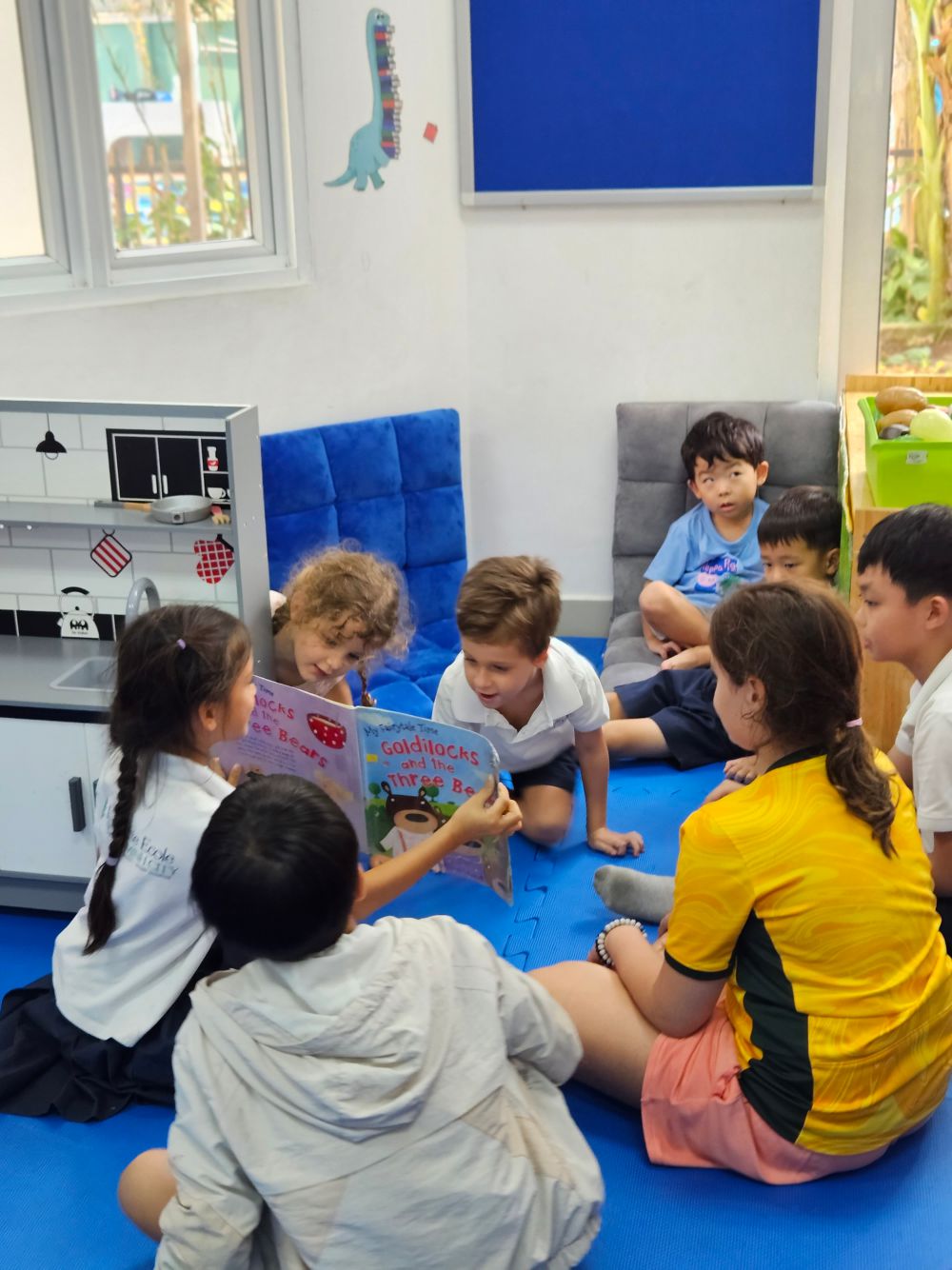
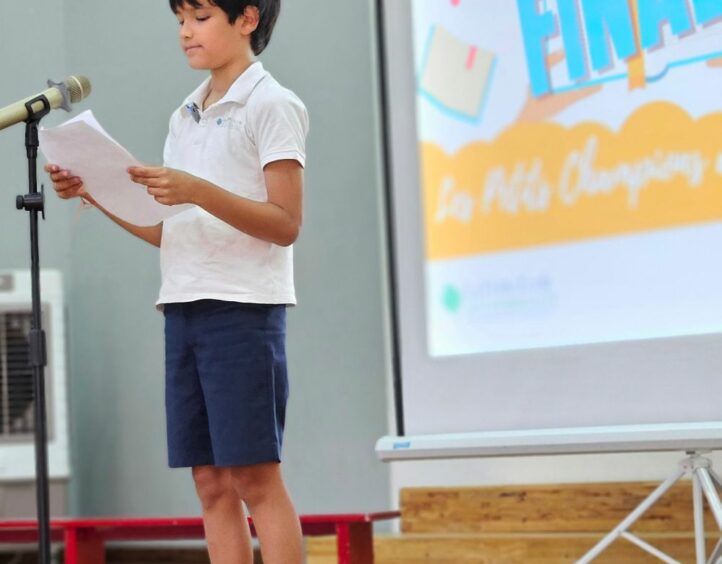
Language Immersion Methods and Approaches at La Petite Ecole Ho Chi Minh - French International School
In early years and elementary school, the French national curriculum is taught alternately in French and English by two qualified native teachers. From Petite Section to Moyenne Section, students change teachers every day, alternating between French and English. From Grande Section onwards, this alternation occurs every half day, ensuring a balanced exposure to both languages. La Petite Ecole welcomes students of all language backgrounds and offers support programs such as FLE/FLSCO (French as a Second Language/French Language Support) and ESL (English as a Second Language) to help integrate new learners. These programs provide targeted instruction in French or English, tailored to each student's needs and proficiency level.
Criteria When Choosing an International Bilingual School for Your Kids
When choosing an international bilingual school for their children, parents should consider several criteria to ensure the best possible educational experience. These include the school’s accreditation and reputation, the qualifications and experience of the teaching staff, the quality of facilities and resources, and the overall school culture and community. Additionally, parents should assess the school’s curriculum and language immersion methods to ensure that they align with their child’s educational goals and learning style.
In conclusion, bilingual schools offer a unique and enriching educational experience that prepares students to thrive in an increasingly interconnected and multicultural world. With a strong emphasis on language proficiency, academic excellence, and cultural awareness, bilingual education equips students with the skills and competencies needed to succeed in the 21st century.
At La Petite Ecole Ho Chi Minh City, we are committed to providing a top-quality bilingual education that empowers students to become confident, global citizens who are fluent in French and English, with a strong connection to the host country, offering weekly Vietnamese language courses.
If you would like to explore how La Petite Ecole Ho Chi Minh City can support your child’s learning journey, discover more about our programs at La Petite Ecole Ho Chi Minh City or arrange a campus visit.
- Phone: 028 3519 1521
- Email: contact@lpehochiminh.com
- Address: 172 – 180 Nguyen Van Huong, An Khanh Ward, Ho Chi Minh City
Frequently Asked Questions About Bilingual Schools
1. What is the difference between a bilingual school and an international school?
A bilingual school teaches academic subjects in two languages with roughly equal instruction time in each, blending a national curriculum with a second language. An international school typically delivers 90–100% of instruction in a single foreign language using an international curriculum such as IB or A-Levels. Bilingual schools are often a better fit for families who want their children to maintain strong connections to the local culture and language while also achieving fluency in a second language.
2. At what age should a child start bilingual education?
Research in early childhood development consistently shows that the earlier children are exposed to a second language, the more naturally they acquire it. Most bilingual schools, including La Petite Ecole Ho Chi Minh City, accept children from age 2–3 in nursery programs. Starting before age 7 is considered optimal, as the brain’s neuroplasticity is highest during these years, making language acquisition feel effortless rather than studied.
3. Will my child become confused learning in two languages?
This is one of the most common concerns among parents, but decades of research have consistently shown that bilingual children do not experience language confusion. Instead, they develop a skill called code-switching – the ability to move fluidly between languages depending on context. Well-structured bilingual programs assign each language to specific times, teachers, or subjects, which helps children build clear mental boundaries between the two languages.
4. What curriculum do bilingual schools in Ho Chi Minh City follow?
Bilingual schools in Ho Chi Minh City follow various models. Some combine the Vietnamese national curriculum with English-language instruction. Others, like La Petite Ecole Ho Chi Minh City, deliver an international curriculum – in this case the French national curriculum accredited by AEFE – taught equally in French and English. The choice of curriculum affects the qualifications students earn and their pathways to higher education, both locally and internationally.
5. How do bilingual schools support children who don’t yet speak one of the languages?
Reputable bilingual schools offer dedicated language support programs for newcomers. At La Petite Ecole Ho Chi Minh City, children who arrive without French receive FLE/FLSCO (French as a Second Language) support, while those needing English support access ESL (English as a Second Language) programs. These are tailored to each child’s proficiency level, ensuring they can participate fully in classroom learning while building language skills progressively.
6. Are bilingual schools in Ho Chi Minh City accredited?
Accreditation varies by school. Parents should look for recognized international accreditation bodies such as AEFE (Agency for French Education Abroad), CIS (Council of International Schools), or WASC (Western Association of Schools and Colleges). La Petite Ecole Ho Chi Minh City holds AEFE accreditation from the French Ministry of Education, which guarantees the quality and continuity of its French-English bilingual program across the global AEFE network of over 580 schools.