


How to Introduce Kids to Sports: A Gentle Guide for Early Years and Primary Children
Knowing how to introduce kids to sports starts with understanding that early movement supports much more than physical development. Through age-appropriate activity, children can gradually build coordination, body awareness, confidence, social skills, and emotional resilience.
Introducing children to sport is not about choosing the “right” activity or starting at a fixed age. It is about creating experiences that reflect a child’s stage of development, temperament, interests, and cultural environment.
This article explores how parents can introduce children to sport in a supportive and developmentally appropriate way. It also looks at how movement, play, and physical exploration are part of everyday learning at La Petite Ecole Ho Chi Minh City.
Key Takeaways
- Sport supports children’s physical, social, emotional, and cognitive growth, with benefits varying by personality and background.
- There’s no single age or sport to start; movement can begin in infancy, with structured activities from around age 5 or 6.
- Home matters: parents who model activity, follow curiosity, and celebrate effort foster a lasting love of sport.
- Trying different activities helps children find their fit, build confidence, and develop varied skills.
- School complements home: extracurricular programmes provide a supportive space to explore sport, like at La Petite Ecole Ho Chi Minh City with over 40 activities.
- The goal is a joyful, confident relationship with movement, not producing athletes.
Why Sports Play A Role In A Child's Development
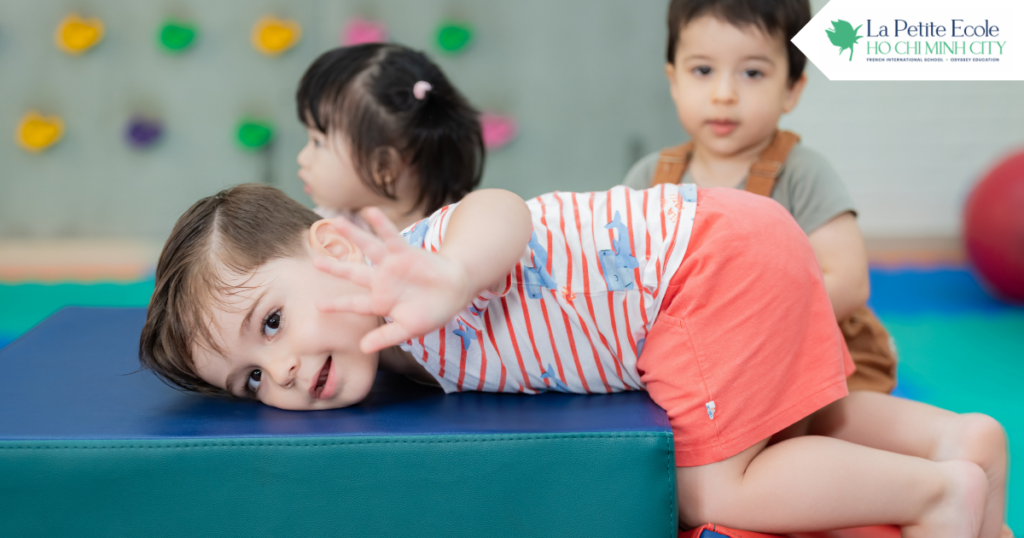
Before thinking about which sport to choose or when to start, it helps to understand what sport actually gives a child. The benefits go well beyond the physical, and they look different depending on the child.
-
Physical Development
Regular movement builds coordination, balance, strength, and healthy habits that children carry into adulthood. For young children especially, active play is how the body learns to navigate space. Running, jumping, throwing, and catching are not just fun; they are the foundation for every sport a child might take up later.
Read more: Nurturing Physical Development in Preschoolers: Essential Benefits and Effective Methods
-
Social Development
Team sports in particular give children a context where communication, cooperation, and empathy grow naturally. For children in multicultural environments, sport becomes a shared language that crosses cultural and linguistic barriers. A child who has never spoken to a classmate from a different country can find common ground on a basketball court.
-
Emotional Resilience
Sport is one of the few places where children regularly experience both success and failure in a low-stakes setting. Missing a goal, losing a match, or struggling to learn a new skill are all moments that, with the right support, build grit and emotional regulation. The key is framing these experiences as part of the process, not proof of ability.
-
Cognitive Growth
Learning rules, reading a game, adapting to changing situations in real time: these are cognitive demands that sport places on children in an engaging way. Research consistently shows links between regular physical activity and improved focus and academic performance in school-age children.
It is worth noting that these benefits do not arrive on a fixed schedule. How and when a child responds to sport depends on their temperament, their previous experiences, and their cultural background. What motivates one child may not motivate another, and that is entirely normal.
When Is The Right Age To Start?
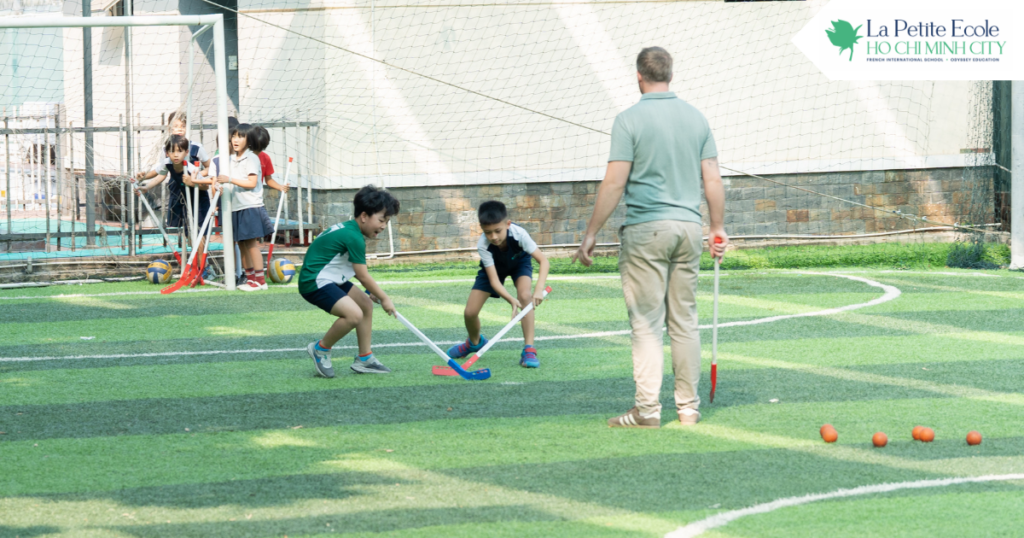
There is no universal answer, but child development research offers useful signposts. What matters most at each stage is matching the activity to what a child is actually ready for, physically and emotionally.
12 Months to 2 Years: Movement And Play
At this age, structured sport is not the goal. The goal is movement. Rolling, crawling, walking, climbing, and splashing are all building the body awareness and motor skills that sports will one day rely on. Water play, soft balls, and open spaces to explore are ideal. Pressure and rules have no place here.
3 to 5 Years: Exploration And Joy of Movement
This is the preschool window, equivalent to Early Years in the French school system. Children at this stage have short attention spans, love imaginative play, and are still developing coordination. The best introduction to sport at this age is through games that feel like play. Think obstacle courses, kicking and chasing a ball, simple gymnastics, or swimming. The emphasis is on delight, not skill.
6 to 8 Years: Simple Team Activities, Fun First
By age six, most children have improved coordination and a better ability to follow basic rules. This is when team activities start to make sense, provided the focus remains firmly on fun and participation over competition. Football, swimming lessons, martial arts, and gymnastics all work well at this stage. Sessions should be short and varied. A child who loses interest quickly is not disengaged; they may simply be telling you the format does not suit them yet.
9 to 10 Years: Ready for Greater Challenge
Older primary school children can handle more complex rules, light competition, and goal-setting. They care more about their peers and what their friends are doing, which means the social dimension of sport becomes increasingly important. This is a good time to let a child go deeper into one or two activities they genuinely enjoy, while still keeping the door open for trying new things.
How To Foster A Love Of Sport At Home
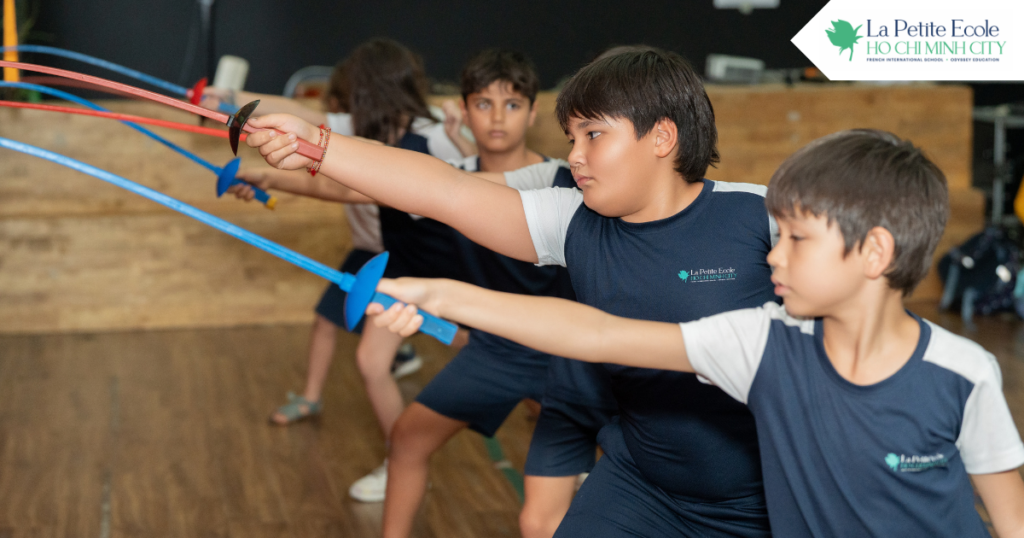
The home environment shapes a child’s relationship with sport long before any coach or team does. Here are some of the most effective ways parents can nurture that relationship.
-
Be An Active Role Model, Without Pressure
Children absorb what they observe. Parents who treat physical activity as a normal, enjoyable part of daily life, whether that is a weekend swim, a walk in the park, or a game of catch in the yard, quietly communicate that movement is valuable. You do not need to be athletic. You need to be present and enthusiastic.
-
Follow Their Curiosity
It is very natural to hope your child will love the sport you love. But the most important thing is that they love a sport. Let them try things that interest them, even if those things are not on your radar. A child who chooses their own sport is far more likely to stick with it.
-
Make Movement Part Of Daily Family Life
Sporty children are rarely the product of structured training alone. They tend to come from families where being active together is simply what you do on weekends. Bike rides, swimming at the community pool, family hikes, or even just playing in the yard all count.
-
Celebrate Effort And Enjoyment, Not Results
Asking “Did you win?” after every session quietly shifts the focus to outcomes over experience. Try asking “What was the best part?” or “Did you try something new today?” This keeps enjoyment at the center, which is where it belongs at primary school age.
-
Respect Cultural Differences In Sporting Culture
For international and expat families, it is worth remembering that attitudes toward sport, competition, and physical education vary significantly across cultures. What feels natural to one family may feel intense or unfamiliar to another. There is no single right approach, and a child’s comfort level is always the best guide.
Choosing The Right Sport For Your Child
There is no single best sport for children. The right fit depends on personality, physical readiness, social preferences, and the environment in which the child is growing up.
-
Individual vs. Team Sports
Some children thrive on the energy of a team. Others prefer the independence of an individual sport where they can set their own pace. Neither is better. A quieter, more introverted child might flourish in swimming or gymnastics, where performance is personal, while a more social child may find belonging through football or volleyball. Watch where your child naturally gravitates and start there.
-
Age-Appropriate Recommendations
For younger children (3 to 6), sports that focus on basic movement skills tend to work best: swimming, gymnastics, martial arts, and simple ball games. For children aged 7 and up, sports with more rules and team dynamics come into play: football, basketball, tennis, and volleyball are all widely Cing, football, and badminton are all highly accessible and socially embedded.
-
Try Before You Commit
Holiday camps and multi-sport programs are ideal first steps. They offer children the chance to experience a sport in a low-pressure setting, without the commitment of joining a league or team. If your child’s school offers extracurricular sports activities, those are often the gentlest entry point of all, since the environment is already familiar and their friends are likely to be involved.
The Role of School in Fostering A Sporting Spirit
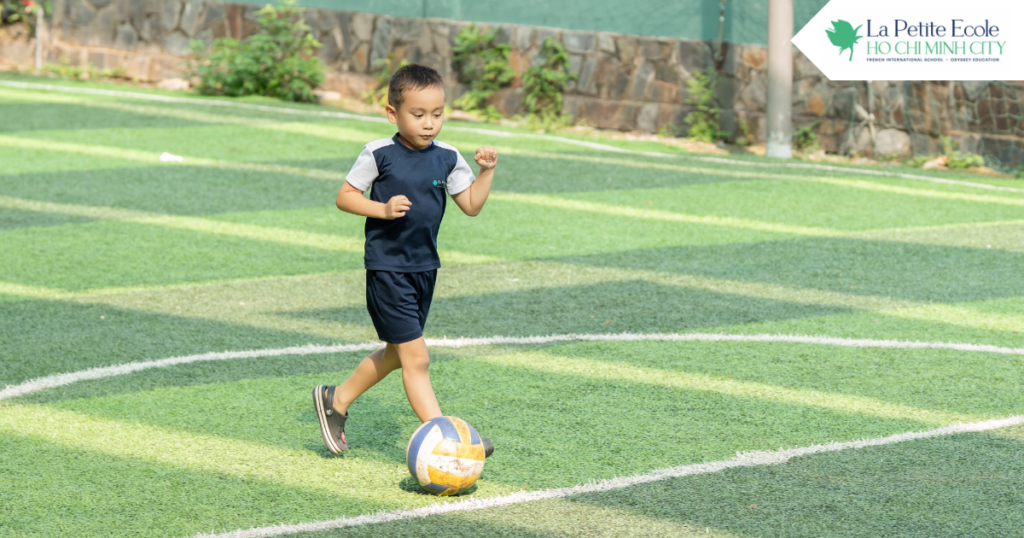
Home and school work best together when it comes to sport. When children are encouraged to move in both environments, they develop a natural relationship with physical activity rather than seeing it as something separate or imposed.
Read more: The Crucial Role Of School In Child Development
At La Petite Ecole Ho Chi Minh City, sport is an essential part of daily school life and reflects the French curriculum, where physical education is a mandatory subject. Children already participate in at least 30 minutes of structured sports activities every day as part of their school routine.
On top of this foundation, extracurricular activities offer additional opportunities for exploration and development. With a wide range of programs available throughout the year, children can further explore their interests in a bilingual and supportive environment that nurtures confidence and curiosity.
Exploring Sports and Activities
- Children choose activities based on their interests and stage of development
- Children can explore a range of sports according to their interests and stage of development, for example football, swimming, and Vovinam (a Vietnamese martial art that also connects children to local culture).
- Other programs encourage creativity, coordination, and teamwork
Social and Cultural Benefits
- Sports provide shared experiences for children from different backgrounds
- Activities foster collaboration, empathy, and cross-cultural connections
- Lessons learned on the football pitch, in the dance studio, or during martial arts carry beyond the school day
In a diverse school community, sport also plays a unique social role. It gives children from different backgrounds a shared experience, a common goal, and a reason to work alongside peers they might not otherwise meet. Lessons learned on the football pitch, in the dance studio, or during martial arts carry beyond the school day, fostering cross-cultural cooperation and lasting friendships.
Common Mistakes Parents Make, And How To Avoid Them
Even the most well-intentioned parents can inadvertently make sport feel like a source of stress rather than joy. Here are the patterns that come up most often:
- Pushing too hard, too early. Starting a child in competitive sport before they are emotionally or physically ready can create anxiety and put them off sport entirely. Pay close attention to how your child feels after a session, not just during it.
- Prioritizing results over enjoyment. Winning is exciting, but at primary school age, enjoyment is the metric that matters most. A child who has fun is a child who keeps coming back. A child who feels pressure to perform may not.
- Choosing the sport for them, not with them. Involving your child in the decision, even at a young age, increases the chance that they will feel ownership over it. Ask questions, offer options, and follow their lead.
- Reacting poorly to losses or mistakes in front of them. Children closely watch how adults respond to sporting setbacks. A calm, encouraging reaction from a parent after a bad game does more for a child’s confidence than any post-match analysis.
- Giving up after one bad session. A first session in any new sport can feel overwhelming. Awkward, even. That is entirely normal. Give it a few tries before deciding it is not a good fit.
Fostering a Lifelong Love of Movement
Introducing kids to sports is not about finding the next great athlete. It is about giving children a way to experience joy, challenge, connection, and growth through their bodies. The best thing a parent can do is create the conditions for that experience: move alongside your child, follow their curiosity, celebrate their effort, and let them lead.
At La Petite Ecole Ho Chi Minh City, we believe that a child who moves with confidence is a child who learns with confidence. Our extracurricular sport and activity programmes are designed to make that first step into sport feel exciting, inclusive, and entirely their own.
Interested in discovering the programmes available for your child? Contact us to learn more or to arrange a visit to our campus in Ho Chi Minh City.
- Phone: 028 3519 1521
- Email: contact@lpehochiminh.com
- Address: 172 – 180 Nguyen Van Huong, An Khanh Ward, Ho Chi Minh City
Frequently Asked Questions
- What Is The Best Age To Introduce Kids to Sports?
There is no single right age. Movement and active play can begin from infancy, while structured sport works best from around age 5 or 6. The most important factor is the child’s interest and readiness, not a fixed number.
- How Do I Know If My Child Is Ready for Team Sports?
Look for signs that your child can follow simple instructions, take turns, and engage with other children without becoming overwhelmed. Most children reach this point between ages 6 and 8, though it varies considerably.
- What If My Child Doesn’t Seem To Like Any Sport?
Not every child gravitates toward traditional sports, and that is completely fine. Some children connect with movement through dance, martial arts, swimming, or outdoor adventure activities. The goal is joyful, regular physical activity, whatever form that takes.
- How Many Sports Should A Child Try At Once?
One or two at a time is plenty, especially for younger children. Too many activities can lead to fatigue and reduce the quality of each experience. Multi-sport exposure works best when it is spread over time, not crammed into one season.