


How to Raise a Bilingual Child: 6 Effective Ways Every Parent Should Know
How to raise a bilingual child? Raising a bilingual child can be more complex than teaching just one language. It not only strengthens a child’s communication and cognitive skills but also offers a solid educational foundation within a global context. So, how can you successfully raise a bilingual child? In short: choose a consistent language model (such as One Parent, One Language), give your child meaningful exposure to each language for at least 25–30% of their waking hours, and start as early as you can, though it is never too late to begin.
Join La Petite Ecole, a bilingual international school in Ho Chi Minh City, as we explore the benefits and methods of bilingual education in this article.
Key takeaways
- There are two main models for raising a bilingual child: One Parent, One Language and One Environment, One Language.
- You can raise a bilingual child even if you are not bilingual yourself.
- Children need a language for roughly 25–30% of their waking hours to become fluent in it.
- Mixing languages and slower early speech are normal, not signs of confusion or delay.
- A strong mother tongue makes learning the second language easier, not harder.
What is Bilingualism?
Bilingualism is the ability to communicate fluently and effectively in two or more languages, reaching a level comparable to that of native speakers. Bilingual individuals are not only proficient in grammar and vocabulary but also possess the ability to understand and use the language appropriately in various situations, while showing respect and a deep understanding of the cultures associated with those languages.
True bilingualism often goes hand in hand with biliteracy, the ability to read and write in both languages, not only speak them. Children may become bilingual simultaneously (learning two languages from birth) or sequentially (adding a second language after the first is partly established). Both paths can lead to full fluency.
Read more: Tips on Raising a Multilingual Child: Effective Ways for Language Success
Benefits of Raising a Bilingual Child
Exposing children to multiple languages from a young age offers tremendous benefits for their holistic development. Here are some notable advantages:
At a glance, these benefits fall into four areas: stronger communication, deeper cultural understanding, sharper cognitive and thinking skills, and broader future career opportunities.
1. Global Communication Skills
Children who know multiple languages can communicate effectively with people from all around the world. This creates opportunities for them to connect and collaborate with friends and partners from diverse countries and cultures.
2. Deep Understanding of Cultural Diversity
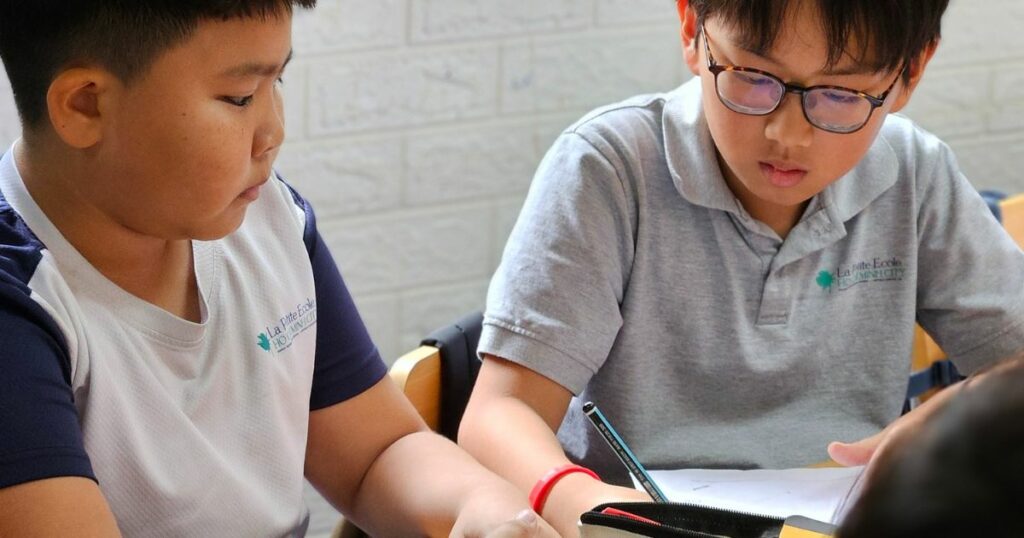
Multilingual children tend to be more aware of cultural differences. Understanding the richness of languages and cultures equips them to thrive in an international learning and working environment in the future.
3. Enhanced Brain Development
Research from University College London suggests that exposing children to bilingual education from an early age helps increase the amount of grey matter in the left hemisphere of the brain. Children who learn a second language early tend to have more grey matter than those who start learning languages later or have not been exposed to foreign languages at all.
4. Flexible Thinking Skills
Bilingual children are generally better at thinking, recognising patterns, and problem-solving. The flexibility in language use helps them quickly and efficiently find solutions in different situations. Exposure to two languages also allows children to discover linguistic rules on their own, which enhances logical, analytical, and reasoning skills.
5. Strong Learning Abilities
Learning multiple languages from a young age makes it easier for children to acquire new languages in the future. The language skills and cultural understanding developed through the first language also help them grasp new knowledge and information more comprehensively.
6. Multidimensional Thinking
Being multilingual allows children to view the world from various perspectives. They can evaluate and understand differences, leading to more nuanced and well-rounded thinking.
7. Broader Career Opportunities
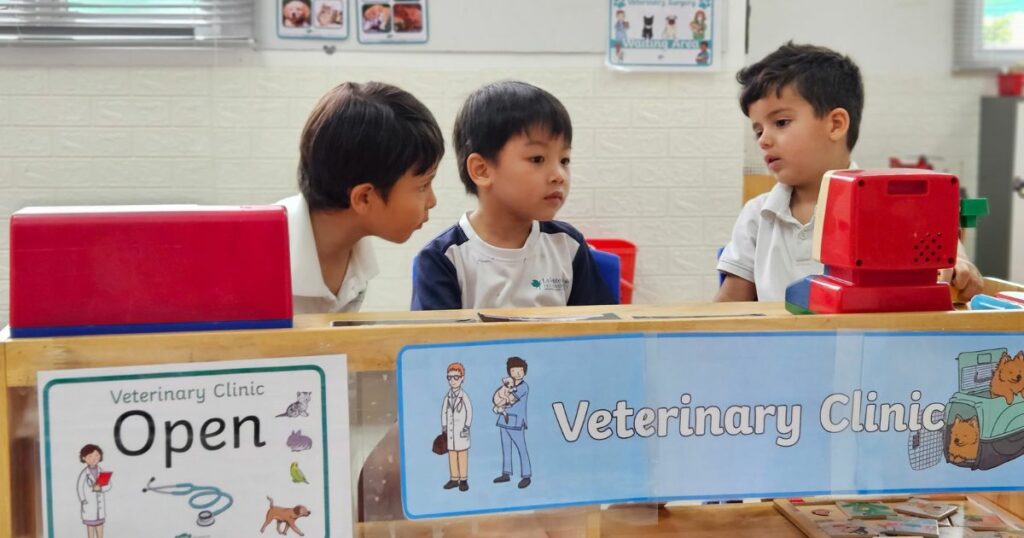
Multilingual children have an advantage in becoming global citizens. Many companies and organizations value candidates who can speak multiple languages and effectively collaborate with international partners and clients.
In summary, encouraging children to learn multiple languages from an early age is a wise decision for parents. Knowing multiple languages not only helps children communicate better but also fosters comprehensive intellectual, emotional, and social skill development.
When to Start Raising a Bilingual Child?
The ideal time to teach a child a second language is when they are young, from six months to six years old. This is when children are most capable of quickly and flexibly absorbing languages. During this period, children are developing fundamental language skills and forming neural connections related to language learning.
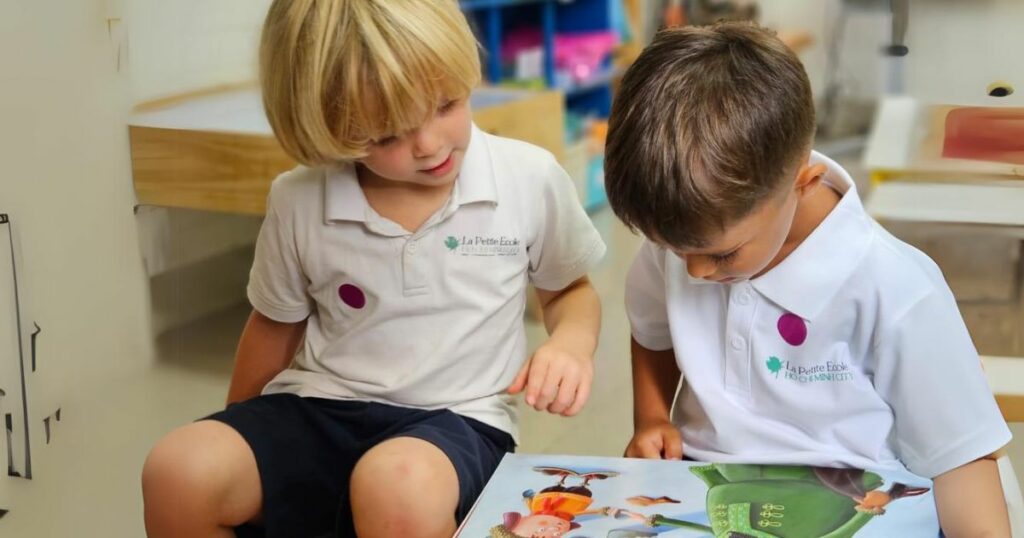
Teaching a second language from an early age allows children to naturally integrate the language into their development process. They will become familiar with the sounds and contexts of different languages, helping them understand that there are multiple ways to express meaning.
Is it ever too late? Early childhood is the easiest window thanks to high neuroplasticity, but it is not the only one. Children well past age six, and even adults, can still become fluent with consistent, meaningful exposure. If your child is already five or six, you have not missed your chance; you simply may need a more structured and consistent routine.
6 Effective Methods to Raise a Bilingual Child
1. One Parent, One Language Approach (OPOL)
An effective method to teach children two languages is for parents to consistently use a specific language when communicating with their child. For instance, the father speaks English while the mother speaks Vietnamese.
This helps the child learn languages naturally through bonding and regular exposure. For this method to be effective, both parents should spend time interacting with the child in their respective languages to help them gradually get used to it. At the same time, they should maintain a balanced use of both languages when spending time with their child.
2. One Environment, One Language (Minority Language at Home)
This is the alternative many families overlook. Instead of splitting languages by parent, you split them by setting: the whole family speaks one language at home, usually the minority language (the one less common in the wider community), while the child uses the majority language at school and out in the world. In Ho Chi Minh City, for instance, a family might speak French or English at home while the child uses Vietnamese everywhere else, or speak Vietnamese at home while the child learns in English at school. This model works well when both parents share the same home language, or when one language needs extra support to keep up with the majority language outside.
Whichever model you choose, the two factors that decide success are the same: consistency and enough exposure, explained in the next section.
3. Create a Bilingual Environment at Home
If your family previously only used one language, try to create a bilingual environment to help optimize your child’s language development.
You can use labels, pictures, and toys with text in both languages to expose your child to the language at all times. Additionally, designate a small corner in your child’s room to display books and toys related to the second language.
When at home, try to communicate with your child in both languages to help them gradually become accustomed to switching languages.
4. Enroll Your Child in a Bilingual School
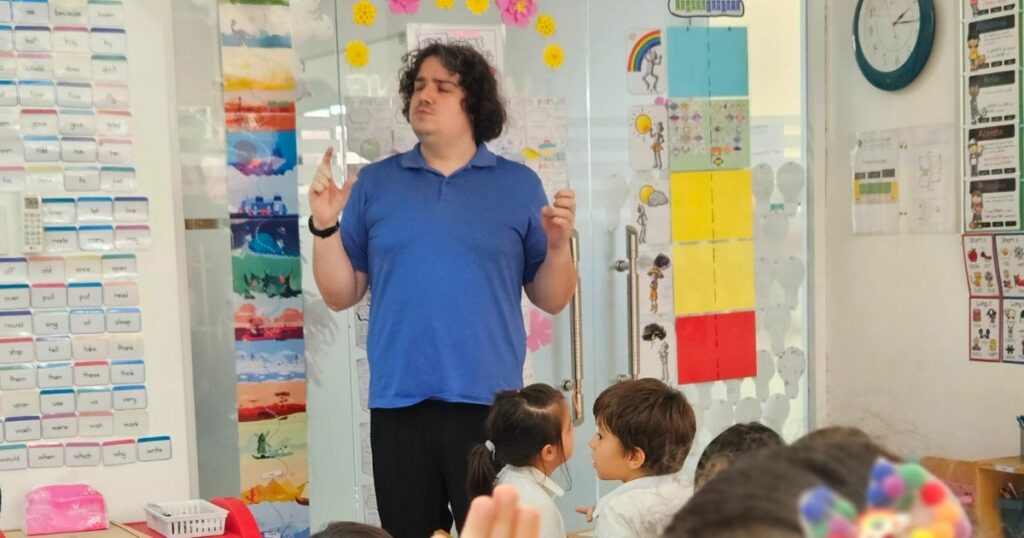
Bilingual schools offer education in two languages, allowing children to become familiar with and proficient in both languages during their studies. Exposure to native-speaking teachers and a professional bilingual learning environment provides a solid foundation for children’s language development from an early age.
5. Sing and Play with Your Child
Young children often learn best through “learning by playing” activities like games and music. Teaching children languages through songs and melodies is one of the most natural approaches. Parents can create an environment filled with music and games, helping children easily memorize vocabulary through songs and poetry. Fun activities like arts, dancing, or cooking also help children develop language skills in a lively way.
6. Encourage Reading Habits in Both Languages
Building a reading habit from an early age is an essential part of raising a bilingual child. Parents should choose storybooks in the language they wish to teach, paired with vivid illustrations, and read with their child daily. During reading, focus on new vocabulary, explain meanings, and repeat them to aid memorization. Place books in easily accessible spots and encourage your child to explore them independently, helping them develop a love for reading early on.
How to Raise a Bilingual Child When You're Not Bilingual
You do not have to speak two languages yourself to raise a bilingual child. Around the world, multilingualism is common and growing, by some estimates it is the norm rather than the exception in many regions. Monolingual families can build rich language exposure with a few deliberate choices:
- Learn alongside your child. Pick up basic phrases together using apps or videos. Shared learning keeps both of you motivated.
- Bring the language in through caregivers. A bilingual babysitter, nanny, or relative can provide natural daily exposure.
- Use media and language apps. Cartoons, songs, audiobooks, and apps in the target language reinforce vocabulary between lessons.
- Read in both languages. Picture books and dual-language stories build vocabulary even if your own pronunciation isn’t perfect.
- Find a community. Playgroups, classes, and playdates with other speakers give your child real reasons to use the language.
- Choose a bilingual school. For families who cannot provide the language at home, a structured immersive school is often the most reliable path to true fluency and literacy.
How Much Exposure Does a Bilingual Child Really Need?
A common question is simply: how much is enough? A widely cited guideline is that a child needs to use a language for at least 25–30% of their waking hours to develop real fluency in it.
In practice, if your child is awake for about 12 hours a day, that means roughly 3 to 4 hours daily of meaningful use of each language, talking, listening, reading, playing, and reasoning in it, not just background noise. The key word is meaningful: purposeful conversation and interaction matter far more than passive screen time.
Common Myths About Raising Bilingual Children
Myth 1: Two languages will confuse my child
Young children are fully capable of separating two language systems. It is normal for them to mix words from both languages in a single sentence early on — this is a natural stage called code-mixing, not a sign of confusion. With consistent exposure, children sort the languages out over time.
Myth 2: Bilingualism causes speech delays
Bilingual children may appear to start a little slower because they are building two vocabularies at once, but their combined vocabulary is on track with their peers. Bilingualism does not cause speech or language disorders.
Myth 3: A strong second language means sacrificing the mother tongue
The opposite is true. A strong foundation in the mother tongue actually makes it easier to learn and master a second language, because language skills and thinking developed in the first language transfer to the second.
Keeping the Mother Tongue Strong
For many families, the worry is not English, it is preserving French or maintaining strong skills in their home language alongside English. As children spend more time in English or French speaking environments, some begin to struggle to express complex ideas in French or their primary language at home, which can affect their connection to family, culture, and identity.
A practical principle helps here: language is a tool for connection, not just a school subject. To keep the mother tongue strong, use it for real, emotionally meaningful conversation at home — storytelling, sharing feelings, even disagreeing and reasoning together. A secure mother tongue and cultural identity give children a stable base from which to add other languages with confidence.
How La Petite Ecole in Ho Chi Minh City Supports Bilingual Education for Children
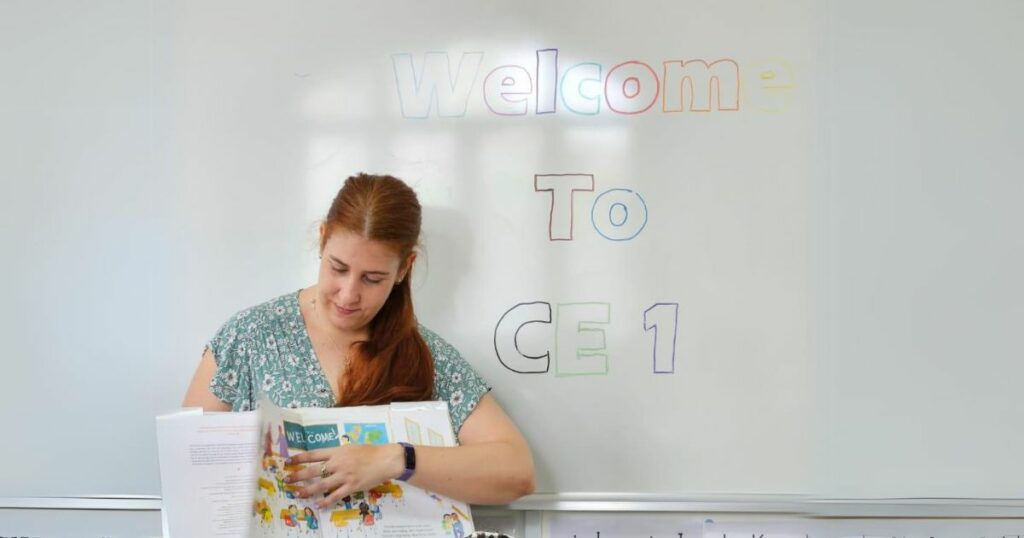
At La Petite Ecole Ho Chi Minh city, an international bilingual school, we strive to provide the “highest quality French education” for every child through a French-English bilingual curriculum. Our programme is built on the strong foundation of French education, combined with modern and innovative teaching methods.
Our bilingual approach at La Petite Ecole focuses on French and English language learning through practical activities, enabling children to engage actively and effectively in their education. With a team of multicultural teachers and a community of students from various countries, children are exposed to diverse cultures.
We hope this information helps parents better understand how to raise a bilingual child. If you need further information or consultation, please contact La Petite Ecole Ho Chi Minh city today.
Want to see inquiry-based, bilingual learning in action? Contact La Petite Ecole Ho Chi Minh City to discover how we help children fall in love with the past.
- Phone: 028 3519 1521
- Email: contact@lpehochiminh.com
- Address: 172 – 180 Nguyen Van Huong, An Khanh Ward, Ho Chi Minh city
Frequently Asked Questions
1. Can I raise a bilingual child if I only speak one language?
Yes. You can build exposure through a bilingual school, a bilingual caregiver, language apps, media, reading, and community groups, and by learning alongside your child.
2. Does raising a child bilingual cause speech delay or confusion?
No. Mixing languages and a slightly slower early start are normal stages. Bilingualism does not cause speech delays or language disorders, and children learn to separate their languages over time.
3. How many hours a day does my child need to hear each language?
As a guideline, a child needs meaningful use of a language for about 25–30% of their waking hours — roughly 3 to 4 hours a day — to become fluent in it.
4. What is the best age to start?
The easiest window is from about six months to six years, when language absorption is fastest. Starting earlier is ideal, but older children and even adults can still become fluent.
5. Is it too late if my child is already 5 or 6?
No. Children past this age can still become bilingual. They may simply need a more consistent and structured routine of exposure and practice.
6. What’s the difference between OPOL and One Environment, One Language?
In OPOL, each parent speaks a different language to the child. In One Environment, One Language, the whole family speaks one language at home while the child uses another language at school and in the community.