

11 Reading Comprehension Tips for Kids: What to Do Before, During, and After Reading
To boost a child’s reading comprehension, focus on active engagement rather than passive reading. Before opening a book, discuss the cover and make predictions. During reading, ask “who, what, when, where, why, and how” questions. Afterward, have your child summarize the story in their own words.
Most parents focus on decoding words rather than building understanding. That is where comprehension gaps begin. At La Petite Ecole Ho Chi Minh City, we believe strong reading habits are built through structured, intentional practice, not just volume.
This article covers proven reading comprehension tips for kids, from vocabulary building to visualization strategies. You will find practical techniques to use at home starting today.
Key Takeaways
- Ask questions before, during, and after reading to keep children actively engaged.
- Pre-teaching unfamiliar vocabulary dramatically improves text understanding.
- Visualization and summarizing are two of the highest-impact comprehension strategies.
- Choosing the right book level reduces frustration and builds genuine confidence.
- Rereading is not a sign of failure. It is a powerful learning tool.
Why Reading Comprehension Matters More Than Reading Speed
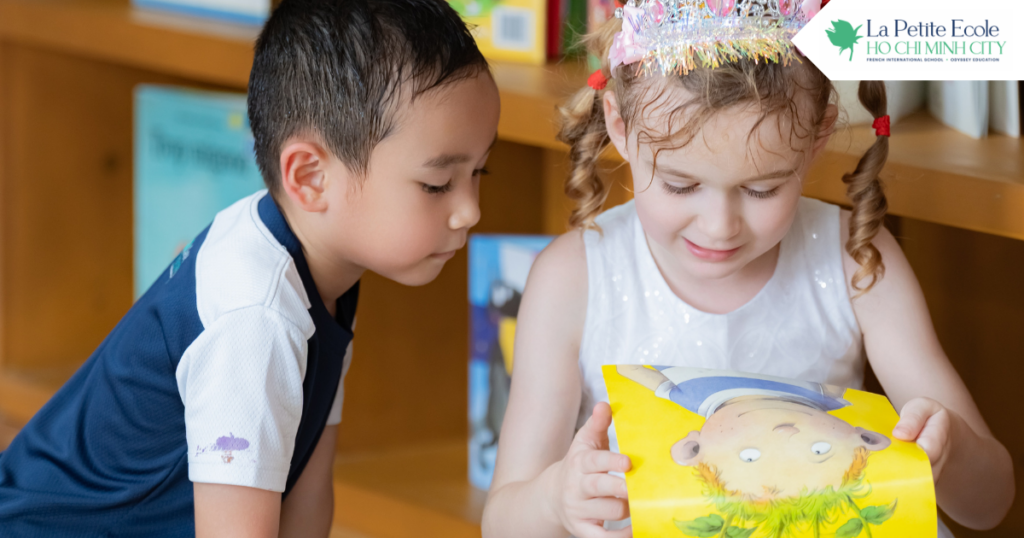
Many children learn to read fluently but still struggle to understand what they read. Decoding and comprehension are two separate skills. A child can read every word correctly and still miss the meaning entirely.
Comprehension is the ultimate goal of reading. It connects new information to prior knowledge. It builds critical thinking, vocabulary, and academic success across all subjects.
The Hidden Gap in Early Reading Education
Schools often measure reading by speed and accuracy. Comprehension depth is harder to assess. This creates children who read well on paper but cannot discuss or apply what they have read.
Reading Comprehension Tips and Strategies for Kids
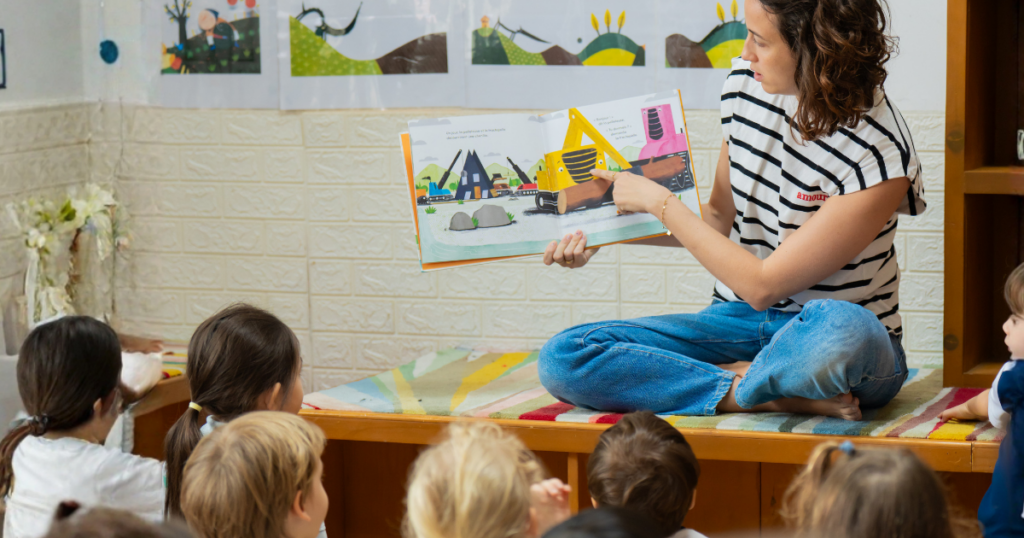
1.Build Background Knowledge Before Reading
Why Prior Knowledge Is a Comprehension Superpower
Children understand new text better when they can connect it to something familiar. Background knowledge acts as a mental framework. New information slots in more easily when there is existing structure to attach it to.
Before reading a book about the ocean, talk about any beach visits or ocean films your child has seen. Spend two to three minutes activating relevant memories. This simple step can significantly increase how much your child retains.
How to Build Background Knowledge at Home
- Visit museums, parks, and cultural sites regularly.
- Watch age-appropriate documentaries together.
- Have conversations about current events in simple terms.
- Read a wide variety of nonfiction alongside fiction.
2. Pre-Teach Vocabulary Before Opening the Book
Unfamiliar Words Interrupt Comprehension
When a child hits an unknown word, their brain pauses. That pause breaks the flow of meaning. By the time they move on, the thread of understanding has been lost.
Preview three to five challenging words before starting a new book. Define them simply and use them in a sentence. Ask your child to repeat the word back in their own example.
Vocabulary Strategies That Work
- Use picture dictionaries for younger readers.
- Create a “word wall” or vocabulary journal at home.
- Play word games like definitions or “use it in a sentence.”
- Connect new words to words your child already knows.
3. Ask Questions Throughout the Story
Before You Start Reading
Look at the cover together. Ask: “What do you think this story is about?” Encourage your child to make a prediction. This activates curiosity and sets a comprehension goal before the first page.
During Reading: Keep the Mind Engaged
Pause every few pages to ask questions. Keep them open-ended and text-focused. Try: “Why do you think the character did that?” or “What do you think will happen next?”
After Reading: Lock in Understanding
Post-reading questions are the most important. Ask your child to retell the story in order. Then ask: “What was the most important part?” and “How did the character change?”
4. Encourage Visualization While Reading
Reading Is a Movie in the Mind
Proficient readers automatically create mental images as they read. Less experienced readers often read words without forming any picture at all. Teaching visualization bridges that gap.
Ask your child to close their eyes after a descriptive passage. Have them describe what they see, hear, or feel. This transforms passive reading into an active mental experience.
Visualization Activities to Try at Home
- Ask your child to draw a scene from the story after reading.
- Have them describe a character’s appearance in detail from memory.
- Use read-alouds with vivid descriptions to model the process.
5. Practice Summarizing After Every Chapter
Summarizing Proves Real Understanding
If a child can summarize a chapter, they understand it. If they cannot, they did not. Summarizing is a powerful self-check tool for comprehension.
Teach your child the “somebody-wanted-but-so-then” framework. Somebody (character) wanted (goal) but (problem) so (action) then (result). This structure works for almost any story.
Keep Summaries Short and Focused
Summaries should be brief. Three to four sentences is enough. Push back gently if your child retells every single detail. The skill is in knowing what matters most.
6. Take Turns Reading Aloud Together
The Power of Shared Reading
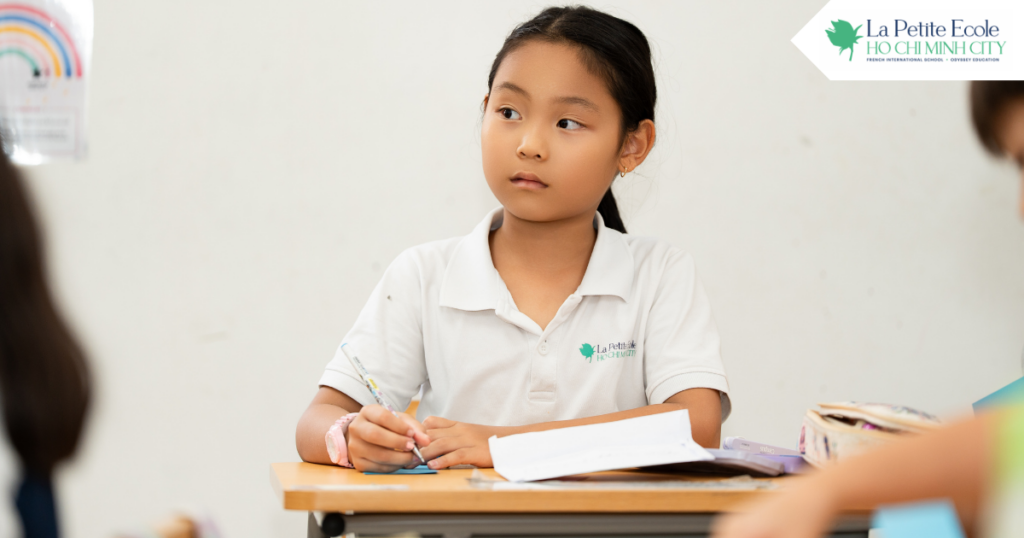
Reading aloud together is one of the most effective comprehension strategies available. It models fluency, expression, and pacing. Children absorb more when they hear text read well.
Take turns reading paragraphs or pages. This keeps both parties engaged. It also gives you a natural opportunity to model how to handle difficult words.
Use Read-Alouds to Discuss Meaning in Real Time
When you read aloud, pause and think out loud. Say: “I wonder why the author used that word here.” This models the internal dialogue strong readers naturally have.
7. Choose the Right Books
The Goldilocks Principle of Book Selection
Books that are too easy build no new skills. Books that are too hard create frustration and avoidance. The right book is just slightly challenging, not overwhelming.
A simple test: have your child read a page aloud. If they stumble on more than five words, the book is too difficult. If they read every word perfectly with zero effort, go harder.
Related blog: 10 Benefits of Reading Books for Kids: Why Books Matter in Early Childhood
Match Books to Your Child’s Interests
A motivated reader is always a better comprehender. Interest dramatically increases attention and retention. Let your child choose topics they genuinely love, even if it means reading comics or graphic novels.
- Choose series books to build momentum and familiarity.
- Include nonfiction to build background knowledge.
- Rotate genres to expose children to different text structures.
8. Normalize Rereading
Rereading Is a Sign of Strength, Not Weakness
Many children feel embarrassed to reread. They associate it with not being smart. Reframe it immediately. All strong readers reread difficult passages.
Tell your child: “Even adults reread sentences that are confusing.” Normalize it as a strategy, not a shortcoming. Professional readers do it constantly.
When to Encourage a Second Read
- After a confusing passage or chapter.
- Before an important discussion or question session.
- To notice details missed the first time through.
- To enjoy a favorite story again with deeper understanding.
Additional Strategies Worth Using To Improve Reading Comprehension

1. Connect the Text to Real Life
After reading, ask: “Has anything like this ever happened to you?” Text-to-self connections make abstract stories personally meaningful. They also improve long-term retention.
2. Use Graphic Organizers
Simple visual tools help children organize story information. A basic story map with boxes for setting, characters, problem, and solution is highly effective. Even drawing it by hand works well.
3. Read a Wide Range of Text Types
Fiction builds empathy and narrative understanding. Nonfiction builds factual knowledge and informational reading skills. Both are essential. Alternate between them throughout the week.
The La Petite Ecole Approach to Reading Development
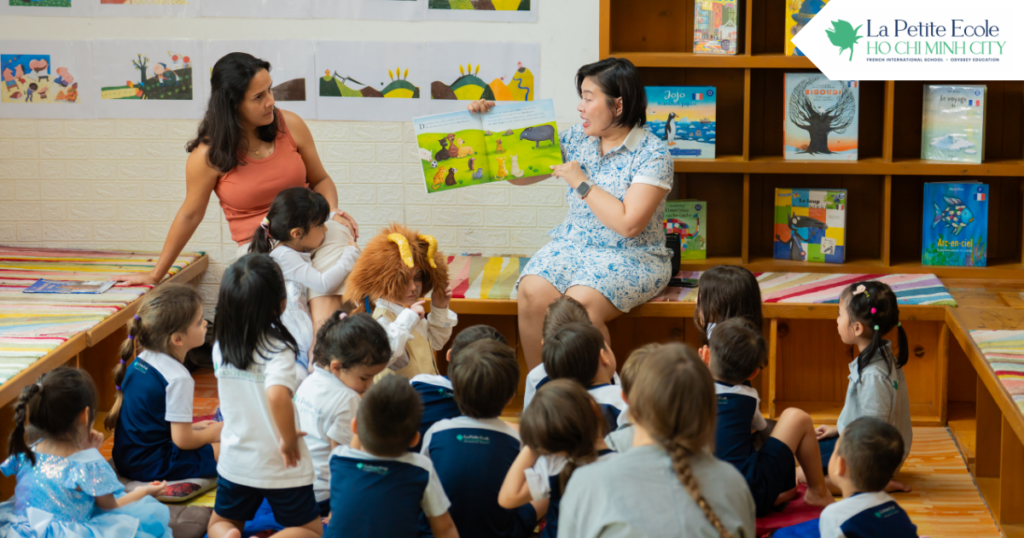
At La Petite Ecole Ho Chi Minh City, reading comprehension is part of everyday learning. Children are encouraged not only to read words, but also to understand, reflect, and connect ideas.
Reading Across Languages
Our multilingual programmes introduce children to meaningful texts in:
- French
- English
- Vietnamese
This early exposure to multiple languages helps children:
- Build vocabulary naturally
- Strengthen comprehension skills
- Process meaning more deeply across different languages
More Than Finishing a Book
At La Petite Ecole Ho Chi Minh City, the goal is not simply for children to finish reading a page. We encourage them to:
- Understand what they read
- Ask questions
- Express ideas and opinions
- Connect stories and information to the world around them
The result is a reader who does not just finish a page. They understand it, question it, and connect it to the world around them.
A Literacy Environment That Encourages Thinking
Reading development is woven into:
- Classroom discussions
- Daily activities
- Group projects
- Subject learning across the curriculum
This helps children become engaged and thoughtful learners from an early age.
If you would like to learn more about how La Petite Ecole Ho Chi Minh City supports literacy development from the early years, our admissions team would be happy to help.
- Phone: 028 3519 1521
- Email: contact@lpehochiminh.com
- Address: 172 – 180 Nguyen Van Huong, An Khanh Ward, Ho Chi Minh city
Start Small, Stay Consistent, Watch Them Grow
Strong reading comprehension does not develop by accident. It requires consistent, intentional practice using proven strategies. The tips above are practical, research-backed, and easy to implement at home starting today.
Focus on one or two strategies at a time. Build the habit before adding more. Small, consistent actions produce the most lasting results.
FAQs About Reading Comprehension Tips
1. What are the most effective reading comprehension tips for kids?
The most effective tips include asking questions before, during, and after reading, pre-teaching vocabulary, encouraging visualization, and practicing summarizing. Consistency matters more than any single strategy. Apply them regularly across different book types and genres.
2. At what age should parents start working on reading comprehension?
Comprehension development begins before formal reading. Even with picture books, you can ask predictive and reflective questions. Start as early as age three or four with simple “what do you see?” and “what happens next?” prompts.
3. How long should a reading comprehension session be?
For children aged five to eight, fifteen to twenty minutes per session is ideal. For older children, thirty minutes is effective. Quality of engagement matters far more than duration. A focused fifteen-minute session beats a distracted hour.
4. Why does my child read well but not understand what they read?
This is called a comprehension deficit, and it is more common than most parents realize. The child has mastered decoding but not meaning-making. Focus on questioning strategies, summarizing, and vocabulary work. Reduce pressure around reading speed.
5. How does bilingual education affect reading comprehension?
Research consistently shows that bilingual children develop stronger metalinguistic awareness, which supports comprehension in both languages. Exposure to multiple language structures teaches children to think more flexibly about text. This is one of the core benefits of bilingual programs like those offered at La Petite Ecole HCMC.
6. Should I correct my child every time they mispronounce a word?
Frequent corrections interrupt comprehension and reduce reading enjoyment. Note mispronounced words mentally and address them after the session. During reading, only correct words whose mispronunciation would change the meaning of the sentence.