


10 Benefits of Reading Books for Kids: Why Books Matter in Early Childhood
Reading is one of the most enriching activities a child can experience during their early years. Whether it’s a cozy bedtime story or a colorful picture book shared in class, books open doors to new ideas, spark imagination, and support essential developmental milestones. In fact, the benefits of reading books for kids go far beyond learning letters and sounds, they lay the foundation for language, emotional intelligence, focus, creativity, and lifelong learning.
In this article, we’ll explore why reading is important for children, especially those aged 1 to 11 years old, and how it supports their overall development.
Key Takeaways
- Reading books for kids supports language, cognitive, emotional, and social development, and helps build a lifelong love of learning.
- The benefits begin in infancy. Even before children can talk, hearing stories and voices helps build the brain connections behind language.
- Shared reading matters as much as the words. Talking about the pictures, asking questions, and re-reading favorites all deepen the benefits.
- A few minutes of enjoyable reading each day often does more than a long, scheduled session. Consistency and joy matter most.
- Choosing books that match your child’s age and interests keeps reading feeling like a pleasure rather than a task.
10 Benefits of Reading for Children
1. Enhancing Language and Communication Skills
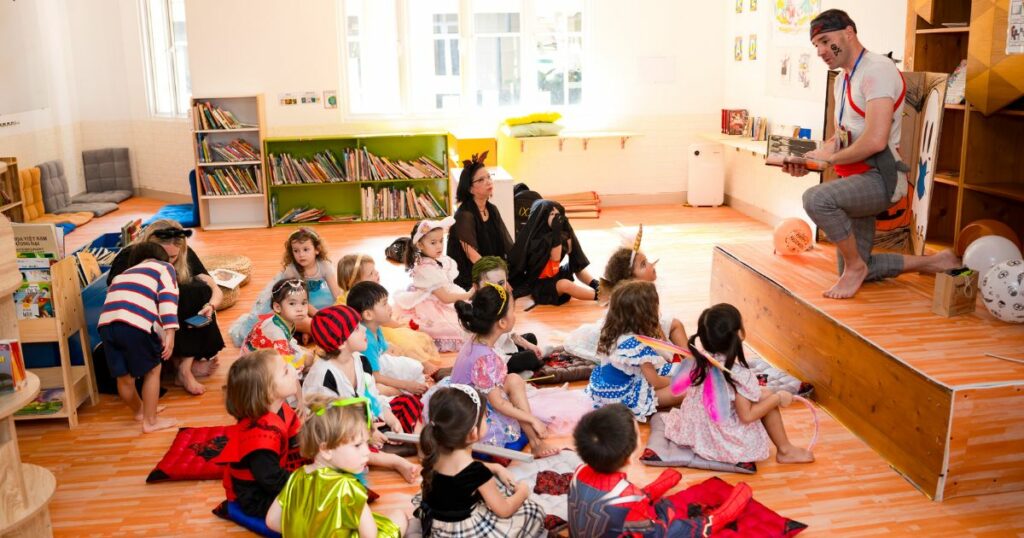
From picture books to playful rhymes, reading introduces children to a wide variety of words, expressions, and sentence structures. This natural exposure helps them expand their vocabulary, refine their pronunciation, and begin to understand how language works. Over time, they become more confident in expressing themselves, both in speaking and writing.
For children growing up in a bilingual learning environment like kids at La Petite Ecole Ho Chi Minh, regular reading in both French and English further strengthens their multilingual communication abilities, helping them develop a rich, nuanced understanding of each language.
2. Stimulating Cognitive Development
Books invite children to think beyond what they see and hear in their daily lives. When listening to a story or exploring pages on their own, young minds are actively engaged, making predictions, remembering details, and drawing connections. These cognitive processes highlight the importance of reading to children, as they help sharpen essential skills like attention, logic, and memory.
Read more: Top Memory Games for Children to Boost Their Skills
Whether it’s solving a gentle puzzle in a story or following the flow of a narrative, reading naturally fosters problem-solving skills that children carry with them into every area of learning.
3. Boosting Concentration and Self-Discipline
In a world full of distractions, the simple act of listening to a story can help children learn how to pause, focus, and enjoy the moment. Books provide an opportunity to slow down, listen carefully, and engage their minds with one idea at a time.
For anyone wondering why children should read, this ability to build focus and presence is a powerful reason. It helps nurture patience and self-discipline, qualities that support both academic success and everyday resilience. At La Petite Ecole Ho Chi Minh, reading is thoughtfully woven into our daily rhythm, creating a calm and focused space where children can truly grow.
4. Fostering Imagination and Creativity
Children are natural storytellers. Reading nurtures that creative spark by opening the door to imaginary worlds, characters, and adventures. As children explore new ideas and places through books, they begin to create their own stories, drawings, and games inspired by what they’ve read.
Read more: Right Brain Education to Enhance the Creative Side of Children
Whether it’s pretending to be a brave explorer or inventing new characters, imaginative play is one of the many beautiful ways reading supports a child’s creative development. This kind of creative thinking forms the foundation for innovation, expression, and original thought in later years.
5. Developing Empathy and Emotional Awareness
Stories help children explore feelings, both their own and others’. By stepping into a character’s world, they begin to understand different perspectives and emotional experiences. This kind of emotional engagement nurtures empathy, helping children build healthy relationships with those around them.
6. Improving Academic Performance Across Subjects
Children who engage with books regularly are more likely to develop strong foundational skills in literacy, which serve as the building blocks for future learning. Reading helps children absorb new concepts in subjects like math, science, history, and languages, all through the lens of storytelling.
At La Petite Ecole Ho Chi Minh, we’ve seen how reading supports both language development and critical thinking, two essential pillars of academic success. When children read often and with joy, they build the confidence to explore, question, and engage with their learning more deeply.
7. Expanding Knowledge and Understanding of the World
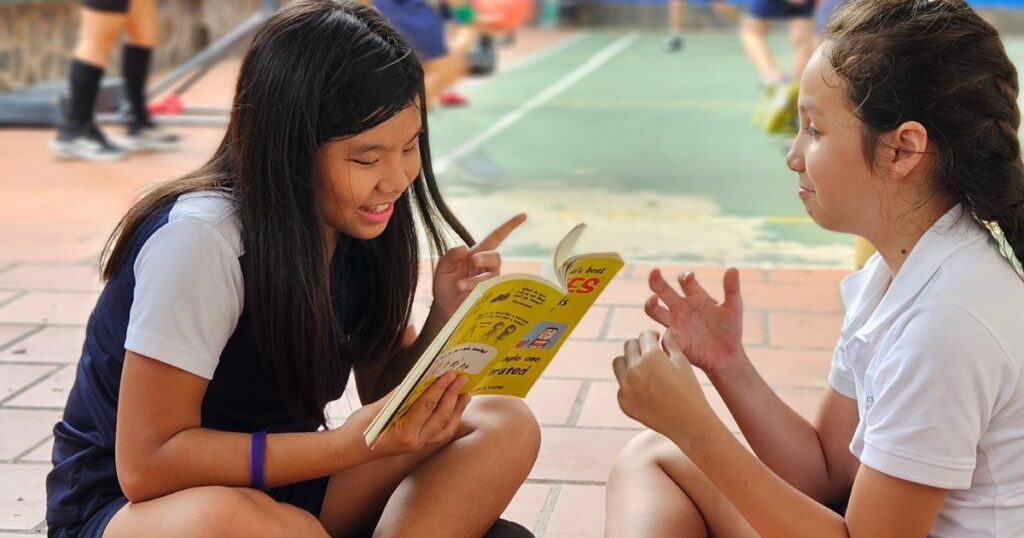
Among the many benefits of reading books for kids is the chance to explore cultures, traditions, and ideas that reach far beyond their everyday experiences. Whether it’s discovering a new country through a picture book or learning about historical events through a simple story, reading helps children make sense of the world around them and nurtures a broader perspective.
8. Strengthening Parent-Child Bonding
The emotional connection fostered through shared reading is one of the most heartwarming benefits of reading for children. Reading together, whether during bedtime or a quiet afternoon, creates meaningful moments that deepen emotional bonds and encourage open communication.
These shared experiences show children that reading isn’t just educational; it’s also a comforting and joyful time filled with love and attention. At home and at school, this sense of emotional security contributes to their overall development and well-being.
9. Encouraging a Lifelong Love for Reading
When reading is part of daily life from an early age, it becomes more than a habit, it becomes a joy. Children who experience books as a source of delight are more likely to carry that passion into adolescence and adulthood, supporting a lifelong love of learning.
Our goal at La Petite Ecole Ho Chi Minh is not only to build strong readers but also to nurture children who are curious, engaged, and excited to explore new ideas, both inside and outside the classroom.
10. Supporting Mental Health and Well-being
Reading can be a calming, centering experience for young children. Whether it’s getting lost in a gentle story or finding comfort in familiar characters, books often serve as a quiet refuge from busy routines or big emotions.
This quiet time with books promotes emotional regulation, reduces stress, and offers children a safe space to reflect and recharge. It’s a small but powerful way to support their mental health and overall happiness.
Practical Tips for Parents: Nurturing a Love for Reading at Home
While reading is a central part of learning at school, it’s equally important for children to explore books beyond the classroom. When parents create positive reading experiences at home, they help reinforce what’s learned at school and deepen the joy of storytelling. Here are some practical, heart-centered tips to make reading a natural, cherished part of your child’s daily life.
Creating a Reading-Friendly Environment
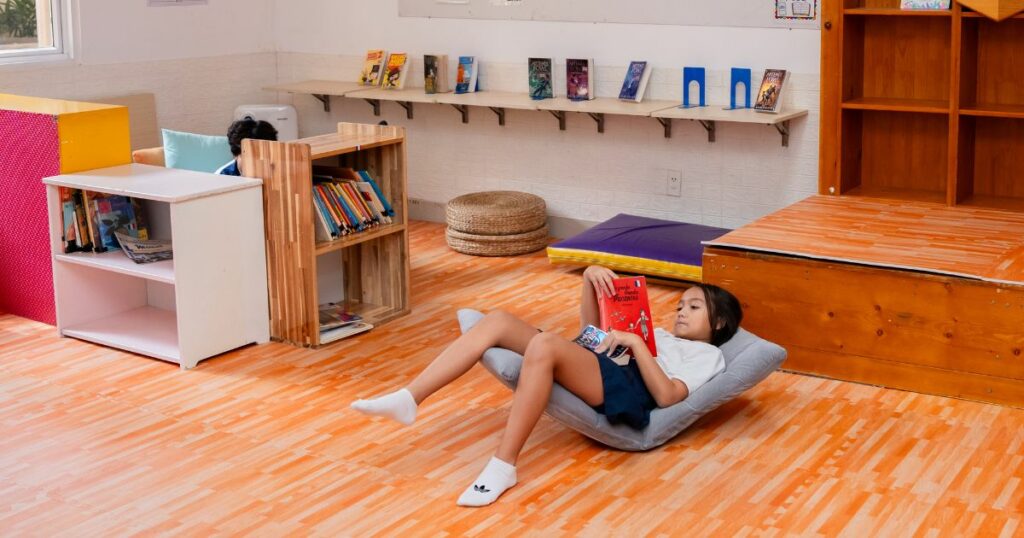
Just like a well-designed reading corner in classrooms, having a cozy, inviting space for books at home can spark a child’s interest in reading. You don’t need a large area, just a quiet nook with soft cushions, good lighting, and a few of your child’s favorite books within reach.
Placing books where children can see and choose them freely, whether on low shelves or in a basket, encourages spontaneous exploration. This simple practice of making books readily available mirrors the experience of browsing in a school library for young kids, empowering them to make their own choices and connect with reading on their own terms.
Selecting Appropriate Reading Materials
Every child’s reading journey is unique, and choosing the right books makes all the difference. For infants and toddlers, board books with textures, rhythms, and colorful illustrations are perfect for capturing early curiosity. Books for preschoolers should be engaging, rich in vocabulary, and often include repetition and rhyme to build confidence.
Understanding why reading is important for children starts with selecting stories that not only entertain but also support their development, emotionally, cognitively, and socially. As your child grows, explore a mix of educational books for children, from stories that teach emotional understanding to books that introduce numbers, shapes, or the natural world. Choose titles that reflect your child’s interests while gently expanding their horizons.
Encouraging Consistent Reading Habits
The key to developing a lifelong love of reading is consistency. Start by making reading a part of your daily routine, perhaps during breakfast, before naptime, or as a soothing end-of-day ritual. When reading becomes a daily habit, it’s no longer a task, it’s a pleasure.
You can also get creative with reading activities for kindergartens, such as acting out a story, drawing favorite characters, or visiting a local book fair. These interactive moments help keep reading fun and engaging.
Most importantly, model reading yourself. When children see the adults around them enjoying books, they naturally want to join in. It’s one of the simplest and most powerful ways of encouraging kids to read.
Common Reading Challenges and How to Gently Navigate Them
Even with all these benefits, reading does not always go smoothly, and that is completely normal. Here are a few common challenges and gentle ways to work through them.
Short attention spans: Young children may find it hard to sit through a whole book. Choose shorter stories, follow your child’s lead, and feel free to stop before the end. Reading a few pages, talking about the pictures, or acting out part of a story still counts. You can also gently build focus over time.
Reluctance to read alone: Moving from listening to reading independently can feel daunting. Keep reading together, take turns with pages, and let your child read the words they recognize. Shared reading builds the confidence for that first step to reading on their own.
Low interest in books: Not every child connects with the same stories. Let your child choose books they genuinely enjoy, and do not worry if they want the same one over and over. Repetition is a natural part of learning, helping children absorb words, patterns, and story structure.
Inspiring a Lifelong Love of Reading with La Petite Ecole Ho Chi Minh
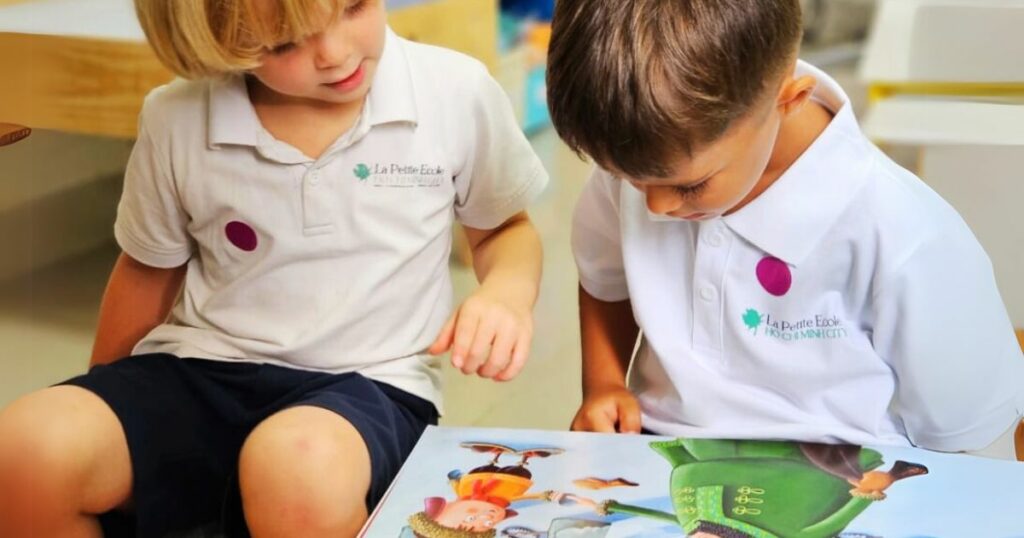
In our classrooms at La Petite Ecole Ho Chi Minh, one of our favorite moments is watching a child ask for the same picture book a fifth time, then start “reading” it aloud from memory to a friend. That joyful repetition is early literacy taking root, right in front of us.
The benefits of reading books for kids reach far beyond literacy, they support language development, emotional growth, creativity, and academic success. By encouraging regular reading habits from an early age, you’re giving your child the tools to think critically, express themselves clearly, and connect deeply with the world around them.
At La Petite Ecole Ho Chi Minh International School, we recognize the powerful role reading plays in early childhood development. Our bilingual learning environment and child-centered approach are designed to nurture curiosity and cultivate a genuine love for learning. From engaging classroom libraries to storytelling sessions that spark imagination, we prioritize reading activities for young children as a joyful part of daily life.
We hope this article has helped you discover why reading is so valuable during the early years. Interested in how we foster reading skills, communication, and creativity at La Petite Ecole Ho Chi Minh? Contact us today to learn more about our educational philosophy and how we support each child’s unique journey through the magic of books.
- Phone: 028 3519 1521
- Email: contact@lpehochiminh.com
- Address: 172 – 180 Nguyen Van Huong, An Khanh Ward, Ho Chi Minh City
Frequently Asked Questions About the Benefits of Reading for Kids
1. What are the main benefits of reading books for kids?
Reading supports language and vocabulary, cognitive skills like focus and memory, imagination, empathy, and academic readiness. For many children, it also builds a calm, joyful habit and a lifelong love of learning. The benefits begin in infancy and grow over the years.
2. At what age should I start reading to my child?
You can start reading to your child from infancy. Babies may not follow every word, but they benefit from hearing your voice, seeing pictures, and getting used to the rhythm of language. Reading together early also builds a warm bond.
3. How long should young children read each day?
There is no fixed rule. For babies, toddlers, and preschoolers, a few minutes of enjoyable reading a day is plenty. The aim is a positive daily habit rather than a set amount of time, so it is fine to follow your child’s interest and stop while they are still enjoying it.
4. Is it okay if my child wants the same book over and over?
Yes. Re-reading the same book is a natural and valuable part of learning. Repetition helps children become familiar with words, sentence patterns, and story structure, and knowing what comes next often builds their confidence.
5. What are good books for toddlers?
Toddlers usually enjoy simple, colorful books with rhythm and repetition, such as picture books, rhyming books, and lift-the-flap or textured board books. Stories about everyday routines, animals, or feelings tend to hold their attention well.
6. What can I do if my child has a short attention span while reading?
Keep sessions short and relaxed. Choose shorter books, let your child point to pictures or move around, and talk about the story as you go. You do not need to finish a book in one sitting; small, positive reading moments still support learning.
7. How can I make reading more enjoyable at home?
Create a cozy reading nook, keep books within easy reach, use playful voices, and let your child choose the stories. Reading yourself, so children see adults enjoying books, is one of the simplest ways to spark their interest.
8. How does La Petite Ecole Ho Chi Minh nurture a love of reading?
At La Petite Ecole Ho Chi Minh, reading is woven into daily life through bilingual classroom libraries, storytelling sessions, and cozy reading corners, in both French and English. This helps children experience books as a joyful, everyday part of learning.