


Right Brain Education: Enhance the Creative Side for Children in 8 Effective Ways
Developing the right side brain in children not only enhances imagination but also boosts creativity and artistic appreciation. The right brain plays a crucial role in processing visual information, intuition, and spatial thinking, supporting a child’s overall development.
In this article, La Petite Ecole Ho Chi Minh City explains what right brain education is, what current research says about the “creative side” of the brain, and practical, age-appropriate activities that support imagination alongside language and logic.
Key Takeaways
- Right brain education is an early childhood learning approach built around images, music, imagination, and intuition, popularized by Makoto Shichida in Japan.
- Creativity is not located in one side of the brain: it relies on networks across both hemispheres working together.
- Brain imaging research has not found people to be “right-brained” or “left-brained” overall.
- Many right brain activities, such as art, music, storytelling, puzzles, and pretend play, are still valuable because they build several skills at once.
- The most helpful goal for young children is whole-brain development: short, playful activities that mix imagination with language, logic, and movement.
What Is Right Brain Education?
Right brain education is an early childhood learning approach that focuses on activities linked to the right hemisphere of the brain, such as processing images, music, imagination, and intuition. It was popularized by Japanese educator Makoto Shichida and draws on ideas from American physical therapist Glenn Doman. Programs such as Shichida and Heguru apply it mainly with children from birth to around age 6, a period many of its supporters describe as a “golden window” for learning.
Common Right Brain Education Techniques
- High-speed flashcards: Cards showing pictures, words, or dot quantities are flashed quickly, with the aim of building visual memory.
- Linking memory stories: Children remember a list of items by linking them into a vivid, imaginative story.
- Visualization and imagination games: Children picture scenes, colors, or objects in their mind and describe them.
- Memory and matching games: Activities such as recalling a mandala pattern or matching picture cards.
- Music and relaxation: Calm music and breathing are used to help children settle before an activity.
Where the Idea Comes From
The idea of a “right brain” and a “left brain” grew from Roger Sperry’s split-brain research in the 1960s, which earned him a Nobel Prize in 1981. His work showed that the two hemispheres specialize in some tasks. Over time, popular culture stretched this into the belief that each person, and each skill, belongs to one side of the brain.
Which Side of the Brain Is Creative? What Research Says
Short answer: both. The right hemisphere plays a larger role in some skills linked to creativity, such as visual-spatial thinking and seeing the big picture. But creative thinking and imagination rely on networks spread across both hemispheres working together, including areas that generate ideas and areas that help us focus and choose between them.
- A University of Utah study of more than 1,000 brain scans found no evidence that people use one hemisphere more than the other overall, so the labels “right-brained” and “left-brained” do not describe real brain types (Nielsen et al., 2013).
- A 2018 study in the Proceedings of the National Academy of Sciences linked creative ability to how well several brain networks communicate with each other, rather than to one side of the brain (Beaty et al., 2018).
Some functions do lean toward one side for most people. This table shows common tendencies, while remembering that both hemispheres are always working together:
| Tends to rely more on the left hemisphere | Tends to rely more on the right hemisphere | Draws on both hemispheres |
|---|---|---|
| Producing speech and grammar (for most people) | Spatial awareness and mental rotation | Creativity and imagination |
| Recognizing written words | Recognizing faces | Memory |
| Step-by-step sequencing | The emotional tone of voice | Problem-solving |
| Exact calculation | Seeing the overall picture | Music and art |
What this means for parents: the activities used in right brain education, such as drawing, music, storytelling, and pretend play, are worthwhile because they are rich, playful experiences that support cognitive development as a whole. They work best alongside language, logic, and movement, which is why many educators describe the goal as whole-brain development.
What Does The Right Brain Specialize In?
The right hemisphere tends to play a larger role in processing images, spatial awareness, and the emotional side of communication, and it works closely with the left hemisphere on creative thinking, imagination, and artistic appreciation, such as music and painting.
Activities associated with right brain education, such as art, music, and visual games, often help children build color sensitivity, intuition, and a holistic approach to problem-solving.
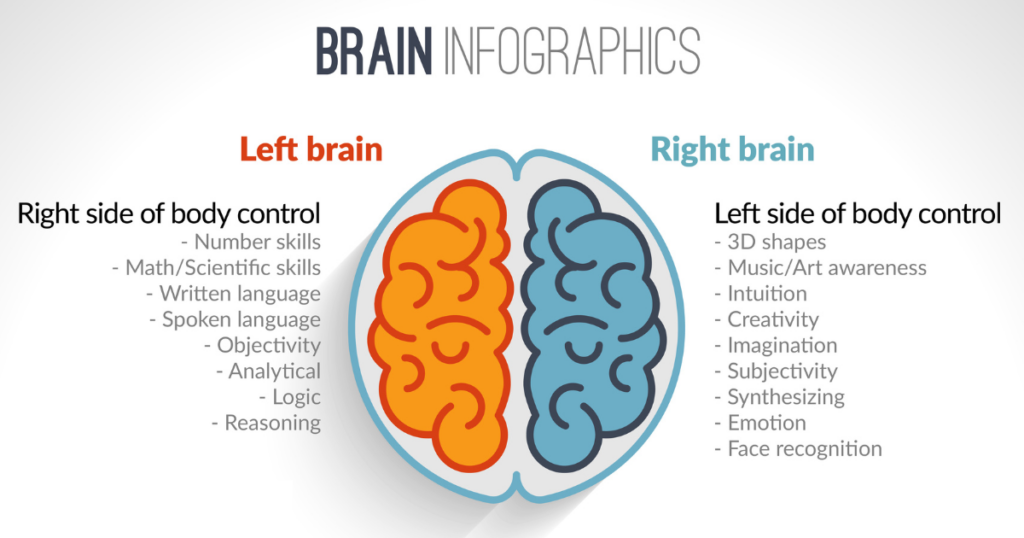
Children with well-developed right brains often exhibit strong color sensitivity, intuition, and a holistic approach to problem-solving.
Right brain education offers several remarkable benefits:
- Enhances creative thinking: The right brain supports unique thinking, fosters a strong imagination, and allows children to approach problems from multiple perspectives.
- Improves memory and intuition: Children can quickly remember images and process information visually, boosting their learning performance.
- Enhances artistic appreciation: The ability to recognize colors, sounds, and shapes helps children express their talents in music, art, and other creative activities.
Understanding what the right brain is and its role will help parents choose the right brain education methods that promote both intellectual and emotional development for their children.
8 Ways to Stimulate and Develop Right Brain Education for Children
Right brain education not only enhances creative thinking but also helps children unlock their full potential in areas such as art, music, and intuition. Here are 8 effective ways to stimulate and develop the right brain in children:
1. Stimulate Children’s Imagination
Imagination is one of the key traits of the right brain. To help children develop their imagination, encourage creative activities such as drawing, sculpting with clay, or building with Lego. These activities not only free their creativity but also help develop spatial awareness and exploration of the world around them.
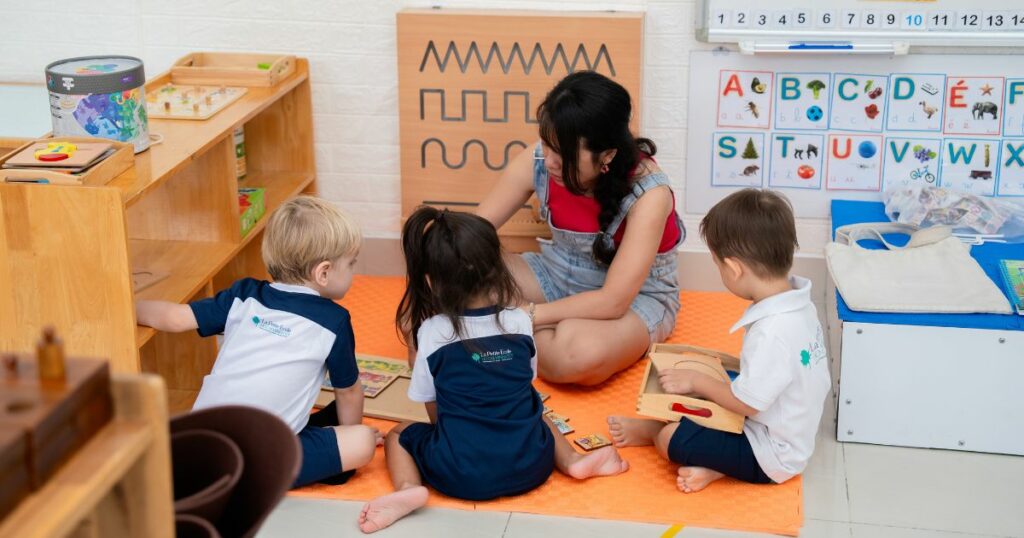
You can create open-ended prompts like “Imagine if you were a superhero” or “What would you draw if you were on a distant planet?”. These questions not only stimulate imagination but also provide opportunities for critical thinking practice.
For more hands-on ideas, explore our list of creative activities for kids.
2. Encourage Children to Ask Questions and Discuss
Children are naturally curious and love exploring the world through questions. To foster right brain education, encourage children to ask questions and engage in discussions. This helps them develop critical thinking and enhances their imagination.
When children ask about the world around them, always provide detailed answers and encourage them to continue searching for answers. You can also participate in discussions with them to help them dive deeper into topics they are curious about.
3. Regularly Read Books and Stories with them
Reading books not only helps children develop their language skills but also stimulates their imagination and creative thinking abilities. Choose books with rich illustrations and engaging stories that spark children’s curiosity. Fairy tales, science books, and animal-themed books are great choices.
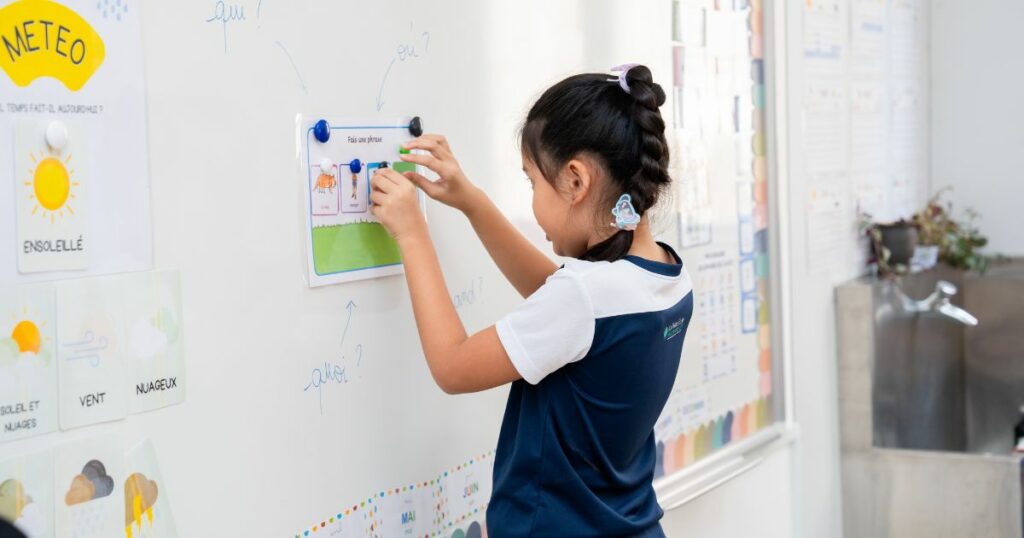 Additionally, you can read books with your child and discuss the content to deepen their understanding and encourage creative thinking by imagining different scenarios from the story.
4. Create an Environment that Encourages Creative Freedom
The environment plays a crucial role in right brain education for children. An open, inspiring space allows children to feel free to be creative. Ensure that children have enough space to play, draw, and practice their creative skills without interruptions.
You can also create a dedicated creative corner for children, where they can find art supplies, creative toys like puzzles and building blocks, or craft materials to explore their creativity.
5. Introducing Brain-Boosting Games for Right Brain Education
Brain games are an excellent way to develop children’s thinking skills. These games not only entertain but also stimulate the development of the right brain. Puzzles, jigsaw puzzles, building block games, and logic games are all fantastic choices to boost children’s intelligence.
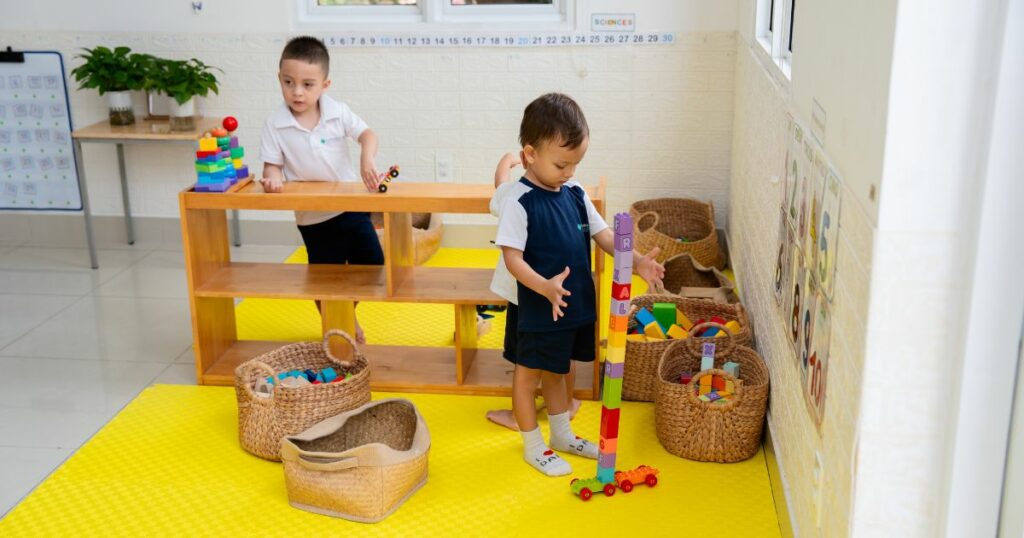
Brain games are an excellent way to develop children’s thinking skills. These games not only entertain but also stimulate the development of the right brain. Puzzles, jigsaw puzzles, building block games, and logic games are all fantastic choices to boost children’s intelligence.
Especially games that require hand-eye coordination, like chess or flashcards, help children enhance their planning skills, analyze situations, and develop imagination. These activities also improve focus, memory, and foster creativity by encouraging children to come up with new solutions to problems.
Picture-based memory games for children, such as matching pairs or “What’s missing?”, are a simple way to practice visual memory at home.
Read more: What Is Play-based Learning In Child
6. Enhance Physical Activities for Right Brain Development
Physical activities not only help children develop their bodies but also support the wider goals of right brain education. Exercises like children’s yoga, gymnastics, dancing, and outdoor play help improve hand-eye coordination, body awareness, and spatial thinking.
Regular participation in physical activities promotes important skills such as flexibility, quick reflexes, and the ability to creatively solve problems. You can create opportunities for your child to engage in sports classes, dance, or outdoor games to foster these developments.
7. Introducing Mind Mapping for Right Brain Education
Mind mapping is a visual technique used to organize information in a structured and easily digestible way. It involves creating a central idea or topic and branching out into related subtopics, much like a tree with branches.
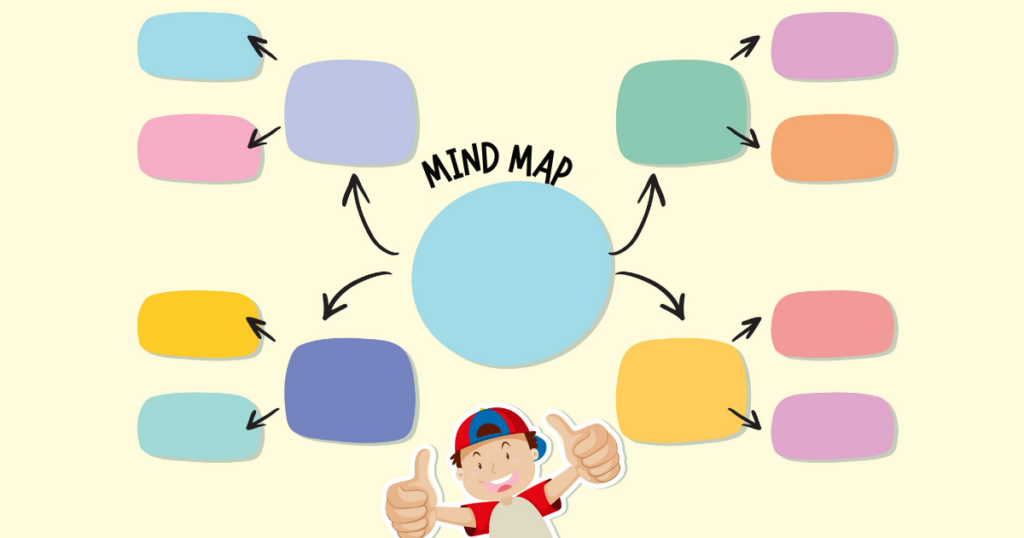
This method helps children break down complex information into smaller, manageable chunks while seeing how these pieces connect. By combining words, colors, and images, mind maps engage both the logical and creative sides of the brain, enhancing memory retention and understanding. Learning to draw mind maps encourages children to think critically, identify patterns, and approach problem-solving with a more organized and innovative mindset.
You can start by guiding children to create mind maps for simple topics like “My Day” or “Animals I Love.” Over time, they will become familiar with using mind maps to process more complex information, enhancing their right brain development.
8. Meditation and Relaxation for Right Brain Education
Meditation and relaxation techniques are powerful tools for fostering right brain education. Activities such as guided meditation, deep breathing exercises, and mindfulness practices encourage children to tap into their creativity and intuition. These practices help them focus and create a mental environment conducive to imaginative thinking and holistic problem-solving.
Incorporating meditation into a child’s routine not only enhances their emotional well-being but also strengthens their ability to visualize, focus, and process information more effectively. Simple activities like storytelling meditation or listening to calming music can make the practice enjoyable and beneficial for right brain development.
15 Right Brain Activities for Kids (and the Left-Brain Skills They Build Too)
The best right brain activities are also whole-brain activities. This table shows what each one offers on both “sides”, so you can choose ideas that build imagination and logic together:
| Activity | Best from | Right-brain side | Left-brain side |
|---|---|---|---|
| Picture-book storytelling | Age 1 | Imagination, visual memory | Vocabulary, sequencing |
| Music and movement | Age 1 | Rhythm, emotion | Patterns, memory |
| Free drawing and painting | Age 2 | Color, shape, self-expression | Fine motor control, planning |
| Building with blocks or LEGO | Age 2 | Spatial thinking | Planning, counting |
| Jigsaw puzzles | Age 2 | Seeing the whole picture | Step-by-step problem-solving |
| Songs in a second language | Age 2 | Sound, melody | Vocabulary, grammar |
| Pretend and role play | Age 3 | Imagination, empathy | Language, following rules |
| Memory matching cards | Age 3 | Visual memory | Concentration |
| “What’s missing?” tray game | Age 3 | Visual memory | Attention to detail |
| Clay modelling | Age 3 | 3D spatial thinking | Fine motor skills |
| Mandala and symmetry coloring | Age 4 | Pattern, symmetry | Focus, fine motor control |
| Guided visualization (“imagine a beach”) | Age 4 | Mental imagery, calm | Listening, describing |
| Learning an instrument | Age 4 | Melody, emotion | Reading notes, counting beats |
| Tangrams | Age 5 | Spatial reasoning | Logic, trial and error |
| Mind mapping | Age 6 | Visual organization | Categorizing, summarizing |
Keep sessions short and playful, follow your child’s interests, and stop while it is still fun. For logic-focused ideas to pair with these, see our guide to logical reasoning for kids.
Important Considerations for Right Brain Education
When it comes to developing a child’s right brain, applying scientific ways is crucial to ensure effective growth and promote well-rounded development. However, alongside stimulating the right brain, parents should pay attention to the following factors to optimize the development process.
1. Integrating Both Right and Left Brain in Learning
While the right brain focuses on creativity and artistic perception, the left brain specializes in logic and analysis.
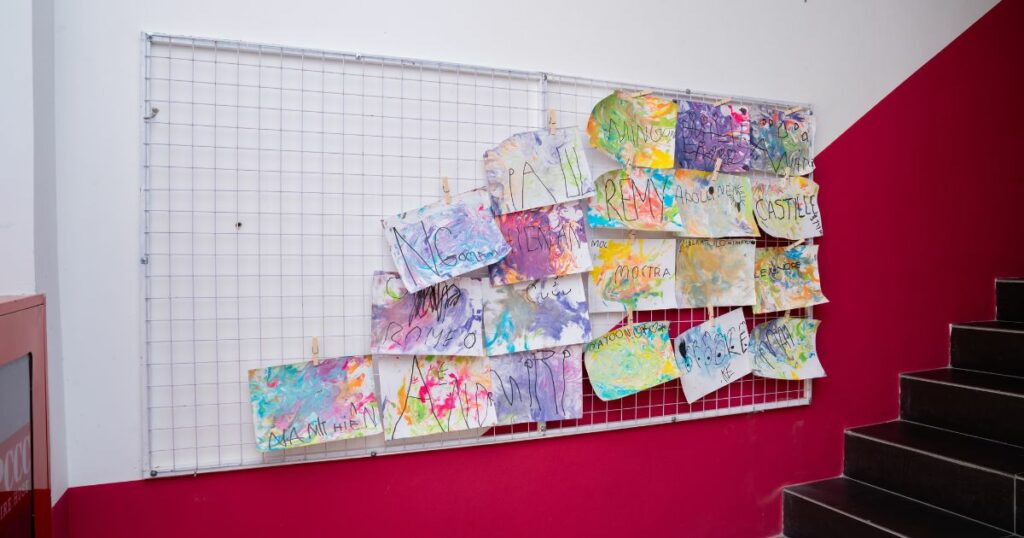
Combining activities that stimulate the right brain with lessons that promote logical thinking—such as mathematics or language—helps children develop both creative thinking and analytical abilities. This balanced approach enhances problem-solving skills and effective decision-making.
2. Balancing Learning and Play
Developing the right brain for children doesn’t mean focusing solely on academic learning. Play is an essential part of intellectual growth. Creative play, especially, helps stimulate the right brain’s development. Therefore, it’s important to create opportunities for children to engage in outdoor activities, brain-boosting games, or artistic endeavors like drawing and playing music.
3. Choosing Age-Appropriate Materials and Toys
Selecting the right learning materials and toys for a child’s age is crucial for effective right brain development. Materials should feature engaging content with vibrant images and creative exercises that spark imagination. Educational toys like puzzles, building sets, drawing books, or mini musical instruments foster creativity and support right brain thinking.
4. Keep It Playful and Pressure-Free
Some right brain programs use fast flashcards and structured drills with very young children. Many early years educators prefer short sessions led by the child’s own curiosity, with plenty of time for free play. A good rule of thumb: if your child looks forward to the activity, it is working.
5. Look for Realistic Goals
When comparing classes or apps, look for programs that talk about curiosity, joy, and well-rounded development. Promises such as a photographic memory or “activating” one half of the brain have not been confirmed by research, so they are best treated with gentle caution.
Right Brain Education for Children at La Petite Ecole Ho Chi Minh City
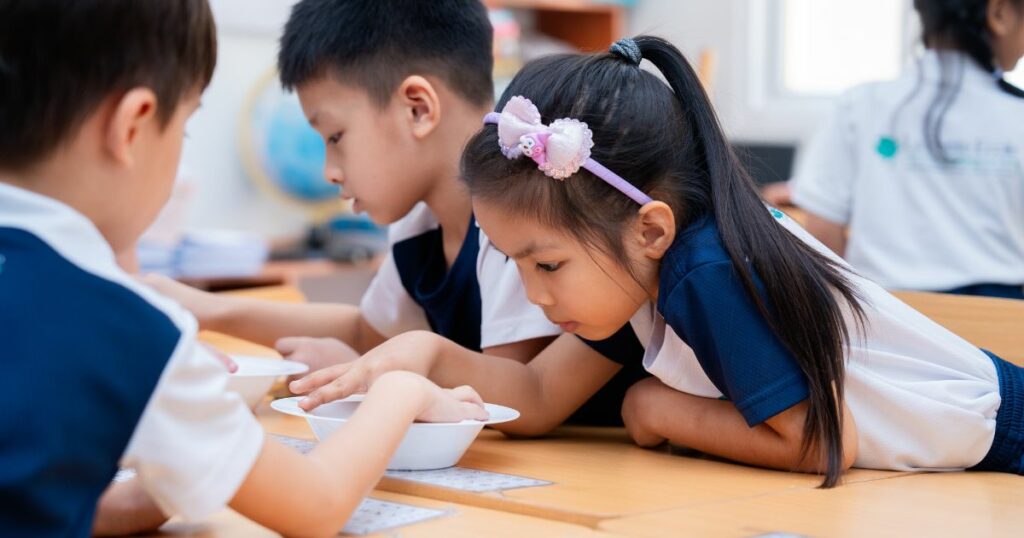
The 8 methods for developing the right brain outlined above not only stimulate imagination and creativity but also help build essential skills for holistic development. By utilizing them, you can help children unlock the full potential of their right brain, enhancing their intellectual, emotional, and problem-solving abilities.
At La Petite Ecole Ho Chi Minh, we see this whole-brain approach every day. As a French-English bilingual school, our classrooms combine art, music, movement, and stories with early language and numbers, so children can paint a picture, describe it in two languages, and count the colors they used, all in one activity.
If you’re looking for an ideal learning environment to foster effective right brain development as well as overall growth, La Petite Ecole Ho Chi Minh City is a good idea. Here, children have access to an advanced international curriculum and opportunities to explore and nurture their creativity through artistic activities, sports, and intellectually stimulating learning programs. The school is committed to providing a balanced learning environment that supports both intellectual and emotional growth, ensuring a well-rounded education.
Reach out to La Petite Ecole Ho Chi Minh to learn more about the curriculum and other activities designed to enhance your child’s right brain development.
- Phone: 028 3519 1521
- Email: contact@lpehochiminh.com
- Address: 172 – 180 Nguyen Van Huong, An Khanh Ward, Ho Chi Minh city
Frequently Asked Questions About Right Brain Education
1. What is right brain education?
Right brain education is an early childhood learning approach built around activities linked to the right hemisphere of the brain, such as images, music, imagination, and intuition. It was popularized by Japanese educator Makoto Shichida and is often used with children from birth to around age 6, through flashcards, memory games, visualization, and music.
2. Which side of the brain is creative?
Both sides. The right hemisphere plays a larger role in some skills linked to creativity, such as visual-spatial thinking and seeing the big picture, but creative thinking depends on networks spread across both hemispheres working together. Research has not found that people are “right-brained” or “left-brained” overall.
3. Is right brain education scientifically proven?
The idea that one half of the brain can be trained separately, or that children are right- or left-brain dominant, is not supported by brain imaging research. However, many activities used in right brain education, such as storytelling, art, music, puzzles, and imaginative play, are valuable for young children because they build language, memory, attention, and creativity together.
4. What are some right brain activities for kids?
Popular right brain activities for kids include drawing and painting, building with blocks, jigsaw puzzles, pretend play, picture-book storytelling, music and movement, memory matching cards, clay modelling, tangrams, mind mapping, and guided visualization. Keep sessions short and playful, and follow your child’s interests.
5. What are left and right brain activities?
“Right brain” activities usually involve images, music, imagination, and spatial thinking, such as art or building. “Left brain” activities usually involve language, sequencing, and logic, such as reading or counting. In practice, most good activities use both: telling a story about a drawing, or counting the beats in a song, are simple whole-brain activities.
6. At what age should right brain education start?
Right brain programs usually focus on ages 0 to 6, when the brain develops very quickly. Playful activities like singing, picture books, and sensory play suit babies and toddlers, while puzzles, pretend play, and drawing suit preschoolers. At any age, short and enjoyable sessions matter more than an early start.
Sources
- Nielsen, J. A. et al. (2013). An Evaluation of the Left-Brain vs. Right-Brain Hypothesis with Resting State Functional Connectivity Magnetic Resonance Imaging. PLOS ONE.
- Beaty, R. E. et al. (2018). Robust prediction of individual creative ability from brain functional connectivity. Proceedings of the National Academy of Sciences, 115(5), 1087-1092.
- The Nobel Prize in Physiology or Medicine 1981: Roger W. Sperry, for his discoveries concerning the functional specialization of the cerebral hemispheres.