


Focus Training for Kids: 7 Ways to Improve Their Concentration in Learning and Life
Focus training for kids means helping children build concentration gradually through short, age-appropriate activities, a calm learning environment, movement, and consistent routines, not forcing them to sit still. Focus is a skill that develops with practice, and small daily habits improve it over time.
This skill unlocks a child’s learning potential and supports essential life skills. Training children to focus from an early age not only helps them achieve better academic results but also enhances their problem-solving abilities and creative thinking.
In this article, La Petite Ecole Ho Chi Minh International School shares practical ways to support focus training at home: attention spans by age, simple focus games, calm study routines, and the everyday habits that help concentration grow.
Key Takeaways
- Concentration is a skill that develops with age and practice, not something a child simply has or lacks
- Attention span grows with age: roughly 5 to 10 minutes at ages 2 to 4, and 20 to 30 minutes by ages 8 to 12
- A simple rule of thumb: many children can focus for about 2 to 3 minutes per year of age on a manageable task; for a new or demanding task, start smaller with the “age plus one minute” rule
- A calm environment, one task at a time, short steps, movement, and routine are the most effective ways to improve focus
- Common causes of poor focus include tiredness, hunger, overstimulation, stress, and too much screen time
- Sleep (9 to 12 hours for school-age children), regular meals, outdoor play, and limited screen time are the everyday foundations that make focus training work
- Match activities to the child’s attention span and interests, and use short breaks to sustain concentration
What Is Focus and Concentration in Children?
Concentration is a child’s ability to direct attention to one task and hold it over time, while managing distractions. Attention is broader, noticing sounds, sights, and information around them, and focus is the more active, intentional channeling of that attention toward a specific task, such as finishing a puzzle or listening to a story.
For young children, concentration is not about sitting still for long stretches. It is about learning to stay engaged, listen, respond, and complete small tasks, with attention span growing gradually as the brain develops.
Focus Development by Age Group
Focus is a crucial factor in helping children develop their thinking and learn effectively. Training focus not only improves memory but also enhances logical thinking, problem-solving skills, and social interaction.
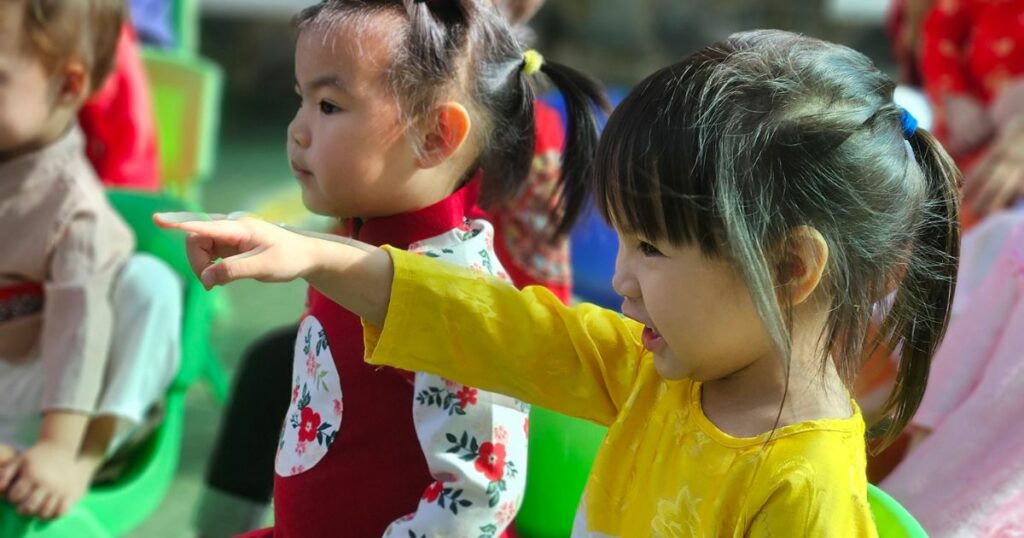
To effectively train focus on children, it’s important to understand how their concentration abilities change as they grow.
- Children aged 2-4 years: Focus is still limited, typically lasting 5-10 minutes. Children at this age are easily distracted and find it challenging to maintain attention for extended periods.
- Children aged 5-7 years: Focus gradually improves, with attention spans ranging from 10-15 minutes. At this stage, children can complete simple tasks without getting distracted.
- Children aged 8-12 years: Children can maintain focus for 20-30 minutes, especially during activities they enjoy or high-interaction learning experiences.
- Adolescents: Focus is more stable, and teens are able to manage time and plan their studies more effectively.
Attention Span by Age at a Glance
| Age | Typical focus on one task | Activities that fit | Helpful tip |
|---|---|---|---|
| 2 to 4 years | About 5 to 10 minutes | Simple puzzles, picture books, sorting, freeze dance | Stop while your child is still enjoying it |
| 5 to 7 years | About 10 to 15 minutes | Simon Says, memory matching, mazes, short crafts | Give one or two instructions at a time |
| 8 to 12 years | About 20 to 30 minutes | Longer puzzles, card and board games, timed challenges | Plan a short movement break every 20 to 30 minutes |
| Teens | Longer, more stable sessions | Self-planned study blocks, hobbies, sport | Help them plan breaks and keep phones out of reach |
The “age plus one minute” rule: Some early-learning programs suggest starting a new or demanding task with a session of your child’s age plus one minute (for example, 7 minutes for a 6-year-old), then extending it gradually. For familiar activities they enjoy, many children can focus for about 2 to 3 minutes per year of age. Treat both as rough guides, since a child will often focus much longer on something they find truly interesting.
7 Effective Ways to Enhance Focus Training for Kids
Training a child’s ability to focus, whether for preschoolers or older children, requires patience and the right approach. Focus skills can be strengthened in many small, everyday ways. Below are effective ways to help children develop better concentration.
1. Create an Ideal Learning Environment
The learning environment plays a crucial role in a child’s ability to focus. When children study in a quiet, clean space without distractions, their concentration improves significantly.
- Quiet Space: Children need a distraction-free learning environment. Ensure that their study area is away from electronic devices and external distractions, allowing them to focus fully.
- Proper Lighting: A well-lit environment stimulates focus. Studying under appropriate lighting helps children feel comfortable, reduces eye strain, and enhances their ability to stay focused for longer periods.
- Eliminate Distractions: Make sure the learning space only contains necessary items. Removing toys and other electronic devices helps children avoid distractions, making it easier to focus on their tasks.
- Use a Visual Timer: A sand timer or a simple visual countdown shows children exactly how long a task will last, which makes starting feel easier for many children.
2. Training the Habit of Focusing on One Task at a Time
One of the key factors in improving a child’s focus is training them to focus on one task at a time. Children are easily distracted when asked to juggle multiple tasks, and multitasking can actually reduce productivity.
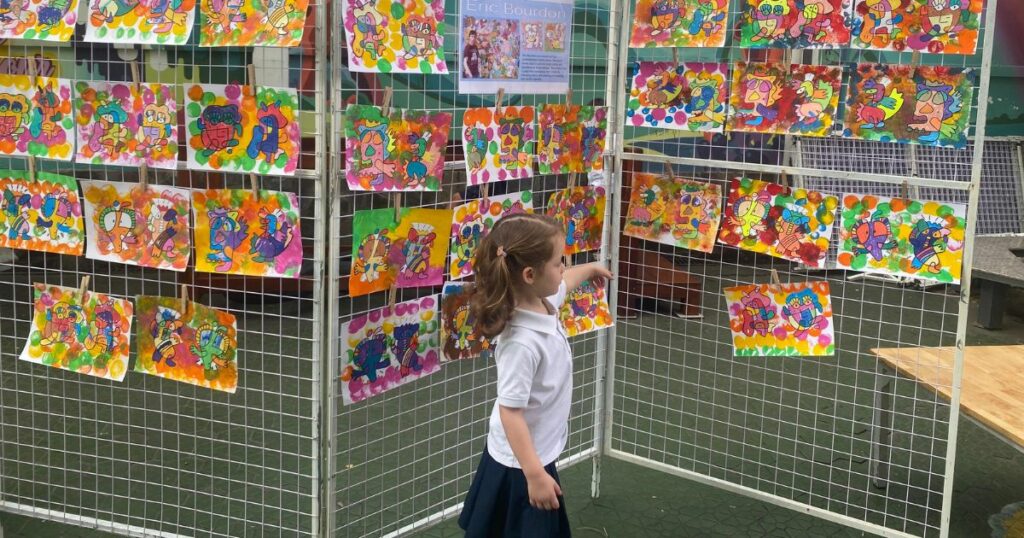
- Focus on a Single Task: Encourage children to complete one task before moving on to another. This habit helps children avoid distractions and allows them to concentrate fully on the task at hand.
- Avoid Multitasking: Asking children to do multiple things at once, such as studying while playing, can cause them to lose focus easily. Create a routine where children focus on one activity at a time, ensuring they give their full attention to it.
3. Making Lists and Breaking Tasks into Smaller Steps
Helping children make lists and break tasks into manageable steps is an effective part of focus training for kids, improving both concentration and task completion.
- Creating a To-Do List: Helping children create a list of tasks can give them a clear goal, making it easier for them to focus on each task. Whether for schoolwork or daily activities, writing down tasks helps children understand what they need to do and stay focused.
- Breaking Tasks into Smaller Steps: Large tasks can overwhelm children and cause them to lose focus. Breaking tasks down into smaller, achievable steps helps children feel less overwhelmed. For instance, instead of asking children to complete an entire homework assignment at once, break it into smaller sections, each lasting about 10-15 minutes.
- Use Visual Checklists: For children who are not yet reading, a picture checklist (for example: shoes, bag, water bottle) lets them tick off each step and see their progress.
- Give One or Two Steps at a Time: Long spoken instructions are hard to hold in mind. Try “Put your book in your bag, then come to the door,” and add the next step once the first is done.
4. Encouraging Physical Activity
Physical activity not only benefits a child’s health but also plays a vital role in enhancing their ability to focus. Research reviews, including a report from the U.S. Centers for Disease Control and Prevention (CDC), have found that physical activity can support children’s attention, concentration, and classroom behavior.
- Active Games: Activities such as skipping, tag, or football not only entertain children but also help improve their focus. These games require children to pay attention to their movements, effectively training their concentration skills.
- Exercise Routines: Activities like yoga for kids or breathing exercises are particularly beneficial for improving focus in children. These exercises help children relax, reduce stress, and create an environment that fosters better concentration.
- Allow Movement While Learning: Many children focus better when they can wiggle a little. Standing at a counter, sitting on a wobble cushion, or holding a small fidget toy lets them release energy without leaving the task.
5. Improving Focus Through Games
Games are an effective way to help children develop their focus in a natural and enjoyable manner. These activities not only enhance cognitive skills but also stimulate attention and concentration.
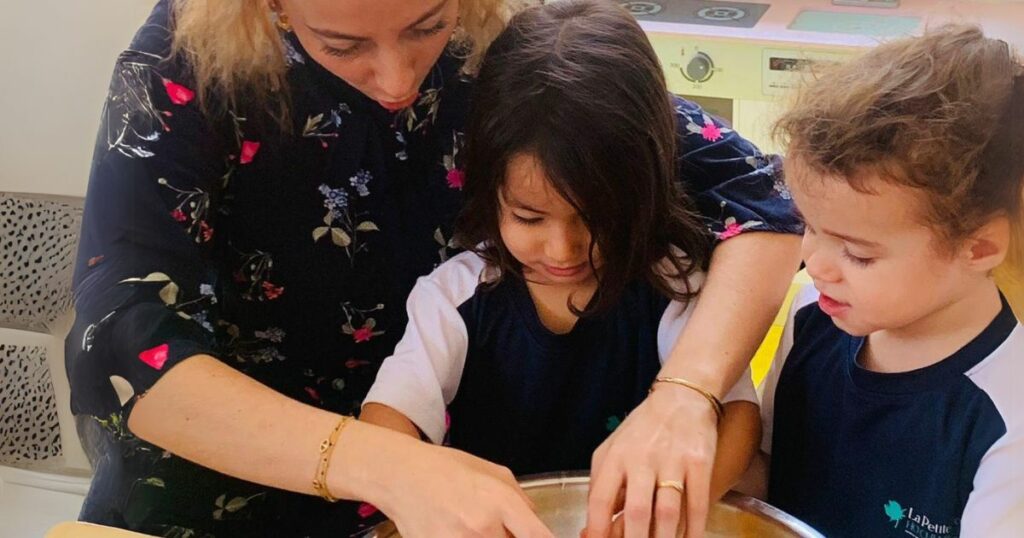
Here are a few game suggestions:
- Mimicking Exercises: Games such as mimicking actions (e.g. copying a ball, animal, or airplane movements) are excellent for improving focus. Children need to concentrate on each action and replicate it accurately, which trains their observation skills and attention.
- Maze Games: Maze puzzles help children develop problem-solving abilities and strengthen their focus. As they navigate through challenges, children improve their concentration and critical thinking skills.
- Stringing Beads: This game helps children enhance hand-eye coordination, fine motor skills, and patience. By focusing on threading beads one by one, children strengthen their ability to concentrate, which also benefits their learning processes.
>> Read more: The Learning-through-Play Approach
6. Optimizing Focus Span to Boost Concentration in Children
Understanding and adjusting focus span according to a child’s developmental stage is key to fostering concentration. Age-appropriate routines help children stay engaged and absorb information effectively.
Preschoolers typically have shorter attention spans, around 5 to 15 minutes depending on age, and benefit from frequent breaks to maintain focus. As children grow, they can focus for longer periods, around 20 to 30 minutes by ages 8 to 12, and taking short breaks every 20 to 30 minutes helps sustain concentration. Adapting focus routines to match a child’s developmental needs encourages better concentration and supports their overall learning experience.
Try a “focus, then move” rhythm: A child-sized version of the Pomodoro technique works well at home. Set a timer for a short focus block that fits your child’s age, then take 1 to 2 minutes for jumping, stretching, or a drink of water before the next block.
7. Parents Supporting Their Child’s Focus Development
Parents play a significant role in helping children develop their ability to concentrate. When parents actively participate in their child’s learning and play activities, it creates a positive learning environment that supports the child’s development.
Engaging in learning activities with children allows parents to understand their child’s focus levels and make timely adjustments. When parents are involved, children feel encouraged and cared for, which enhances their focus on tasks. For example, when children are doing their homework, parents can sit with them or assist in breaking down tasks into manageable steps.
Read more: The Importance of Positive Parenting
Focus Activities by Age
The best focus activities match a child’s attention span and interests. Many simple brain games and memory games can be adjusted up or down by age.
Ages 3 to 5
Keep activities short, playful, and hands-on. Try freeze dance, simple “I Spy” games, bean-bag tosses at a target, and sorting or matching games. These build listening, observation, and impulse control in a few minutes at a time.
Freeze dance and other music games for preschoolers are especially useful, because children must listen closely and stop the moment the music does.
Ages 6 to 8
Children can handle simple rules and short challenges. Try “Simon Says”, puzzles and mazes, memory matching games, and gentle breathing or mindfulness moments. Aim for around 10 to 20 minutes with a short break.
Ages 9 to 12
Older children enjoy goals and strategy. Try card games such as Memory or Uno, timed tasks (“see how many problems you finish in five minutes”), longer puzzles, and yoga or movement sequences that require planning and body awareness.
Board games that require planning ahead, such as chess or checkers, also build logical reasoning alongside concentration.
Fun Focus Games and Exercises at a Glance
Use this quick guide to pick a game for today. Most need nothing more than everyday household items, and many work well as family games for kids.
| Game or exercise | Ages | What it builds | How to play |
|---|---|---|---|
| Seek-and-find picture books | 2+ | Visual scanning, patience | Search a busy picture for small hidden objects or characters |
| Jigsaw puzzles | 2+ | Persistence, problem-solving | Start with 4 to 6 pieces and add more as focus grows |
| Memory matching cards | 3+ | Working memory | Turn cards face down and take turns finding pairs |
| Simon Says | 3+ | Listening, self-control | Follow only the instructions that start with “Simon says” |
| Freeze dance | 3+ | Listening, impulse control | Dance while the music plays and freeze when it stops |
| Blowing games | 3+ | Breath control, calm focus | Blow a cotton ball or ping-pong ball across the table through a straw |
| Color hunt | 3+ | Attention to detail, movement | Find and touch five objects of one color around the house |
| “What’s missing?” tray | 3+ | Memory, observation | Show 5 objects on a tray, cover them, remove one, and ask what is gone |
| Threading beads | 3+ | Fine motor skills, patience | Copy a simple bead pattern on a string or lace |
| Five-finger breathing | 4+ | Calm before a task | Trace up each finger while breathing in and down while breathing out |
| Chinese whispers (Telephone) | 4+ | Active listening, memory | Pass a whispered sentence around a circle and compare the ending |
| Story recall | 5+ | Listening, comprehension | After a short story, ask your child to retell three things that happened |
| Mazes and dot-to-dots | 4+ | Planning, visual tracking | Trace the path with a finger first, then with a pencil |
| Card and board games | 7+ | Planning, turn-taking | Play Uno, checkers, or chess, increasing the challenge over time |
Why Kids Struggle to Focus: Common Causes
Before training focus, it helps to understand what gets in the way. A child who seems unable to concentrate is usually responding to something in their body or environment, not simply choosing not to try. Common causes include:
- Tiredness or poor sleep, which makes it harder to stay alert and engaged
- Hunger or an unbalanced diet, which can cause energy dips and restlessness
- Overstimulation from screens, noise, or a cluttered space, which overwhelms the senses
- Stress or big emotions, since it is hard to focus when a child feels anxious or upset
- A lack of routine, which makes it harder to settle and move between tasks
- A task that is too long or too difficult for the child’s current stage
Because emotions and attention are closely linked, supporting emotional regulation often helps focus as well. A calm, settled child finds it much easier to concentrate.
Small Shifts That Help Focus Practice Work Better
Focus grows through consistency more than intensity. These small changes make everyday practice more effective:
| Instead of… | Try… |
|---|---|
| One long practice session a week | Short, playful practice most days, ending before your child gets restless |
| Praising only results (“You’re so clever”) | Praising effort and process (“You kept looking until you found it”) |
| Several instructions at once | One or two steps at a time, or a picture checklist |
| Background TV or a tablet left on | A quiet space with screens out of sight |
| Expecting your child to sit perfectly still | Allowing gentle movement, such as standing or a wobble cushion |
| Filling every minute with structured activities | Leaving time for free play, where many children practice deep, self-chosen focus |
| Comparing with siblings or classmates | Comparing with your child’s own progress last month |
Signs of Focus Challenges in Children
Children may exhibit certain signs that suggest they are working on improving their focus in daily activities. Common indicators include:
- Limited attention during conversations: Children may occasionally find it challenging to remain fully engaged in conversations and actively listen to what is being said.
- Easily diverted: External distractions or unrelated stimuli can sometimes shift a child’s attention.
- Difficulty completing tasks: Children may find it more challenging to finish tasks, such as homework, and sometimes leave them unfinished.
- Delayed task initiation: Children might take time to begin tasks, finding it a bit harder to focus right away.
- Shorter attention span: Children may find it more difficult to sustain focus during activities that require patience or extended thinking.
By recognizing these signs, parents can support their child in developing stronger focus skills.
How to Help Your Child Focus on Studies and Homework
Focusing on schoolwork combines several habits above. A few practical steps that help most children:
- Set up a quiet, tidy study space away from screens and toys
- Work on one subject or task at a time, not several at once
- Break homework into short blocks of about 10 to 15 minutes with a small break between
- Agree on a simple routine and start time so studying becomes a habit
- Sit nearby for younger children, offering encouragement rather than doing the work for them
For a 7-year-old struggling to focus at school, the same approach applies at home: short tasks, a calm space, clear routines, and plenty of movement between study blocks. Consistency matters more than long sessions.
Developing Concentration Skills for Children at La Petite Ecole Ho Chi Minh
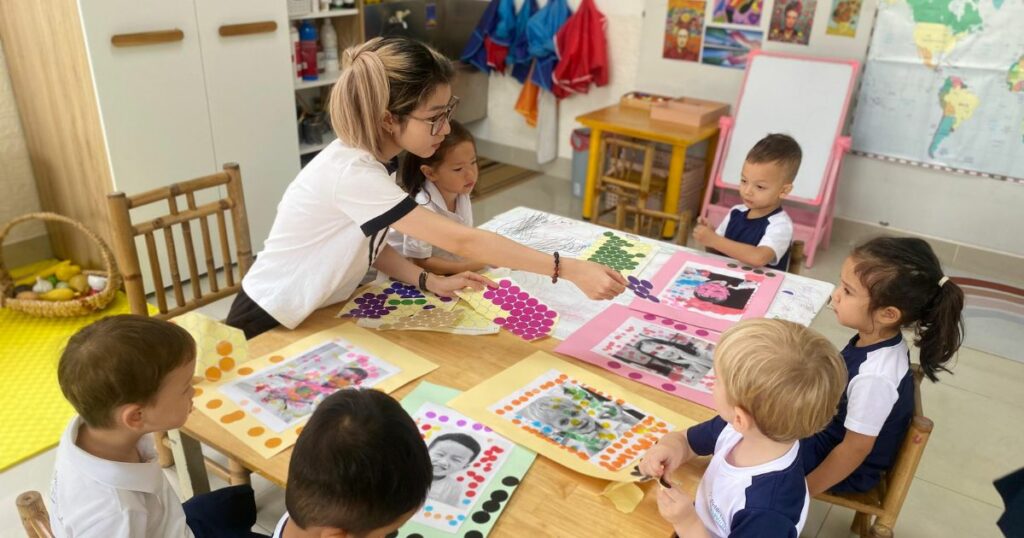
Fostering concentration in children through focus training for kids is key to their overall development, enhancing both cognitive abilities and social skills. Creating an ideal learning environment, maintaining a healthy lifestyle, and ensuring parental involvement all contribute to improving a child’s ability to focus effectively.
In our own classrooms, we often see focus grow naturally when tasks are short, hands-on, and matched to each child’s stage, with gentle breaks for movement between activities.
As a French-English bilingual school, we also see how much careful listening a two-language day involves: children notice which language is being spoken, switch between French and English, and follow familiar routines in both. Some research suggests that this kind of everyday language switching may support attention control, and in class it gives children many small, natural chances to practice focus.
If you’re looking for an ideal educational environment to help your child develop concentration skills, La Petite Ecole Ho Chi Minh International School is an ideal choice. Here, children are guided in enhancing their concentration through engaging learning activities, stimulating games, and a positive learning environment. With an advanced educational approach, children not only learn to maintain focus but also develop cognitive abilities and life skills in a comprehensive manner.
Contact La Petite Ecole Ho Chi Minh City to learn more about our curriculum and extracurricular activities:
- Phone: 028 3519 1521
- Email: contact@lpehochiminh.com
- Address: 172 – 180 Nguyen Van Huong, An Khanh Ward, Ho Chi Minh city
Frequently Asked Questions
1. How can I help my 7-year-old focus in school?
Support focus at home with short, consistent routines and a calm space. Break homework into 10 to 15 minute blocks with small breaks, work on one task at a time, and build in daily movement to release energy. A 7-year-old’s attention span is usually around 10 to 15 minutes, so keep tasks short and praise effort. If focus concerns persist at school, speak with the teacher.
2. How can I improve my child’s concentration at home?
Create a quiet, tidy space away from screens, and encourage one task at a time. Match activities to your child’s attention span, use short breaks, and keep a predictable daily routine. Simple games such as puzzles, memory matching, and “Simon Says” build concentration playfully. Enough sleep, balanced meals, and daily physical activity also make a noticeable difference to focus.
3. What are good concentration exercises for kids?
Effective concentration exercises include memory matching games, puzzles and mazes, “Simon Says”, mimicking actions, threading beads, and short mindfulness or breathing activities. Timed challenges suit older children, while movement games like freeze dance help younger ones practise impulse control. The key is keeping activities short, playful, and slightly challenging, then gradually extending the time as focus improves.
4. How do I get my child to focus on studies?
Set up a quiet study space, agree on a routine and start time, and work on one subject at a time. Break study into short blocks of 10 to 15 minutes with breaks between, and remove phones and toys from view. Sit nearby for younger children to encourage them. Short, regular study sessions usually work better than long, tiring ones.
5. What is a normal attention span for a child by age?
Attention span grows with age. Children aged 2 to 4 typically focus for about 5 to 10 minutes, those aged 5 to 7 for around 10 to 15 minutes, and children aged 8 to 12 for roughly 20 to 30 minutes. These are general ranges, and a child will often focus longer on activities they find genuinely interesting.
6. What causes poor focus in children?
Common causes include tiredness or poor sleep, hunger, overstimulation from screens and noise, stress or big emotions, and a lack of daily routine. A task that is too long or too hard for the child’s stage can also make focusing difficult. Often, adjusting one of these, more sleep, fewer distractions, or shorter tasks, noticeably improves a child’s concentration.
7. What is the difference between focus and attention?
Attention is the broad ability to notice information around us, such as sounds or movement in a room. Focus is more active and selective: intentionally directing that attention to one task while ignoring distractions, like reading a book despite background noise. Children develop attention first, then gradually build the focus needed to stay with a single task for longer.