


20+ Best Family Games for Kids: Fun Activities to Connect and Grow Together
Family games for kids are both entertaining and beneficial, helping family members bond, share love, and enjoy quality time together. After busy school days and work schedules, simple at-home games not only bring joy but also support children in developing motor skills, critical thinking, and teamwork abilities.
In this article, La Petite Ecole Ho Chi Minh city shares over 20 easy-to-implement, fun, and enriching family games for kids that the whole family can enjoy together, creating memorable moments.
Why Playtime Together Matters for Families with Young Children
Children learn and grow most effectively through hands-on experiences, especially when playing with loved ones. Even seemingly simple games help kids develop movement skills, thinking abilities, and an understanding of care and affection from their parents.

Read more: Positive Parenting Explained
Spending time playing together helps:
- Strengthen family bonds: Parents gain insight into their child’s emotions, personality, and interests.
- Develop social skills: Children learn patience, sharing, and cooperation.
- Foster positive emotions: The whole family relaxes and reduces stress after a long day.
- Encourage creativity: Children are free to imagine, ask questions, and explore the world around them.
Just 20–30 minutes of play each day with your child can make a meaningful difference in building strong, loving family connections.
20+ Simple and Fun Family Games for Kids
1. Blindfold Chase
- Age: 4–10 years
- How to Play: One person (usually a parent) is blindfolded, while the other family members move around to avoid being caught. The blindfolded player uses sound to locate others. The caught person becomes the next blindfolded player.
- Benefits: Develops listening skills, quick reflexes, and brings lots of laughter.
2. Tug of War
- Age: 5+ years
- How to Play: Divide the family into two teams with an equal number of players. Use a long rope with a middle mark as a reference. On “Go!”, both teams pull. The team that pulls the rope past the middle line wins.
- Benefits: Builds strength, teamwork, and coordination.
3. Hopscotch
- Age: 3–8 years
- How to Play: Draw boxes on the floor or pavement with chalk. Players hop through the boxes in order, picking up markers without stepping on the lines.
- Benefits: Improves balance, focus, and basic motor skills.
4. Treasure Hunt
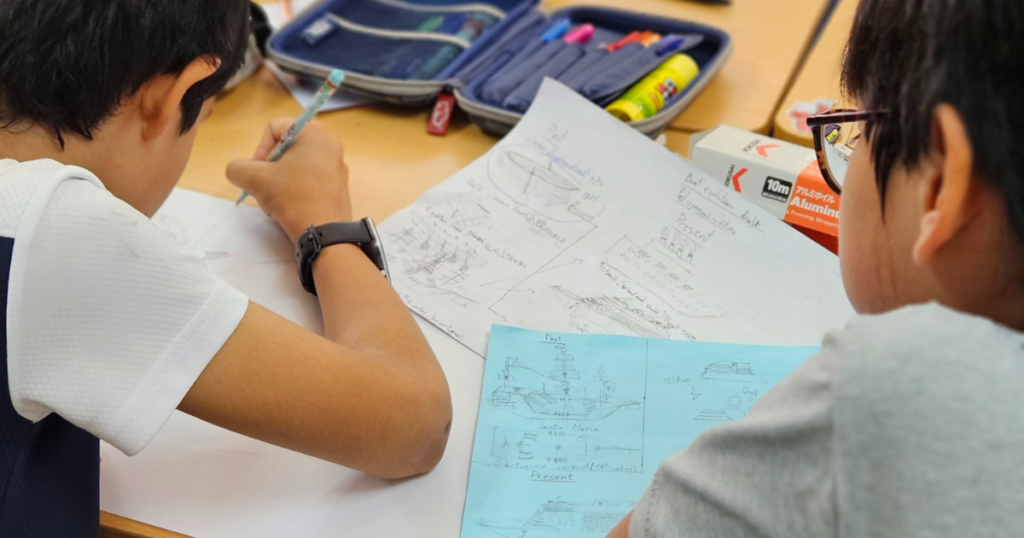
- Age: 4–12 years
- How to Play: Parents hide a small item (toy, candy, etc.) and provide clues or riddles to guide children to the “treasure.”
- Benefits: Enhances reasoning, reading comprehension, and problem-solving skills.
5. Guess the Object
- Age: 3–8 years
- How to Play: Place familiar objects (fruit, toys, pencils, etc.) in a bag. Players take turns feeling and guessing the item without looking.
- Benefits: Stimulates senses, observation, and descriptive language.
6. Junior Chef
- Age: 5+ years
- How to Play: Prepare simple dishes with your child, such as salads, sandwiches, or cookies. Teams can compete on taste or presentation.
- Benefits: Encourages participation in household tasks, creativity, and attention to detail.
7. Role Play / Acting
- Age: 5–11 years
- How to Play: Choose a favorite fairy tale, assign roles, and use props or costumes from around the house.
- Benefits: Boosts communication, expression, cooperation, and imagination.
8. Simple Science Experiments
- Age: 5–11 years
- How to Play: Try easy experiments like a baking soda volcano or creating a rainbow with food coloring.
- Benefits: Encourages curiosity, scientific thinking, and observation skills.
Read more: Top 20 Science Activities for Preschoolers
9. Arts and Crafts
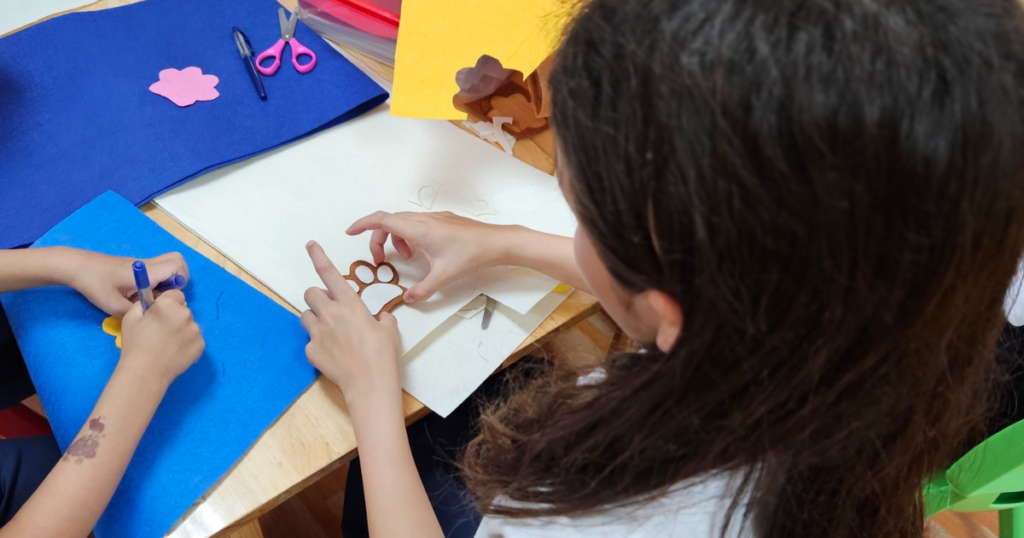
- Age: 4–10 years
- How to Play: Use colored paper, cardboard, yarn, straws, etc., to make cards, bracelets, or frames.
- Benefits: Develops creativity, dexterity, and patience.
10. Puzzle Building
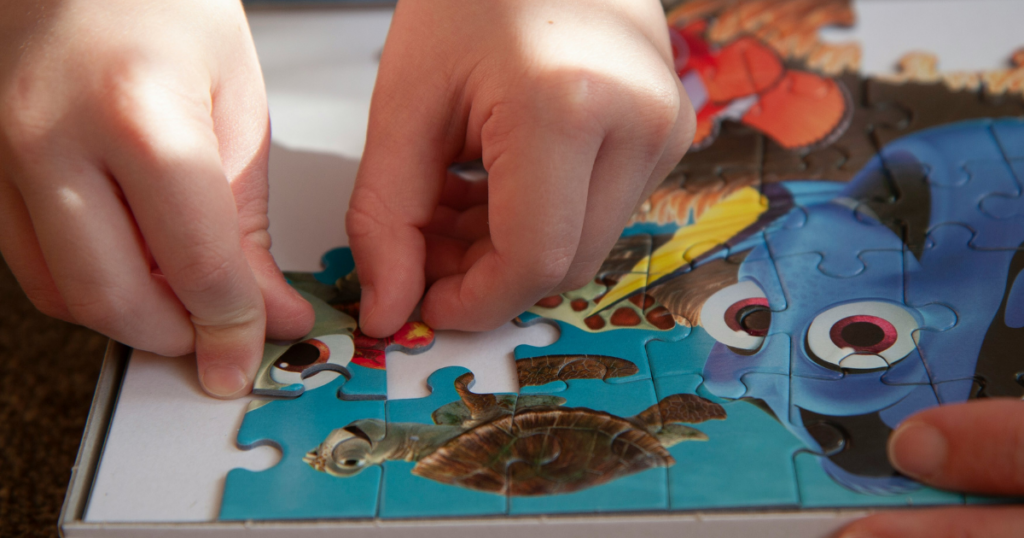
- Age: 3–10 years
- How to Play: Choose age-appropriate puzzles and complete them together. Assign roles like corner-finder or middle-piece assembler.
- Benefits: Improves observation, spatial reasoning, and teamwork.
11. Music Games
- Age: 3+ years
- How to Play: Play music and dance together. When the music stops, anyone still moving is out.
- Benefits: Enhances rhythm, reflexes, and creates a joyful atmosphere.
Read more: 15 Fun and Creative Music Games for Preschoolers
12. Story Chain
- Age: 4+ years
- How to Play: One person starts a story, and each subsequent player adds a sentence until the story is complete.
- Benefits: Develops imagination, language skills, and creative thinking.
13. Indoor Camping
- Age: 3–9 years
- How to Play: Set up a tent with blankets and pillows, turn off the lights, and tell stories or pretend to “roast marshmallows” with a flashlight.
- Benefits: Encourages imagination, teamwork, and adaptability.
14. Blindfolded Voice Guess
- Age: 3–9 years
- How to Play: One person is blindfolded while others speak a sentence in turn. The blindfolded player guesses who it is.
- Benefits: Improves auditory recognition and concentration.
15. Jenga

- Age: 5+ years
- How to Play: Take turns removing a block from a Jenga tower without toppling it. The player who causes the tower to fall loses.
- Benefits: Enhances dexterity, patience, and strategic thinking.
16. Board Games
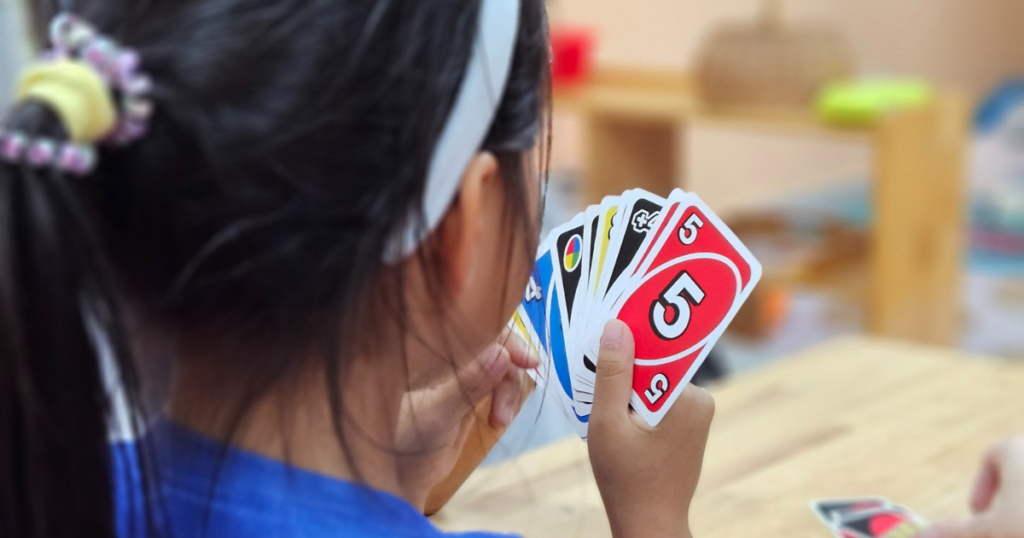
- Age: 6+ years
- How to Play: Choose games like Uno, Ludo, Monopoly, or Scrabble. Each has its own rules, and the family can play together interactively.
- Benefits: Boosts logical thinking, patience, sharing, and problem-solving.
17. Cup Tower Challenge
- Age: 3–8 years
- How to Play: Stack plastic cups or paper boxes into the tallest tower possible within 2 minutes. Compete in pairs if desired.
- Benefits: Develops spatial thinking, fine motor skills, and hand-eye coordination.
18. Matching Pairs
- Age: 3–7 years
- How to Play: Use cards with animals, numbers, or letters. Turn over two cards at a time to find matching pairs.
- Benefits: Improves memory, observation, and pattern recognition.
19. Obstacle Course
- Age: 4–10 years
- How to Play: Create a mini obstacle course using chairs, pillows, or boxes. Children crawl, jump, or climb through obstacles in the fastest time.
- Benefits: Builds fitness, reflexes, orientation skills, and problem-solving.
20. Drawing Together

- Age: All ages
- How to Play: Draw as a family on a chosen theme, such as “My Family,” “Weekend Fun,” or “Favorite Animal.”
Benefits: Strengthens emotional bonds, sparks creativity, and helps parents understand their child’s thoughts.
Tips for Playing with Your Child

Not every game suits every family, so parents can consider a few key points to make playtime enjoyable, safe, and meaningful.
- Observe your child’s age and personality: Children aged 3–5 enjoy games with light physical activity and vivid visuals, while those aged 8–11 are more engaged with challenges or games that have clear rules.
- Ensure a safe play space: Arrange a spacious area free of obstacles and accompany your child to provide reassurance.
- Use available space and materials: Families living in apartments can opt for board games, crafts, or light interactive activities. If you have a garden, outdoor games like tug of war or jump rope are great choices.
- Respect your child’s pace: Every child engages differently. If your child prefers to watch before joining in, this is part of the learning experience.
- Mix different types of activities: Alternate between physical, creative, and intellectual games to keep playtime engaging and long-lasting.
Playing and Learning with Your Child: The Role of Family and La Petite Ecole Ho Chi Minh City
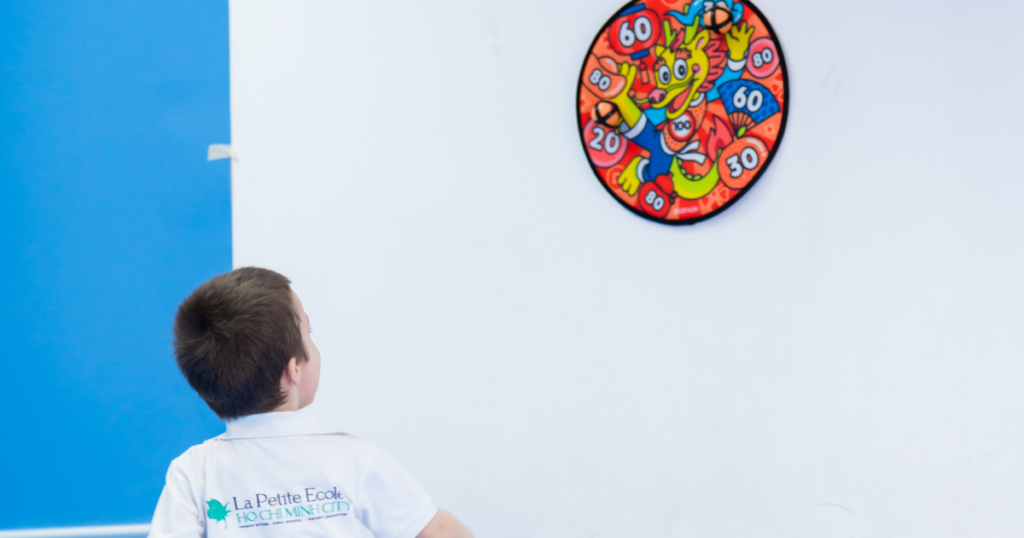
Family games for kids not only bring joy and laughter but also serve as a bridge for parents to better understand their children, while fostering essential skills such as critical thinking, cooperation, and communication. When home playtime is harmoniously combined with a supportive school environment, children have the opportunity to grow holistically, both emotionally and intellectually.
At La Petite Ecole Ho Chi Minh city, the philosophy of “learning through play, playing through learning” is encouraged in daily activities, allowing children to enjoy meaningful experiences while developing essential skills for the future.
Parents interested in learning more can reach out directly to the school for personalized guidance, discovering how families and educators can work together to support children’s comprehensive development.
- Phone: 028 3519 1521
- Email: contact@lpehochiminh.com
- Address: 172 – 180 Nguyen Van Huong, An Khanh Ward, Ho Chi Minh city