


Why the Role of Family in Child Development Matters More Than Ever
The role of family in child development begins from a child’s very first moments, providing the love, care, and guidance that form a strong foundation for growth. Family connections offer emotional security, a sense of belonging, and the encouragement children need to explore the world with confidence.
This role is not a one-size-fits-all approach but reflects the unique values, traditions, and dynamics of each household. Through daily conversations, shared routines, and cultural celebrations, families nurture emotional well-being, inspire curiosity, and support learning in ways that go beyond academics.
This article explores how family involvement shapes a child’s emotional, social, and cognitive development across diverse cultures and backgrounds.
Key Takeaways
- Families shape emotional security, language, values, health, and learning from birth onward.
- How a family functions day to day matters more for child outcomes than the type of household.
- Warmth combined with clear, consistent boundaries supports many children well.
- Community, school, and extended family widen the family’s influence rather than replace it.
- Every child responds differently, so responsiveness matters more than any single formula.
What Is the Primary Role of Family in Child Development?
The primary role of family in child development is to meet a child’s basic needs consistently. Families also shape how children learn, relate to others, and see themselves. This happens through daily care, conversation, routines, and example.
Researchers usually separate family influence into three layers:
- Family structure: who lives in the home and how they are related to the child.
- Family processes: how the household communicates, copes, solves problems, and makes decisions.
- Family functions: what the family provides, from food and safety to affection and social identity.
Of these three, processes carry the most weight. A warm and predictable home supports many children well, whatever its shape or size.
The Six Core Functions of a Family
Almost every family, in every country, performs a similar set of functions. The table below links each function to the area of development it supports most directly.
| Family function | What it looks like at home | Development it supports |
|---|---|---|
| Economic and material support | Food, housing, clothing, healthcare, school costs | Physical health, attention, school attendance |
| Emotional support | Comfort, affection, praise, unhurried listening | Emotional security, self-esteem |
| Socialisation | Family rules, turn-taking, table conversation | Social skills, moral reasoning |
| Protection and safety | Supervision, a safe home, guidance around screens | Trust, awareness of risk |
| Guidance and boundaries | Routines, clear expectations, gentle follow-through | Self-regulation, planning skills |
| Identity and belonging | Home language, faith, traditions, family stories | Cultural identity, self-concept |
These functions overlap. A shared family meal can deliver four of them at once, which is part of why simple routines matter so much.
How Family Shapes Personality Development
The role of family in personality development works mainly through repeated interactions rather than single events. Four influences show up consistently in the research.
Temperament and goodness of fit
Children arrive with a temperament. Some are cautious, some outgoing, some intense. Development tends to go more smoothly when family responses suit the individual child rather than a fixed expectation.
Self-concept
Children build a sense of who they are partly from how their family describes them. Casual labels such as “the shy one” can stick for years. Describing effort rather than fixed traits tends to serve children better.
Expectations of other people
Early relationships shape what a child expects from others. A child who is regularly comforted often grows to expect help when things go wrong. That expectation carries into friendships and classrooms.
Modelled behaviour
Children copy what they see far more than what they are told. How adults handle frustration, disagreement, and apology becomes a working template for many children.
Personality is never shaped by family alone. Genetics, peers, school, and chance all contribute. Families influence the direction of growth rather than determine it. Building emotional intelligence in kids at home gives children a useful head start.
Values, Moral Development & Cultural Identity
Children are often described as “sponges,” absorbing attitudes and behaviours from the people around them. When they see respect, compassion, fairness, and responsibility practised at home, especially when modelled by positive parents, they are more likely to embrace these values. Disrespect or unkindness can have the opposite effect, so leading by example is essential.
Values grow through everyday experiences. Simple responsibilities, setting the table, caring for a pet, or comforting a friend, help children develop empathy and responsibility. Explaining the outcomes of different choices, in ways they can understand, reinforces why these values matter.

Cultural and community influences also play a central role. Traditions, family history, and role models shape a child’s moral compass. Some families pass down customs unchanged, while others blend heritages to create new traditions. Sharing stories, music, food, and celebrations can strengthen cultural identity and belonging, highlighting how the role of family in child development extends far beyond academics.
Families can encourage moral growth by:
- Modeling respect and fairness in daily interactions.
- Involving children in meaningful tasks at home or in the community.
- Discussing right and wrong using relatable, age-appropriate examples.
- Guiding media exposure, helping children understand what aligns with family values.
In today’s media-rich environment, families also play an important role in helping children navigate messages from TV, movies, and online content. While some programs can reinforce kindness and understanding, others may not align with the values a family wishes to promote. For young children still learning to separate right from wrong, careful guidance and conversation can make a significant difference.
Ultimately, values are not just “taught” once, they are lived, shown, and reinforced over time. When children see these qualities in action within their family and community, they are more likely to carry them forward into their own relationships and choices.
Cultural identity deserves a practical note for bilingual households. Children who keep their home language strong often find it easier to stay close to grandparents and extended family. Language and belonging tend to travel together.
Families raising children in two languages can find useful guidance on how to raise a bilingual child.
Foundations: Emotional Security & Attachment
A child’s sense of safety and self-worth often begins with the emotional environment at home. When children experience warmth, patience, and responsiveness from parents, guardians, or extended family members, they are more likely to develop a secure emotional foundation. This emotional stability is a key part of the role of family in child development, helping children feel confident enough to try new things, interact with others, and recover from setbacks.
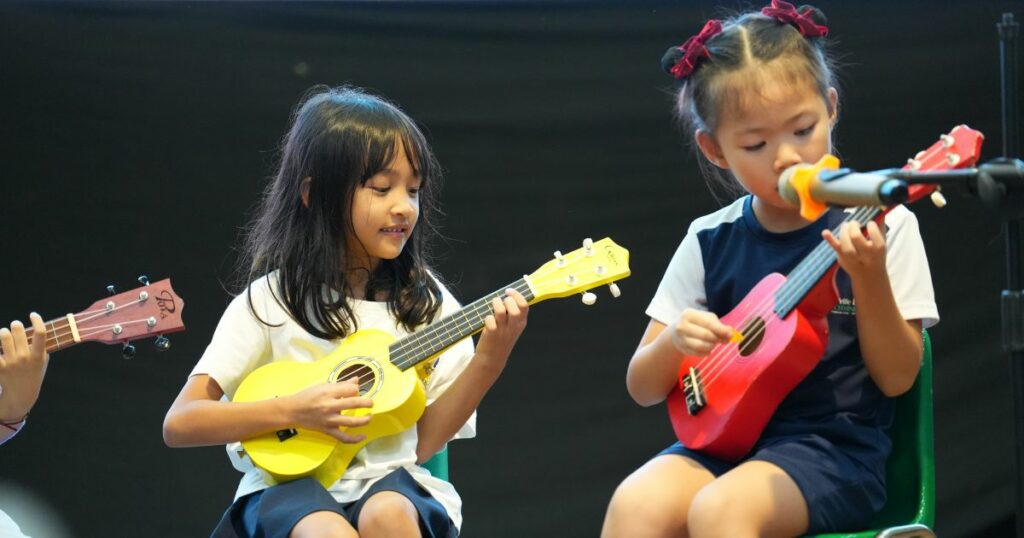
Attachment, the bond children form with their caregivers, can take different shapes depending on personality, culture, and family traditions. In many cases, consistent emotional support fosters trust and resilience. This might look like comforting a child after a challenging day, listening attentively when they express feelings, or celebrating small achievements together.
Families can encourage emotional well-being by:
- Providing reassurance and stability through consistent routines and gentle communication.
- Creating safe spaces for expression, where feelings are heard and validated without judgment.
- Modeling healthy coping skills, such as pausing before responding to stress or finding positive outlets for frustration.
By focusing on emotional connection, families lay the groundwork for confidence, empathy, and a strong sense of self, qualities that influence how children approach learning, friendships, and life’s challenges.
The secure base, in practical terms
Attachment researchers describe the family as a secure base. A child explores, checks back for reassurance, then explores further. You can see this pattern on any playground.
What builds it is ordinary and repeatable. Respond when a young child signals distress. Follow their attention rather than redirecting it. Repair the relationship after conflict rather than letting it settle unspoken.
Consistency matters more than perfection. Many caregivers miss cues regularly, and children remain securely attached when the overall pattern is warm and responsive.
Cognitive Development & Early Learning
A child’s mind grows rapidly during the early years, and the family environment plays an important role in this process. Everyday interactions, from conversations at the dinner table to bedtime stories, help strengthen language skills, memory, and problem-solving abilities. These moments highlight how the role of family in child development extends beyond emotional support, directly influencing curiosity, focus, and learning habits.
When children are encouraged to ask questions, explore their surroundings, and try new activities, they nurture a natural love for learning. Reading together, playing word games, and involving children in age-appropriate household tasks can build vocabulary and critical thinking.
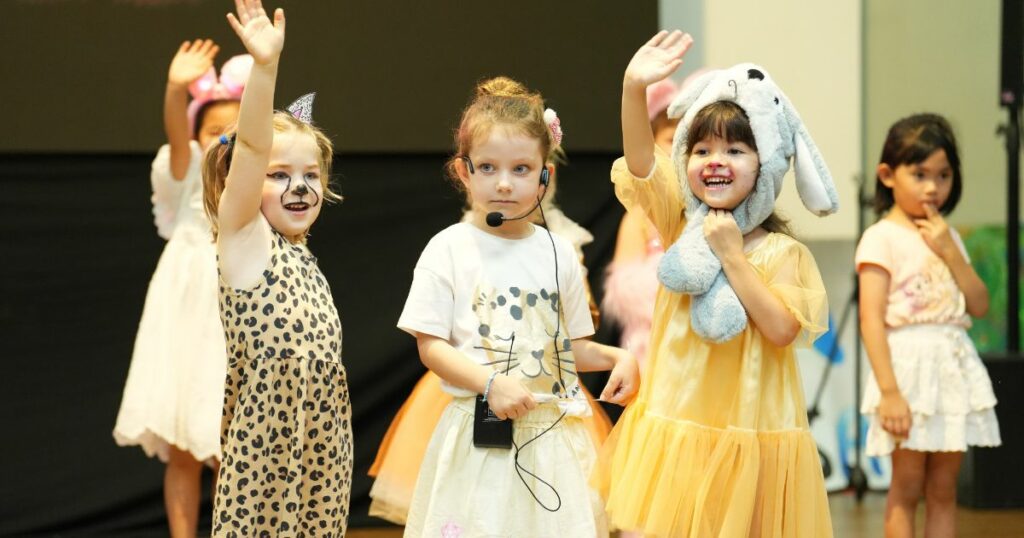
Families can also create a rich home learning environment by:
- Providing access to books and storytelling that match the child’s interests and language level
- Encouraging creative play with building blocks, art materials, or music
- Using daily routines as learning moments, such as counting while cooking or identifying colors during a walk
Early literacy is especially influenced by family engagement. When children hear stories, songs, and conversations regularly, they are more likely to develop strong language skills that support later academic success. Each child learns in a unique way and at their own pace, so flexibility and patience are key in fostering cognitive growth.
Scaffolding: doing it with the child, not for the child
Scaffolding means giving just enough help for a child to succeed, then stepping back. A parent might hold the puzzle box steady while the child places the piece.
The useful part is the withdrawal. Support that stays constant can slow independence, while support that fades as skill grows tends to build it.
Simple prompts do a lot of work here. Asking what a child thinks will happen next, or why something did not work, invites reasoning rather than supplying the answer.
Hands-on activities give families an easy setting for this. Creative activities for kids and science activities for preschoolers both work well at the kitchen table.
Social Skills, Communication & Resilience
Families are often the first place where children practice social skills and learn how to interact with others. Simple acts like taking turns during a game, listening when someone speaks, or helping a sibling can lay the foundation for positive relationships. The role of family in child development is especially clear in these moments, as early home experiences shape how children connect, communicate, and respond to others.
Communication skills grow when children are encouraged to express their thoughts and feelings openly. This might involve sharing experiences from their day, asking questions, or joining family discussions. By responding with empathy and respect, families help children understand the value of listening and being heard.
Resilience also develops through family support. When challenges arise, whether it’s a disagreement with a friend or a disappointing result at school, children benefit from guidance on how to cope and move forward. Families can:
- Model empathy by acknowledging emotions and validating feelings
- Encourage problem-solving rather than giving immediate solutions
- Highlight strengths and progress, helping children see setbacks as learning opportunities
Positive parenting and consistent emotional support give children the confidence to navigate new environments and relationships. With encouragement at home, they can build self-esteem, adapt to change, and develop the social awareness needed to thrive in diverse communities.
Siblings and the first social laboratory
For many children, siblings provide the earliest practice in negotiation, sharing, and repair. Sibling disagreement is normal and carries real learning value.
Families often help most by coaching rather than judging. Naming what each child wants, then inviting them to find a solution, builds skills that transfer to the classroom.
Only children get the same practice through cousins, neighbours, playgroups, and school. What matters is regular contact with other children, not the number of siblings at home.
Shared play is one of the simplest routes into this. A short list of family games for kids and social emotional games for preschoolers can fill twenty minutes after dinner.
Physical Health, Habits & Well-being
Healthy growth begins at home, and families play a central role in shaping daily habits that support a child’s overall well-being. The role of family in child development is evident in how these routines influence not only physical health but also emotional balance and self-confidence. Nutritious meals, active play, and regular rest form the foundation for strong physical development. Simple habits, like sharing balanced family meals or setting a consistent bedtime, help children feel secure and energized.
Encouraging movement is equally important. This might mean playing outside, going for a walk, or joining activities that match the child’s interests, such as swimming, cycling, or dance. Regular physical activity builds coordination, strength, and a positive relationship with exercise that can last into adulthood.
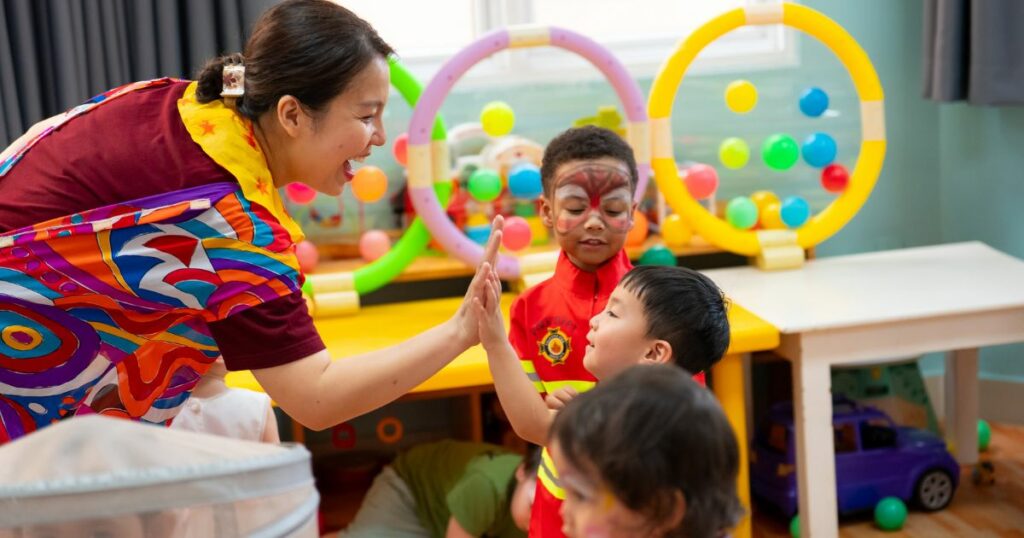
Good health habits also include personal hygiene, adequate hydration, and screen time balance. Families can model these behaviors by practicing them together, turning daily routines into shared experiences rather than rules to follow.
Every child’s physical needs are unique. Some may require more rest, others may thrive on high-energy activities, and some may need adjustments due to health conditions. By observing and responding to these differences, families can create an environment where healthy living feels natural and enjoyable.
Sleep is the habit families tend to underestimate. Predictable bedtimes support attention, mood, and memory in many young children. A short wind-down routine often helps more than an earlier lights-out time alone.
Ho Chi Minh City weather shapes how this works in practice. Early morning and late afternoon are usually the most comfortable windows for outdoor play.
Mental Health & Parenting Styles
A child’s mental health is deeply influenced by the emotional climate at home. The role of family in child development is especially clear when looking at how supportive, understanding relationships help children build confidence, manage stress, and feel secure. When emotions are acknowledged and discussed openly, children learn that their feelings are valid and manageable.
Different families foster mental well-being in different ways. Some may rely on open conversations, while others may use shared activities like cooking or reading to connect. What matters most is that children feel heard, valued, and respected.
Parenting styles can shape how children respond to challenges and build resilience. Approaches that combine clear boundaries with warmth and encouragement tend to create a safe space where children can explore their independence. Consistency helps children understand expectations, while flexibility allows them to express themselves and grow in their own way.
Families can support mental health by:
- Encouraging open dialogue without judgment
- Modeling healthy coping skills, such as taking breaks or using calming techniques
- Celebrating progress rather than focusing only on outcomes
By fostering emotional safety and adapting to each child’s personality and needs, families lay the groundwork for lifelong mental well-being.
The four parenting approaches, briefly
Family researchers commonly describe four broad approaches, defined by how much warmth and how much structure a household provides.
| Approach | Warmth and structure | What is often observed |
|---|---|---|
| Authoritative | High warmth, clear structure | Linked with confidence, self-regulation, and school engagement in much of the research |
| Authoritarian | Lower warmth, high structure | Rules are followed, though children may show less initiative or confidence |
| Permissive | High warmth, little structure | Strong closeness, though routines and self-regulation can be harder to establish |
| Uninvolved | Low warmth, low structure | Fewest supports for the child, and the pattern most often linked with difficulty |
These are broad descriptions, not fixed types. Most families move between them depending on the day, the child, and the pressure they are under.
Cultural context matters too. Firmness that reads as strict in one culture can be experienced as care and involvement in another, so warmth is judged by the child’s experience rather than by the rule itself.
The Role of Family at Each Stage of Child Development
What a family provides shifts as a child grows. The table below sets out where families make the most difference at each stage from birth to age eleven.
| Age | What the family provides most | Everyday example |
|---|---|---|
| 0 to 12 months | Responsive care and physical closeness | Answering cries, talking during feeding and changing |
| 1 to 3 years | Language exposure and safe exploration | Naming objects, allowing mess, staying nearby during play |
| 3 to 5 years | Routines, early literacy, emotional vocabulary | Bedtime stories, naming feelings, simple household jobs |
| 6 to 8 years | Homework habits, friendship coaching, encouragement | A quiet reading time, talking through playground problems |
| 9 to 11 years | Independence with clear boundaries, open dialogue | Managing their own bag, agreed screen limits, honest conversation |
Ages are indicative. Children move through these stages at their own pace, and many sit between two rows at once.
Family Structures and How They Shape Development
Children grow up in many kinds of households, and no single structure guarantees a particular outcome. What children experience day to day matters more than the label on the family.
| Family structure | Who is in the home | What often supports the child |
|---|---|---|
| Nuclear family | Two parents with their children | Shared caregiving load, consistent routines |
| Extended or multigenerational | Parents plus grandparents or relatives | Extra caregivers, strong cultural transmission |
| Single-parent family | One parent with children | Close bond, clear routines, outside support network |
| Blended or step family | Children living with a step-parent or step-siblings | Patience during transition, clear and fair expectations |
| Adoptive, foster, or kinship care | Children raised by non-biological carers | Stability, openness about the child’s story |
| Expatriate or transnational | Family living away from their home country | Predictable routines, home language kept strong |
Extended and multigenerational households are common across Vietnam and much of Asia. Grandparents often provide daily care, language exposure, and cultural continuity. Many families find this widens a child’s circle of secure relationships.
Families under financial pressure, or separated across countries, may find some functions harder to cover. Community services, schools, and extended relatives can help fill those gaps.
Long-Term Impact: Lifelong Learning & Future Success
Early family experiences shape how children think, grow, and adapt for the rest of their lives. A home that values curiosity, problem-solving, and empathy gives children tools they will carry into school years, future careers, and beyond.
The Foundation for Lifelong Learning:
- Asking questions and exploring answers together
- Discovering nature and making new connections
- Trying hobbies that spark creativity
- Reflecting on challenges to grow stronger
Beyond Academic Achievement:
Children raised in supportive environments often develop:
- Confidence to take on challenges
- Adaptability to navigate change
- Communication skills for strong relationships
From Home to School: A Seamless Support System

With that strong foundation from home, children also need an environment that cares for and supports them as warmly as their family does. At La Petite Ecole Ho Chi Minh, this philosophy is central. We nurture curiosity, creativity, and resilience through a multicultural, supportive community where each child is valued as an individual.
Read more: The Crucial Role of School in Child Development
By working hand in hand with families, La Petite Ecole Ho Chi Minh helps children carry their love of learning into every stage of life, setting them up for lasting confidence and success.
If you’d like to explore how we can support your child’s growth, we invite you to get in touch or visit our campus to experience our warm, nurturing environment firsthand.
- Phone: 028 3519 1521
- Email: contact@lpehochiminh.com
- Address: 172 – 180 Nguyen Van Huong, An Khanh Ward, Ho Chi Minh city
How Families and Schools Work Together
Children do best when home and school pull in the same direction. Consistency across the two settings reduces confusion and reinforces the same expectations.
Five practical habits make the partnership work:
- Share what works at home. Teachers rarely see the settling routine, the fear, or the favourite subject unless a family mentions it.
- Keep a reading routine. Ten minutes daily at home does more for literacy than a longer session once a week.
- Align routines. Similar expectations around tidying, turn-taking, and politeness make both settings easier for the child.
- Attend the conversations. Parent meetings are where small concerns get resolved before they grow.
- Protect the home language. A strong first language supports rather than competes with a second one.
Families sometimes worry that involvement means supervising homework closely. Interest and conversation usually matter more than supervision.
Building a Strong Foundation for Your Child’s Future
The role of family in child development is at the heart of raising confident, capable, and compassionate individuals. From nurturing emotional security to encouraging lifelong learning, families lay the foundation that shapes a child’s growth in every area of life.
The lessons children absorb at home form the core of their character and abilities. But home is only part of the journey. A supportive learning environment outside the family is equally important, offering consistent care, guidance, and opportunities for growth.
At La Petite Ecole Ho Chi Minh, children benefit from a nurturing atmosphere that complements the love and guidance they receive at home. With a focus on personal growth, cultural understanding, and well-rounded development, LPE helps each child take confident steps toward a successful and fulfilling life.
Investing in your child’s development today is planting the seeds for their success tomorrow!
Frequently Asked Questions
1. What is the role of family in child development?
The family provides a child’s first and most consistent source of care, shaping emotional security, language, values, health habits, and early learning. Families influence development through daily routines, conversation, and example rather than through single events. This influence begins at birth and continues throughout the school years, alongside the growing influence of school and community.
2. What is the primary role of the family in individual development?
The primary role is to meet a child’s basic needs consistently while shaping how they learn, relate to others, and see themselves. Family researchers describe this through three layers: structure, meaning who is in the home; processes, meaning how the household functions; and functions, meaning what the family provides. Processes matter most for outcomes.
3. How does family influence personality development?
Family influences personality mainly through repeated interactions. Children arrive with a temperament, and development tends to go more smoothly when family responses suit that individual child. Children also build a self-concept partly from how their family describes them, and they copy how adults handle frustration and repair. Genetics, peers, and school also contribute.
4. What is the role of family and community in shaping the growth of an individual?
Families provide direct daily care, while communities extend what a family can offer. Extended relatives, neighbours, faith groups, sports clubs, libraries, and schools all add relationships and opportunities. Wider factors such as a parent’s working hours, local healthcare, and national education policy shape family life indirectly. Children benefit when home and community expectations are consistent.
5. Does family structure affect child development?
Family structure has less influence than how a family functions day to day. Children grow up well in nuclear, extended, single-parent, blended, adoptive, and expatriate households. What matters more is warmth, consistency, safety, and whether a child has at least one stable, caring adult. Structure can affect resources, which is why community support helps.
6. Which parenting approach supports child development best?
Research most often links an authoritative approach, combining high warmth with clear and consistent boundaries, to confidence and self-regulation. This is a broad pattern rather than a rule, and cultural context matters. Firmness experienced as care in one culture may read differently in another. Most families move between approaches depending on the day and the child.
7. At what age does family influence matter most?
Family influence is strongest in the earliest years, when the brain develops fastest and a child spends most time at home. Responsive care in the first three years supports attachment, language, and self-regulation. Family influence does not stop there. It changes shape, moving from direct care toward guidance, conversation, and support for independence.
8. How can families and schools work together effectively?
The partnership works best when both settings share expectations. Families can share what works at home, keep a short daily reading routine, align routines around tidying and turn-taking, attend parent meetings, and keep the home language strong. Schools contribute by communicating openly and early. Interest and conversation usually matter more than close homework supervision.