


Back-to-School Checklist for Parents: What to Prepare
Heading back to school is an exciting milestone, and a little preparation goes a long way in making day one a breeze. At La Petite Ecole Ho Chi Minh City, we’re here to support your family every step of the way. This complete back-to-school checklist for parents breaks down the essential prep into simple, manageable steps: organizing supplies, setting up healthy daily habits, and helping your child step into the new term feeling happy, confident, and prepared.
Key Takeaways
- Work backwards from day one. Spreading tasks across four weeks keeps every step small and easy to manage.
- Book appointments early. Health checks, dentist visits, and eye tests are easiest to arrange in July.
- Sleep matters more than stationery. Shifting bedtimes a week early does more for the first day than any purchase.
- Local conditions change the list. Rainy season, traffic, and paperwork renewals are specific to families here.
- Involve your child in small choices. A sense of ownership helps many children feel ready on day one.
What Should Be on a Back to School Checklist for Parents?
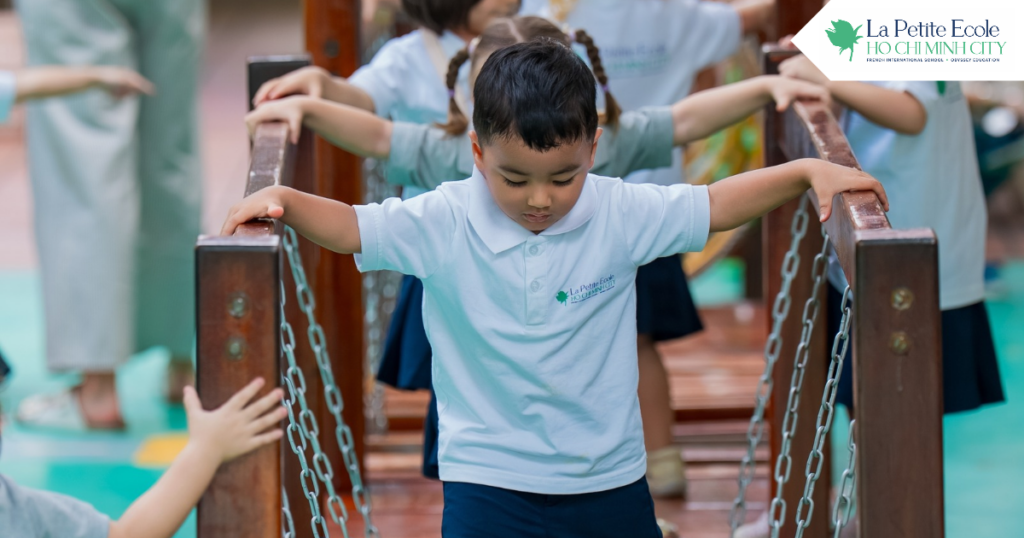
Every useful checklist covers five areas. In our experience, covering all five is what makes the final week feel easy.
The Five Categories That Cover Everything
- Health and paperwork. Medical checks, immunization records, forms, and any documents needing renewal.
- Supplies and uniforms. Bag, shoes, stationery, labels, and weather items.
- Logistics. Transport, pickup arrangements, lunch, and after-school care.
- Routines. Sleep, mornings, homework space, and screen limits.
- Emotional readiness. Conversations, expectations, and reconnecting with friends.
Most parents handle the first two easily. The last three are the ones worth a little extra attention.
Your Back to School Checklist by Timeline
We suggest working backwards from the first day. Adjust the dates to your own school calendar.
Four Weeks Before: Health and Admin
- Book the health check. July appointments are the easiest to arrange.
- Update immunization records. Ask for a printed copy for the school office.
- Check visa and residence documents. Renewals can take weeks for expat families.
- Review the school calendar. Add term dates, holidays, and parent evenings to your phone.
- Check the after-school club sign-up. Many schools open registration well before the new school year, so check where things stand. If places are still available, choosing extracurricular activities for kids early gives your child something to look forward to.
Two Weeks Before: Supplies and Uniform
- Try on every uniform item. Children grow noticeably over a long holiday.
- Check shoes properly. Have your child stand while you check the fit.
- Work through the supply list. Shop your own house first, since half of it is usually in a drawer.
- Test the school bag. Pack it fully and check the weight on your child’s shoulders.
One Week Before: Routines and Sleep
- Shift bedtime gradually. Move it fifteen minutes earlier each night rather than all at once.
- Practice the first morning. Run one full rehearsal, from waking up to walking out the door.
- Set up the homework space. Quiet, well lit, and stocked with spare stationery.
- Do a practice run of the route. Time it during actual rush hour, not on a quiet Sunday.
The Night Before: The Short List
- Lay out the uniform. Socks included, so the morning stays simple.
- Pack the bag together. Your child should know what is inside it.
- Confirm pickup. Tell your child exactly who is collecting them and where.
- Early bedtime. Rest does more for a first day than any last-minute preparation.
The Ho Chi Minh City Items Most Checklists Miss
Most back to school guides are written for a northern autumn. These are the items our teachers notice missing during the first wet week.
Rainy Season Essentials
- A proper raincoat or poncho. These travel far better in a school bag than an umbrella.
- A spare set of clothes. Keep it in the bag from the first week.
- Waterproof shoes or a spare pair. A dry change keeps your child comfortable all day.
- A large refillable water bottle. Humidity means children drink far more than parents expect.
Traffic and Pickup Planning
The commute deserves a rehearsal. A calm, familiar journey sets a good tone for the whole day.
- Register for the school bus early. Routes and seats are limited.
- Confirm pickup and drop-off points. Walk your child through them in person.
- Agree a backup plan. Name one alternative adult and make sure the school knows.
Documents That Expire
Expat families tell us this is the most useful one to handle early. Check the expiry dates on your child’s passport, visa, and temporary residence card before term begins.
Renewals can take several weeks. Starting in July leaves plenty of room.
Back to School Checklist by Age

A three-year-old and a ten-year-old need very different preparation. Our teachers see that difference clearly in the first week of term.
Ages 1 to 5
- Comfort item. Check whether the school allows one, and label it.
- Spare clothes and wipes. At least two changes for the youngest children.
- Nap items. A small blanket or sheet if the school requests one.
- Separation practice. Short goodbyes at home help many children in the first week.
For the very youngest, our guidance on how to prepare 2-year-old toddlers for first day of school covers the emotional side in more depth.
Ages 5 to 7
- Independent dressing. Practice shoes, buttons, and jacket zips before term.
- Lunchbox practice. Make sure your child can open every container alone.
- Bathroom independence. A quiet confidence builder for the first week.
Building self-care skills for kids during the holiday makes the first term noticeably smoother. If your child is starting primary, our guide on how to get ready for first grade covers the skills that matter most.
Ages 8 to 11
- A personal planner. Let your child own the homework schedule.
- Packing their own bag. Supervise once, then step back.
- A quiet study routine. Agree a daily slot rather than negotiating nightly.
This age is ideal for handing over more control. Our guide to developing independence in children offers practical ways to do that without stepping back too fast.
Restarting Reading and Language After a Long Break
Reading habits naturally ease off over a long holiday, and that is completely normal.
Two weeks of short daily reading brings it back. Fifteen minutes is enough, and letting your child choose the book matters more than the level.
The benefits of reading books for kids extend well beyond literacy, from focus to vocabulary. In a bilingual setting, alternating languages across the week helps both.
Understanding what is a bilingual school explains why that balance matters before term begins.
Preparing Your Child Emotionally

The practical list is the easy part. In our experience, how a child feels on day one shapes the whole first month.
Conversations Worth Having
- Ask what they are looking forward to. Start with the positive.
- Ask what they are wondering about. Talking it through makes the day feel familiar.
- Arrange one playdate. Reconnecting with a classmate before term helps enormously.
If Your Child Feels Unsure
Mixed feelings before a new school year are completely normal. Our teachers expect them and plan for them. Rather than promising everything will be easy, describe what the day will actually look like.
Acknowledge the feeling, then move to something concrete. Simple emotional regulation for kids habits, practiced calmly at home, give children something to lean on. Small wins also build children’s wellbeing over the first term.
If your child is still finding their feet after two weeks, a quick word with the class teacher helps. Our guide on how to build confidence in kids offers further support for this stage.
The Checklist for Parents, Not Just Children
Checklists usually focus on children. These four take ten minutes and make the whole term easier.
- Download the school app and log in. Do it before you urgently need it.
- Save the office and nurse numbers. In your phone, not on paper.
- Block out the first parent evening. It is easier to protect the date now.
- Agree the division of tasks at home. Who does mornings, who does evenings.
How La Petite Ecole Ho Chi Minh City Helps Families Prepare
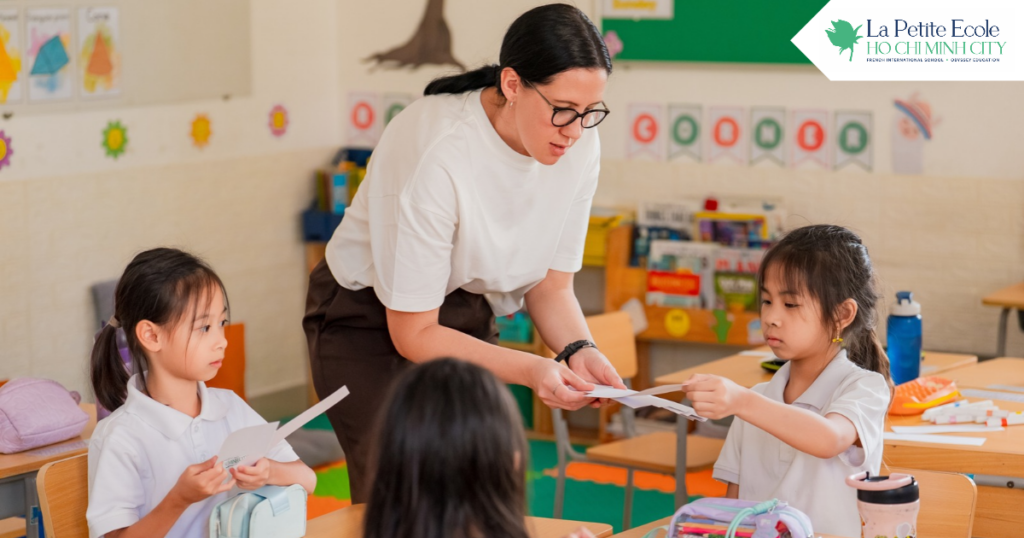
La Petite Ecole Ho Chi Minh knows the first days of term matter, so we plan for them rather than leaving families to guess.
What Families Can Expect
- A clear supply and uniform list. Sent well before term, with nothing ambiguous.
- Orientation for children joining us. New students meet their teachers and see their classroom before the first day.
- Small classes. Teachers notice quickly when a child needs a little extra reassurance.
- A settled first week. Predictable routines in both French and English, introduced gently.
We follow the official French curriculum, accredited by AEFE, delivered in French and English by qualified teachers. Our approach suits children aged one to eleven, whether they are new to the city or returning after a long holiday.
Start Early, Finish Calmly
A back to school checklist works best when it is spread out. Four weeks of small tasks make the final week feel easy.
Cover health, supplies, logistics, routines, and feelings. Then let the local details guide the rest, from the rainy season kit to document renewals.
If we could pass on one thing, it would be this. Protect sleep and keep the conversation open, because those two carry more weight than everything else.
Preparing for a new school year in Ho Chi Minh City? We would be glad to answer your questions about our program, the school day, and what your child needs for a confident start. Contact La Petite Ecole Ho Chi Minh City to arrange a visit or speak with our admissions team.
- Phone: 028 3519 1521
- Email: contact@lpehochiminh.com
- Address: 172 – 180 Nguyen Van Huong, An Khanh Ward, Ho Chi Minh city
Frequently Asked Questions
When should I start my back to school checklist?
Around four weeks before term is comfortable for most families. Health appointments and document renewals need the longest lead time, so handle those first. Supplies and uniform can wait until roughly two weeks out, once you know what still fits.
Which items are worth double-checking?
Spare clothes, a second pair of shoes, and a properly sized water bottle. It is also worth updating emergency contact details and labeling smaller items such as jackets and lunchboxes.
How early should I change my child’s sleep schedule?
About a week before term, shifting bedtime fifteen minutes earlier each night. A gradual change is far easier than a single large jump. Reducing evening screen time at the same time helps considerably.
What should be in a school bag for a preschooler?
Two changes of clothes, wipes, a labeled water bottle, a hat, and any comfort item the school permits. Add a raincoat during rainy season. Confirm nap items with the school, as requirements vary.
How can I help my child feel ready for the first day?
Listen to how they are feeling, then describe the day in order so it feels familiar. Arranging one playdate with a classmate before term also helps many children a great deal.
Do I need to prepare anything specific for the rainy season?
Yes. A raincoat or poncho, waterproof or spare shoes, a dry bag for books, and a spare set of clothes kept in the school bag. Humidity also means children need more water during the day.
How do I help my child restart reading after a long holiday?
Fifteen minutes of daily reading for about two weeks rebuilds most of the habit. Let your child choose the book. In a bilingual household, alternate languages across the week rather than mixing within one session.