
10+ Life Skills for Children to Support Their Confidence and Development
Life skills for children are the everyday abilities a child uses to manage daily life. They cover practical tasks, thinking skills, and social or emotional skills. Most children build them gradually between ages two and eleven.
The World Health Organization describes life skills as abilities for adaptive and positive behavior. These abilities let people deal effectively with the demands of everyday life.
Key Takeaways
- Life skills fall into three groups: practical, thinking, and social or emotional.
- The WHO names ten core life skills, from self-awareness through to coping with emotions.
- Ages two to six are a strong window, though skills keep developing well into primary school.
- Short, repeated practice in real situations works better than one-off lessons.
- Children need to be allowed to do the task slowly and imperfectly before they get good at it.
Why Teaching Life Skills for Children Matters
Teaching life skills for children is vital for their overall development, covering intellectual, physical, and moral growth. The early years, particularly between the ages of 2 and 6, are crucial for children to acquire these skills, which will help them confidently navigate social situations and address challenges in life. Life skills for children not only involve self-care, but also encourage the development of a positive mindset, resilience, and perseverance.
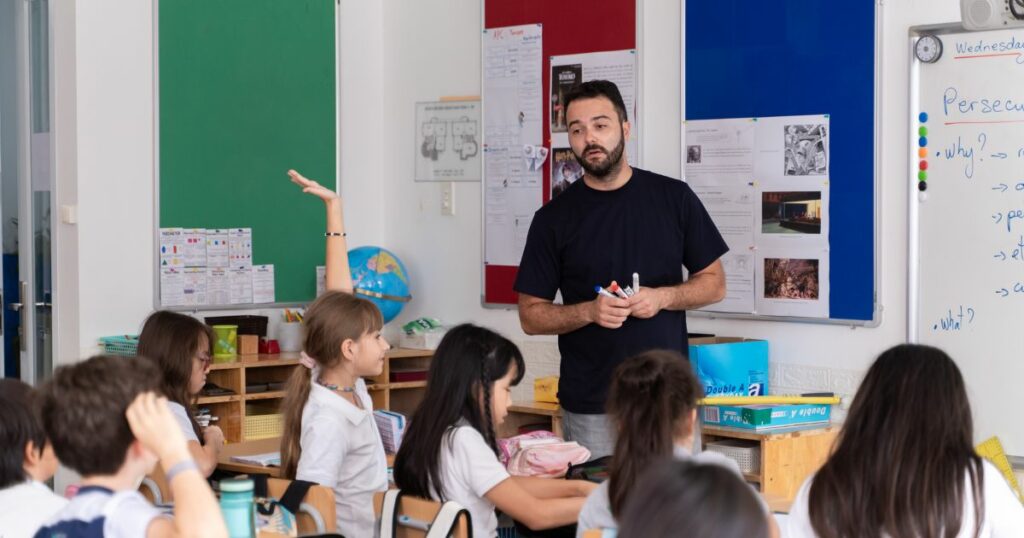
In addition, these skills play a significant role in cognitive development, enabling children to distinguish right from wrong and understand the value of respecting others’ viewpoints. By fostering curiosity and a love for family, friends, and nature, life skills for children lay a strong foundation for their future success. Early education in these areas empowers children to become confident, independent, and prepared to handle life’s difficulties effectively.
There is a second reason these skills matter, and it is less often mentioned. Children who can manage small tasks alone ask for help more confidently, not less.
Independence and support are not opposites. A child who knows they can pour their own water is usually calmer about the things they still cannot do.
Families and schools both contribute here. Our article on the role of family in child development looks at how home routines support this.
What Are Life Skills for Children?
Life skills are the abilities a child uses to manage daily life without constant adult help. They are learned through repetition and real situations rather than instruction alone.
It helps to sort them into three groups:
- Practical skills: dressing, hygiene, tidying, simple cooking, road safety, handling small amounts of money.
- Thinking skills: problem solving, decision making, critical thinking, creative thinking, planning time.
- Social and emotional skills: communication, listening, empathy, cooperation, managing frustration.
Children need all three. A child who can tie their shoes but cannot ask for help is not yet independent.
These skills overlap with, but are broader than, social skills for children. Social skills sit inside the wider life skills picture.
Life Skills by Age: What to Expect at Each Stage
| Age | Practical skills | Thinking skills | Social and emotional skills |
|---|---|---|---|
| 1 to 3 years | Feeding themselves, washing hands, putting toys in a box | Simple choices between two options | Naming happy, sad, and angry |
| 3 to 5 years | Dressing, brushing teeth, tidying, setting the table | Sorting, sequencing, asking why | Turn-taking, sharing, saying sorry |
| 6 to 8 years | Packing their own bag, simple cold food, tying laces | Following a three-step plan, telling the time | Resolving small disputes, listening without interrupting |
| 9 to 11 years | Simple cooking with supervision, small budgets, road safety alone | Planning a week, weighing options, spotting unreliable information | Managing frustration, giving and receiving feedback |
Ages are indicative only. Many children sit across two rows at once, and that is normal.
For a closer look at how expectations shift with age, see our guide to fostering responsibility in children by age.
The 11 Life Skills in This Guide at a Glance
| # | Life skill | Why it matters | Best age to start |
|---|---|---|---|
| 1 | Communication | Foundation for friendships and classroom learning | From 18 months |
| 2 | Self-care | The first real experience of independence | From 2 years |
| 3 | Critical thinking | Helps children question rather than copy | From 4 years |
| 4 | Swimming | Water safety, and a genuine safety issue in Vietnam | From 4 years |
| 5 | Helping and respecting others | Builds empathy and reduces conflict | From 3 years |
| 6 | Caring for plants and animals | Nurtures responsibility and gentleness | From 3 years |
| 7 | Safety awareness | Road, home, stranger, and online safety | From 3 years |
| 8 | Time management | Supports planning and school readiness | From 5 years |
| 9 | Listening | Underpins every other communication skill | From 2 years |
| 10 | Emotional management | Reduces meltdowns and builds resilience | From 3 years |
| 11 | Queueing and patience | Practical self-control in public settings | From 3 years |
10+ Essential Life Skills for Children
Today, many schools focus on teaching life skills to children, helping them to develop holistically. Here are 10+ essential life skills children need to be equipped with to apply in their daily lives.
1. Communication Skills
Communication is one of the most important life skills. Teaching children communication skills from an early age helps them integrate into the community and forms a solid foundation for future social skills.
By the age of 3, a child’s communication abilities change significantly, from using non-verbal cues like eye contact and gestures to expressing emotions and thoughts verbally. This is a key period to teach basic communication skills such as greetings, apologising, saying thank you, and sharing.
Creating a suitable learning and living environment at home can encourage children to participate in group activities like team games, outdoor excursions, or life skills lessons. These activities help children develop language and social skills effectively. Teaching life skills at an early age will help children grow confident and strong, ready to face future challenges.
For primary-age children, our guide to communication skills for primary school children covers this stage in more detail.
2. Self-Care Skills
Self-care skills are an important part of helping children become independent. Teaching children life skills like brushing their teeth, dressing themselves, and maintaining personal hygiene not only helps them become independent but also builds a strong foundation for their future.
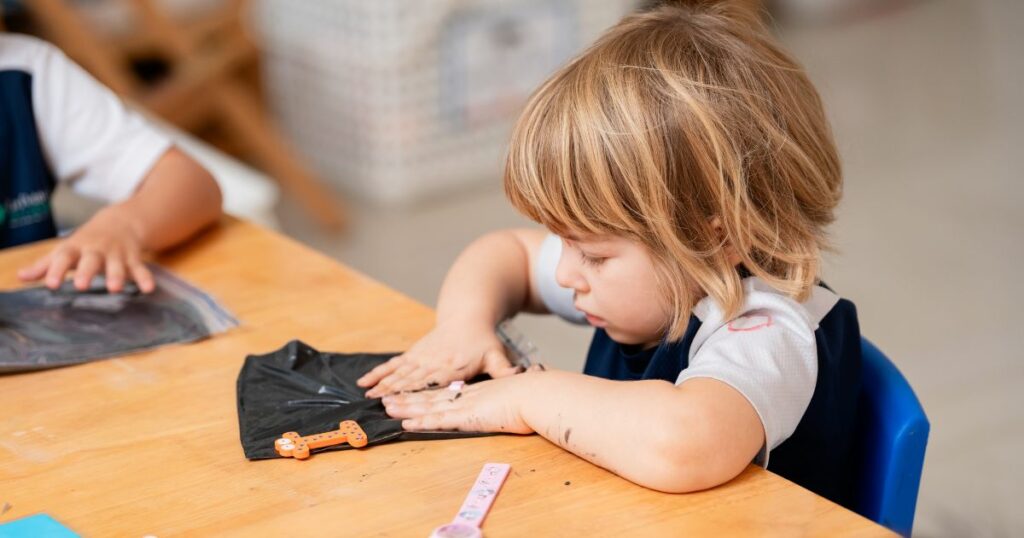
Encouraging children to take part in physical activities, arts, and household chores like sweeping and tidying up toys fosters teamwork and teaches responsibility. Both family and school environments play a vital role in cultivating self-care habits, empowering children to develop independence and confidence in handling challenges. These skills are not only key to social integration but also serve as a foundation for strong personal development and future success.
A practical, age-by-age breakdown is available in our guide to self-care skills for kids.
3. Critical Thinking Skills
Critical thinking is an essential life skill that enables children to analyse, assess, and make decisions accurately. Developing this skill helps children take ownership of their knowledge, think logically, and improve problem-solving abilities. Critical thinking enhances communication, argumentation, and the ability to defend one’s views with reasoning.
Parents can help children develop critical thinking through activities like games, role-playing, or problem-solving scenarios. These activities teach children how to present clear arguments and analyse information carefully. Encouraging children to ask questions and consider different perspectives is also a great way to develop their critical thinking skills.
When children apply critical thinking in real-life situations, they become more confident in making decisions, learning from mistakes, and developing other important life skills, such as communication, self-management, and problem-solving.
4. Swimming Skills
Swimming is one of the essential life skills that helps children develop holistically. It not only improves physical fitness but also enhances survival skills. Learning to swim helps children develop strength, focus, and improves sleep quality. Moreover, becoming familiar with water stimulates creativity and encourages flexible thinking, which can further benefit academic performance.
For safe and effective learning, parents should enrol children in age-appropriate swimming classes, supervise them closely, and ensure they have proper safety equipment like life jackets. Swimming is not just a beneficial sport; it teaches children how to protect themselves and assist others, laying a strong foundation for future independence.
Water safety deserves particular attention for families living in Vietnam. Drowning remains one of the leading causes of accidental death among children across the region.
Swimming ability alone is not full protection. Children also need to recognize unsafe water and understand that they must never swim alone. They should know to call for help rather than jump in after a friend.
Regular movement supports water confidence too. See our list of physical activities for preschoolers for simple options.
5. Helping and Respecting Others
One of the essential life skills for children is learning to help and respect others. Teaching children respect starts with guiding them to listen, understand, and empathise in specific situations.
>> Read more: How to Foster Kindness and Empathy in Children
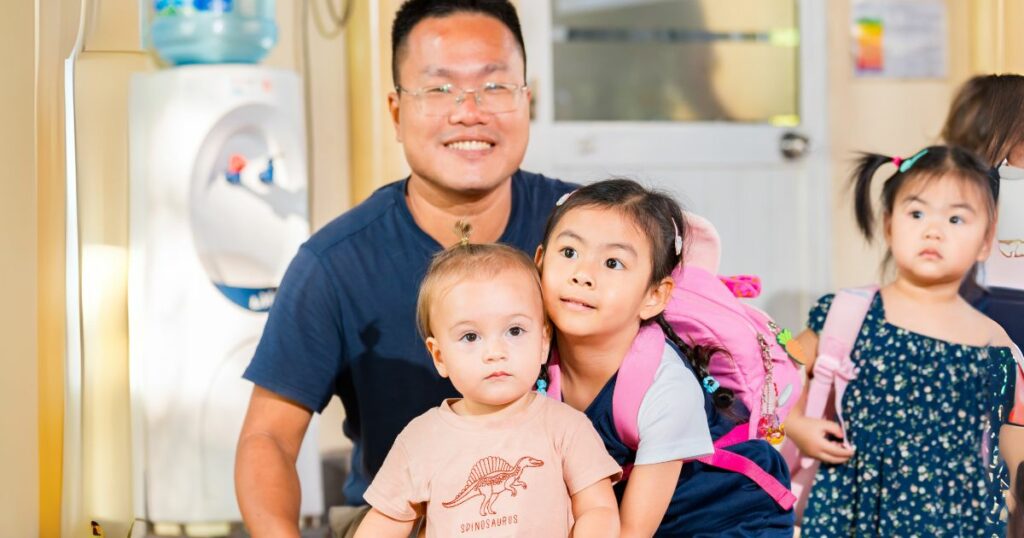
Parents can create opportunities for children to help with small tasks like sweeping the house or cleaning the table, which fosters closeness and teaches the value of sharing. Respecting and helping others not only builds tolerance but also minimises conflicts in relationships.
Moreover, parents should model this behaviour and encourage children to show kindness through specific actions, like praising them when they help others. Teaching children these skills from a young age helps them integrate smoothly into society and grow into well-rounded, compassionate global citizens.
6. Skills in Planting and Caring for Animals
Life skills for children include not just basic skills like communication and self-care, but also nurturing abilities such as caring for plants and animals.
Teaching children to love and care for plants and animals fosters environmental intelligence and helps cultivate positive thinking. Studies show that when children learn to care for animals and nature, it enriches their emotional development, making them more empathetic and compassionate towards others.
Parents can encourage children to look after pets, water plants, or engage in environmental charity work to instil kindness and empathy. These activities not only help children develop life skills but also teach them the importance of sharing and caring for living beings around them.
7. Safety Awareness Skills
Teaching children to recognise and avoid potential risks is another life skill that helps them feel secure and confident in various situations. Parents can gently explain areas to be cautious of, such as electrical outlets, stoves, or balconies when no adults are present. Additionally, guiding children not to follow strangers or accept items from them, and always staying close to an adult in busy places, supports their understanding of personal safety.
Through enjoyable activities like storytelling, watching educational content, or role-playing scenarios, children can practise recognising situations that need attention. These skills not only enhance awareness but also build self-confidence, contributing to their overall development.
8. Time Management Skills
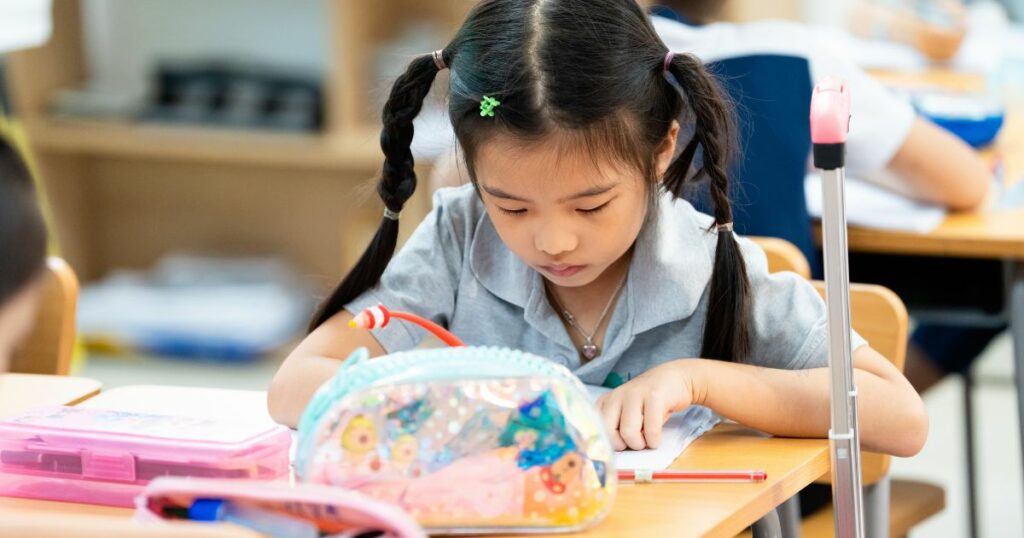
One of the key life skills for children is time management, which should be instilled from a young age. This skill helps children develop independence and plan their activities effectively.
Parents can help children organise their daily routines in a balanced way, covering activities like studying, playing, eating, and resting. Teaching children to value their time through simple activities such as checking the clock, making to-do lists, and sticking to set plans will help them achieve future success. When children know how to prioritise tasks and manage their time, they will develop problem-solving abilities and work towards their life goals more effectively.
Young children do not yet feel time passing. Making it visible helps more than asking them to hurry.
A sand timer, a picture chart, or a song that lasts as long as tooth brushing all help. Each gives the child something concrete to work with.
9. Listening Skills
Listening is a vital component of a child’s life skills, as it aids in communication, learning, and maintaining positive social relationships. When children develop listening skills, they are better able to absorb information and understand the views of others, which is particularly important for both learning and everyday interaction.
To teach children listening skills, parents should lead by example, listening to their children patiently without raising their voices, and providing opportunities for children to engage in games that promote listening. Games like “Simon says” can be fun and effective ways for children to practise listening. Early development of listening skills will help children communicate easily and build lasting relationships in the future.
More activities are collected in our guide to listening skills for kids.
10. Emotional Management Skills
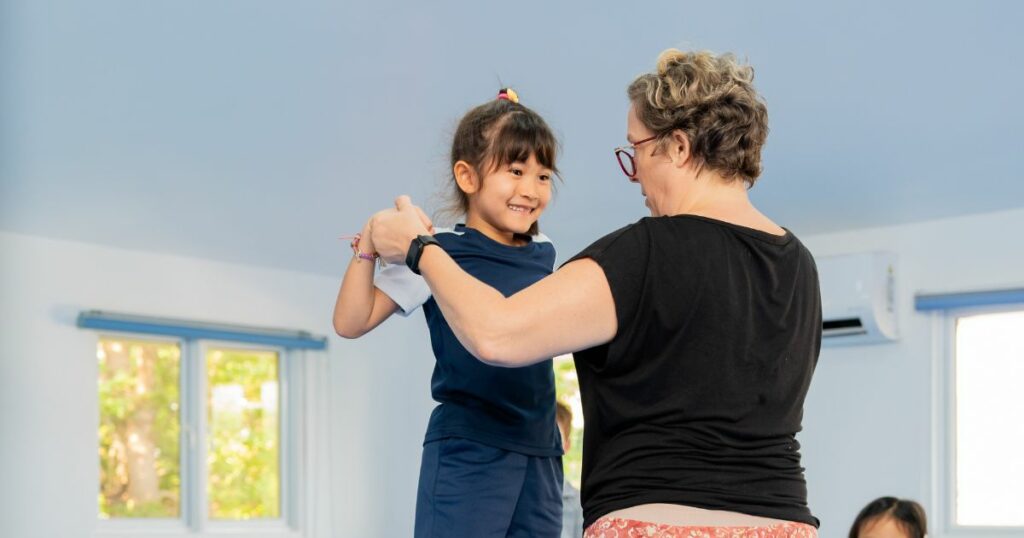
Emotional management is an essential life skill that equips children to handle challenges effectively. To cultivate this ability, parents can guide their children in recognising and acknowledging their emotions while expressing them appropriately.
Teaching techniques such as deep breathing, focusing on positive aspects, or engaging in physical activities like sports can help children release negative energy constructively. Through storytelling, conversations, and practical activities, children learn to balance their emotions, establishing a strong foundation for comprehensive personal development.
One point is easy to miss. Children cannot use calming techniques while they are already overwhelmed.
The practice has to happen when everyone is calm. Breathing exercises introduced during a meltdown rarely land, while the same exercise practiced at bedtime often does.
Playful practice helps here. Our list of social emotional games for preschoolers has simple options for home.
11. Queueing Skills
Teaching children queueing skills is a crucial aspect of developing their life skills. This practice not only cultivates patience but also helps children learn to wait, respect rules, and behave courteously.
Parents and teachers can employ creative games or storytelling to illustrate the importance of queueing, making the learning process enjoyable for children. Real-life scenarios such as waiting in line at supermarkets, playgrounds, or schools provide excellent opportunities for children to practice and develop this positive habit.
Practical Everyday Life Skills Often Overlooked
The list above covers the skills schools tend to focus on. A few household skills matter just as much and are easy to miss.
Simple cooking and kitchen confidence
Children can help in the kitchen long before they can cook. Washing vegetables, tearing herbs, and stirring a cold bowl all count.
From around age eight, many children can prepare simple cold food alone. Supervised use of heat usually comes later and varies a lot between families.
Cooking bundles several skills at once. Sequencing, measuring, patience, and hygiene all appear in one activity.
Money sense
Small amounts of real money work better than explanations. Letting a child pay at a shop and count the change makes the idea concrete.
From around age seven, many children can handle a small weekly amount. They can also choose whether to save it or spend it. The lesson lands when they occasionally choose badly.
Household jobs
Regular jobs suited to age build a sense of contribution. Watering plants, feeding a pet, folding their own clothes, or clearing the table all work.
The most useful part is that the job is genuinely needed. Children can tell the difference between a real task and a made-up one.
Knowing what to do in an emergency
Children benefit from knowing a few fixed things. Their full name, a parent’s phone number, and their home address are the basics.
They also need a simple plan for getting lost in a public place. Staying still and finding a staff member is easier for a young child than searching.
Many of these skills develop naturally through structured activities outside class. See our overview of extracurricular activities for children for ideas.
How to Support Life Skills at Home Without Adding Pressure
Life skills are built through repetition in ordinary moments. Setting aside a special lesson time is rarely necessary.
Four habits do most of the work:
- Allow extra time. A child buttoning their own coat takes four minutes instead of thirty seconds. That gap is where the skill forms.
- Let them do it imperfectly. Redoing a child’s work in front of them quietly signals that their effort did not count.
- Narrate rather than instruct. Saying what you are doing while you do it gives children the language along with the action.
- Hand over one step at a time. Give the child the last step first, such as pressing the final button, then work backward as they gain confidence.
Progress is rarely smooth. Many children manage a skill for weeks, then stop, then pick it up again.
Four Common Mistakes to Avoid
- Stepping in too early. A short struggle is part of learning. Waiting a few extra seconds before helping often changes the outcome.
- Introducing too many skills at once. One new expectation at a time is usually enough for a young child.
- Practicing only when rushed. School mornings are the worst moment to hand over a new task. Weekends work better.
- Praising the result rather than the effort. Noticing that a child kept going matters more than noticing that the bed looks neat.
La Petite Ecole Ho Chi Minh International School: Helping Children Develop Life Skills
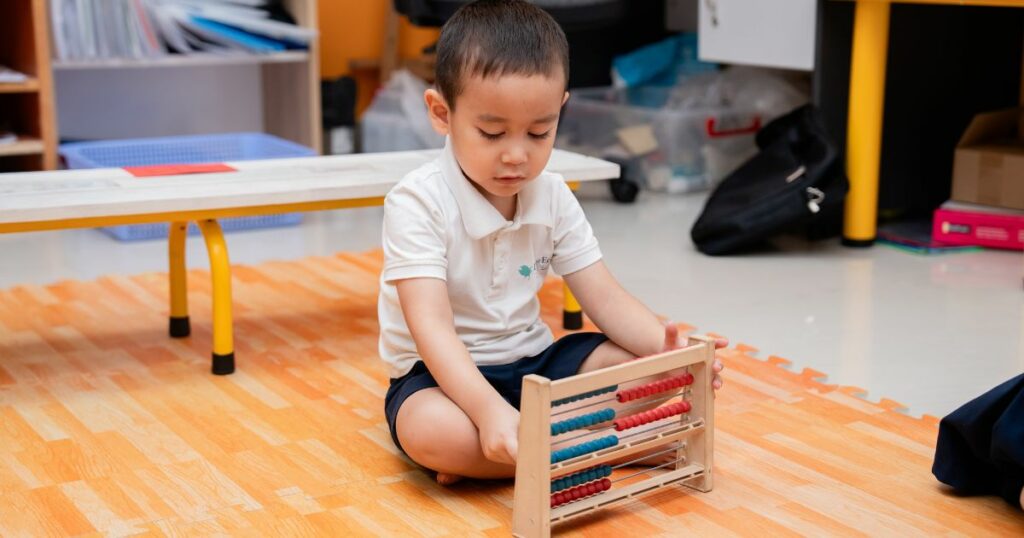
La Petite Ecole Ho Chi Minh International Bilingual School offers a dynamic learning environment that fosters the comprehensive development of life skills in children. With its modern educational approach, the school places equal importance on knowledge and the development of essential skills such as independence, communication, and problem-solving. Through a variety of academic and extracurricular activities, children learn to master their emotions, enhance their creativity, and boost their confidence, preparing them well for the future.
This article highlights the important role life skills play in a child’s overall development. Teaching these skills helps children grow intellectually and physically, while also honing the soft skills that will be essential for their future success. For more information on teaching life skills to children, contact La Petite Ecole Ho Chi Minh International School for detailed advice.
- Phone: 028 3519 1521
- Email: contact@lpehochiminh.com
- Address: 172 – 180 Nguyen Van Huong, An Khanh Ward, Ho Chi Minh city
Frequently Asked Questions
1. What are life skills for children?
Life skills are the everyday abilities a child uses to look after themselves, relate to others, and handle problems. They fall into three groups: practical skills such as dressing and hygiene, thinking skills such as problem solving and decision making, and social or emotional skills such as listening and managing frustration. Children build them through repetition in real situations.
2. What are the 10 core life skills?
The World Health Organization names ten: self-awareness, empathy, critical thinking, creative thinking, decision making, problem solving, effective communication, interpersonal relationship skills, coping with stress, and coping with emotions. This framework is widely used in school curricula worldwide. It is a useful checklist, though practical skills such as cooking and road safety sit outside it.
3. At what age should children start learning life skills?
Many children begin around age two with simple self-care such as washing hands and putting toys away. Ages two to six are a particularly strong window, but life skills keep developing throughout primary school and beyond. The best starting point is whatever a child can nearly do alone, with a little support.
4. What are some examples of life skills for kids?
Practical examples include dressing, brushing teeth, tidying, packing a school bag, simple cooking, crossing a road safely, and handling small amounts of money. Thinking examples include planning a morning, solving a problem without help, and weighing two options. Social examples include listening without interrupting, taking turns, and repairing a friendship after a disagreement.
5. How can parents support life skills at home?
Allow extra time, let the child do the task imperfectly, and hand over one step at a time. Real household jobs work better than invented exercises, because children can tell the difference. Practice new skills at calm moments rather than during a rushed school morning. Noticing effort matters more than noticing a neat result.
6. What life skills should a 5 year old have?
Many five year olds can dress themselves, brush their teeth with supervision, tidy their own toys, and help set a table. They can usually sort and sequence, follow a two-step instruction, and ask why. Socially, most can take turns, share with prompting, and name basic feelings. Every child arrives at these at their own pace.
7. Are life skills the same as social skills?
No. Social skills are one part of life skills. Social skills cover how a child communicates, cooperates, and behaves around others. Life skills also include practical abilities such as hygiene and road safety, and thinking abilities such as decision making and planning. A child needs all three groups to manage daily life.
8. Which life skills matter most for starting school?
Schools generally value independence in the small things: using the toilet alone, managing shoes and a bag, opening a lunch container, and asking an adult for help. Being able to wait a short time and follow a simple instruction also helps a great deal. Academic readiness matters far less at this stage than these practical basics.